Showing posts with label Zambia. Show all posts

Friday, 6 January 2012

POVERTY: SOUTHERN AFRICA: Floods leave Angolan returnees stranded

JOHANNESBURG, 6 January 2012 (IRIN) -

 Photo: Tomas de Mul/IRIN
The Zambezi is prone to flooding annually
Several thousand Angolan returnees from the neighbouring Democratic Republic of Congo (DRC) are stranded by floods in northeastern Angola. They are among the first casualties of what promises to be a very wet rainy season in parts of southern Africa.
“At least 50,000 people - 24,000 of them returnees - in 10 villages in Uige Province [northeastern Angola near border with DRC] have been affected by the flooding, rains and hailstorms in the past four months,” said Antonio Maiandi, head of the Evangelical Reformed Church of Angola, which has been trying to help those affected. The rainy season here tends to be longer than elsewhere in Angola.
“It is still pouring hard. At least 1,142 houses have been destroyed by the rains. Each family with shelter is now hosting other families,” said Maiandi, adding that the returnees, who had sought refuge from the civil war in Angola which ended in 2002, were putting enormous pressure on locals, and organizations such as his.
“The local population who are mostly farmers have been severely affected. Their cassava [staple food in Angola] and groundnut crops have been destroyed, so there is not enough food to go round.”
The UN Refugee Agency (UNHCR) restarted formal repatriation of Angolans in November 2011 after logistical and other problems forced the process to stop in 2007. DRC is home to some 80,000 Angolans refugees, according to UNHCR.
The new return initiative comes after a UNHCR survey in 2010 found that 43,000 wanted to return home, and following a tripartite agreement between Angola, DRC and UNHCR (signed in June 2011), around 20,000 people signed up for help to return. The agreement came about after years of tense relations between the two countries: Angolan and Congolese nationals have been expelled from the two countries regularly.
Each family with shelter is now hosting other families
“The local population is extremely poor and unable to support the returnees,” and “people are still coming in every day,” said Maiandi.
UNHCR in Angola told IRIN they took a break in December 2011 and would resume formal repatriation on 17 January, but did not have an update on the number of people who had already arrived.
According to aid workers, increasing instability in the DRC following the recent disputed elections could be prompting more people to leave.
Maiandi said the returnees had not received adequate support from the authorities and church organizations had limited resources.
Meteorologists for the Southern African Development Community (SADC) have predicted normal to above normal rains for most of the region from January to March 2012 largely because of the continuing effects of the 2011 La Niña event. Thousands of people in the region were displaced and scores killed in early 2011 as a result of heavy rains and flooding associated with La Niña.

Zimbabwe
As the rainy season begins here, aid workers and disaster prevention teams are closely monitoring water levels in the all-important Zambezi river, the continent's fourth largest.
The authorities have issued a flood alert after being forced to release water from the swollen Kariba Dam on the Zambezi earlier than usual in the rainy season.
The Zambezi River Authority (ZRA) which usually opens the spillway gates of Lake Kariba in the last two weeks of January was forced to open one of the gates on 3 January. It has advised people living downstream to evacuate their homes.

Zambia
Zambia is in for a mixed season. Dominicano Mulenga, national coordinator of Zambia's Disaster Management and Mitigation Unit, said a plan had been drawn up to help 368,953 people likely to be affected by rain and dry spells. While northwestern and western parts of the country had seen heavy rain, southern, eastern and parts of central Zambia were likely to receive little or no rain, he said.
The water level in the Zambezi was higher than at the same time in 2011, he added. “We have had three seasons of heavy rainfall and the ground is saturated with water, making it more prone to flooding.”

Namibia
Namibians, currently experiencing a heat wave, are eager for rain, said Guido van Langehove, chief of the Namibia Hydrological Services. Southern African Development Community (SADC) meteorologists have forecast normal to above normal rains for Namibia over the next three months. “It was the same forecast last year and we recorded three times the normal rain,” van Langehove pointed out.
The Caprivi Region, Namibia’s poorest area, is prone to annual flooding.
Japhet Itenge, director of Disaster Risk Management in the Office of the Prime Minister, said they were prepositioning essential commodities and relief tools as part of their contingency plans.

Lesotho
Lesotho has not received adequate rainfall in the past few months, a spokesman for the country’s meteorological services told IRIN. “SADC has forecast heavy rains for Lesotho in the coming weeks. We are worried it can cause early frost and destroy crops that have already been planted,” he said.
Lesotho and Namibia have food insecurity levels greater than their five-year averages due to the severe flooding experienced during the last growing season, according to FEWSNET.

Mozambique
The Mozambican authorities have begun to release water from the Cahora Bassa Dam on the Zambezi. People living mainly along the lower Zambezi basin and in Buzi, Save, and Pungue basins, including Beira city, are on alert.
Sofala Province in central Mozambique is currently distributing items such as bicycles, stretchers, masks, gloves, megaphones and boats, according to the Mozambique Red Cross; and members of seven local disaster risk management committees established in Beira City are cleaning the drainage system.
The National Institute of Disaster Management (INGC) is monitoring the rivers Montepuez, Licungo, Mutamba, Pungué, Buzi, Save, and Maputo, said FEWSNET. In the Zambezi and Limpopo river basins, FEWSNET warned of a near-average-to-high probability of flooding.
João Bobotela, CARE’s emergency response coordinator in Mozambique, said INGC and local authorities had been running flood simulation exercises since November 2011 to prepare communities for sudden evacuations.

Botswana
Arid Botswana has not received good rains in the past few months. “We are expecting average rains which might help crops,” said a spokesman for the Botswana Meteorological Services.

Malawi
More rains have been forecast for southern Malawi, where land adjacent to the River Shire, one of the most food-insecure parts of the country, is prone to flooding. Parts of the region, which has seen an outbreak of foot and mouth disease and a hike in food prices, are in crisis mode, warned FEWSNET.

South Africa
Much-needed rain has fallen in South Africa’s major maize-producing northern Free State area in the past few weeks. The government and USAID’s Famine Early Warning Systems Network (FEWSNET) say the country has adequate supplies, but global maize stocks are low, putting considerable upward price pressure on South African white maize.

http://www.irinnews.org/report.aspx?reportID=94598

Monday, 18 July 2011

TUBERCULOSIS: An interview with Zambian global health advocate Carol Nyirenda

Meredith Mazzotta ⋅ July 7, 2011 ⋅
 Executive Director of the Community Initiative for Tuberculosis (TB), HIV/AIDS and Malaria plus related diseases Carol Nyirenda.

Carol Nyirenda – executive director of the Community Initiative for Tuberculosis (TB), HIV/AIDS and Malaria plus related diseases – has been living with HIV for several years and is a tuberculosis survivor. A Zambian native, her advocacy work initially in TB created the foundation for her career in national and global activism that now stretches beyond HIV, TB and malaria. Nyirenda serves on the Stop TB Partnership’s New Diagnostics Working Group as a community representative, and is a board member representing communities of people living with TB, HIV and malaria for UNITAID, where she has successfully lobbied for resources for drug resistant TB diagnostics, according to the Treatment Advocacy and Literacy Campaign where Nyirenda used to work.
She sat down with Science Speaks while on her latest trip to the U.S. and discussed access to treatment and care services in Zambia, how critical Global Fund investment is to these services in her country and what has changed since the corruption allegations surfaced in 2010.
When did you find out about your HIV status?
I found out in 2003 that I had HIV, though I had been having clinical signs since 2001 after my husband died. At that time there wasn’t clear information about what to look out for.
After being married for 13 years and not having ever strayed from our marital bed – coupled with the fact that we used condoms 90 percent of the time also as contraception for family planning – I didn’t have reason to think I was HIV positive. After my husband died I had tuberculosis (TB), malaria, kaposi’s sarcoma [a type of cancer], and other opportunistic infections. Had I known that I had HIV earlier, it would have been easier, especially in regards to the TB diagnosis, which took a long time and a lot of resources, and the treatment for the cancer.
It took about six months to diagnose the TB. I had extra pulmonary TB. I had a very dry cough and was not producing sputum which I could give to the lab for testing and it couldn’t diagnose with an x-ray machine. My brother was a doctor at a private hospital at the time so he paid for my TB treatment. It was me, my family and my brother that put the resources together and started buying the anti-HIV medication I needed to survive, and I started my initial treatment at the private hospital.
Eventually we ran out of money so I had to stop taking medication for a while. Because of the cancer that I had, I wasn’t responding to treatment. I was on a first-line regimen then.
My family reached out to a family friend from our church that was living in South Africa and was helping members of our church. He had come up with this organization in South Africa that was supporting people from our church that had health problems including HIV. So the organization started paying for my treatment – and finally my cancer started going into remission. The cancer is now in remission – I haven’t had a problem in the last six years.
After all of this, I couldn’t work. I have two children and I had to look after them. After the medicines from South Africa stopped, I found out that the country had free antiretrovirals (ARVs) funded by PEPFAR [the U.S. President’s Emergency Plan for AIDS Relief] and I managed to enroll in the free antiretroviral therapy (ART) roll-out scheme. I also joined a support group at the same clinic that also offers free clinical visits, medication, lab tests, and everything with regards to the management of one’s HIV status is free. Most of the people in the group were semi-literate and we needed to raise money for activities. Since I had worked prior to my HIV diagnosis as a secretary and had knowledge on resource mobilization, I helped writing proposals, one of which got funded and we carried out activities as people living with HIV. I then found out that there was a call for nominations to attend an AIDS conference in Canada. I responded to the call to apply for a sponsorship to attend the International AIDS Conference in Toronto and fortunately got a full scholarship. The conference was big and really overwhelming, but there I saw what the advocacy community was doing and that I could contribute to the cause in my own little way.
I continued advocacy at the country level – I joined an activist organization in Zambia called the Treatment Advocacy and Literacy Campaign. From there I started getting training in advocacy and that is where I found out there were other calls on the internet for representatives of those living with HIV at the global level. The first one I applied to was for those who are affected by TB and malaria through UNITAID. From that I gained exposure to the international community. After a few years, I found out they were looking for someone from affected communities to join the Global Fund Board. I applied and I was accepted.
I started off with just HIV treatment advocacy – I now do TB advocacy as well. It’s actually treatment, care and support and respect for the human rights of people living with HIV – including stigma reduction – and prevention (re-infection) among people with HIV. It is so important to keep reemphasizing prevention among those already infected with HIV, to prevent re-infection and also to prevent infection of those in the world who are not infected.

How critical is investment by the Global Fund to Fight AIDS, TB and Malaria to the success of HIV and TB programs in Zambia?
Very critical. Because for one, though there is the issue of treatment and it is very important – treatment cannot go alone. There’s also empowering the people with HIV and those living with TB and the general community to enable them to take part in the management of their illness. If people don’t have information, accurate information, then any interventions you implement will not work well. So for me information dissemination is really important. Global Fund helps to fund programs that carry out information, education and communication and other activities in relation to HIV, TB and malaria.
Secondly, the other important aspect for me is how the Global Fund puts the affected communities at the center of all of its activities. The fact that we, people living with HIV, affected by TB and malaria, have a seat on the board of the Global Fund with full voting rights like any other board member, donor or whoever, is amazing. We as affected communities bring to the table this unique perspective that all the other board members do not have. We represent the affected constituency which all the work of the Global Fund revolves around.
At the national level, civil society organizations are also able to be principal recipients of donations from the Fund. Zambia has two civil society principal recipients for Global Fund resources. At CITAM, the Community Initiative for people living with HIV, TB and malaria where I work, we started our office with funding from Global Fund money that we apply for and receive as sub-recipients. We in turn use the money to support programs of those who need care and support on the ground.
In 2010 some $137 million funds were blocked from disbursement to Zambia because of corruption allegations.

What has happened since then? What steps has Zambia taken steps to address this issue?
When this misappropriation of funds happened in country, Zambia reported itself through the Global Fund’s country coordinating mechanism (CCM). So the CCM is the one that identified the issue, got in touch with the Global Fund secretariat in Geneva informing them that there were some problems with a particular principal recipient.
What has happened now is that those who were involved in the misappropriation of funds were arrested, some of the cases are still in court and the government has started paying back the money. The bulk of the money has been paid back. There was also the issue with the fact that because the money was misappropriated at the Ministry of Health (MOH), the MOH is no longer a principal recipient – it’s now a sub recipient. The United Nations Development Program is now the one receiving the money and also helping build the capacity of MOH so they can take over.
These interventions that have been put in place to ensure that this doesn’t happen again.
Funding into Zambia had slowed down from the Global Fund. Some of the funding that was withheld after the misappropriation is trickling in now, but a lot of programs also were cut down and closed because of that, and it has had a big impact on the programs on the ground. It didn’t affect treatment per se – ARVs were still made available, but other programs that are part of the disbursement of the drugs, care and support of people living with HIV suffered.

What’s going on with HIV and TB co-infection in your country?
TB is a growing problem in Zambia. We have high rates of HIV/TB co-infection. The rate is about between 60 and 70 percent of people with HIV have TB, and vice versa, but it is not the worst country affected in sub-Saharan Africa.
The country is making efforts to integrate HIV and TB services, but we are not there yet. Zambia has what is called the TB HIV Joint Collaborative Body where stakeholders from the TB and HIV communities meet and discuss integration of services. So at the national level you see there are tools that were developed that should make service integration feasible, but sometimes when you go to the ground, systems that should work are not working as anticipated.
The effort is there – I’m not sure what can be done to create a balance with the efforts the authorities are making and the impact it should be having on the ground. But as civil society we are talking about it a lot and we are still increasing the information we are distributing about co-infection.

Is the Gene Xpert rapid TB diagnostic machine making its way to clinics there?
I know there are one or two machines in the country, one that is operational and as activists we are pushing to get more. You realize that the affected communities are usually not aware of the existence of such equipment and so we create awareness so people will demand it. It’s a good tool and it is definitely needed.

Is there broad access to treatment in Zambia? What is the CD4 cut off point?
The ART free roll-out scheme is country wide. The CD4 cut off is at 350 now – it used to be at 200 but we moved up sometime around 2009 or 2010. It is mostly those below 350 that get treatment now unless one has other underlying infections. We still have a lot of people who are queuing and waiting to get on treatment. In 2009 14.3 percent of Zambia’s estimated 12.9 million population was infected with HIV. There are more than 300,000 people on treatment currently, but I do not have the exact number of those eligible but still waiting to access life-saving treatment.

Are HIV-infected individuals with TB disease being fast-tracked onto antiretroviral therapy (ART)?
Now, yes, people with TB are being fast-tracked to receive ART as part of the TB/HIV co-infection program.
In the clinics, patients also are being sensitized to the issue of triaging so they are aware of this as an infection control strategy, but that this is for their own good and the good of those around them. There is a real push for people with TB to start ART. The referral systems are there. If you present with TB and have signs of HIV you are referred for diagnosis and possible HIV treatment initiation and vice versa.

What are the prospects for Zambia managing its own HIV program in the near term?
I know it can be done but at the moment it is still far away. Civil society is pushing for the government to increase its domestic health funding. At a CSO meeting a few weeks ago, we were discussing a proposal that a tax should be levied on certain products and the revenue put toward health – a part of the tax revenue would pay for ART specifically in order to ensure sustainability. We plan to communicate this plan to the relevant authorities once we are ready.

http://sciencespeaksblog.org/2011/07/07/an-interview-with-zambian-global-health-advocate-carol-nyirenda/

Saturday, 16 July 2011

POVERTY: Zambia and Ghana are the 27th and 28th countries the World Bank has reclassified as middle-income since the year 2000

Charles Kenny and Andy Sumner 12 July 2011 guardian.co.uk

MDG : Getting out of poverty , Lusaka , Zambia : Doctors perform cataract surgery Doctors perform cataract surgery at the Lusaka Eye Hospital in Zambia. It's inexpensive and it changes people's lives instantly, so it's a good example of how just a little bit more money can make a huge difference to the world's poorest people. Photograph: Per-Anders Pettersson/Getty Images

Remember the poverty trap? Countries stuck in destitution because of weak institutions put in place by colonial overlords, or because of climates that foster disease, or geographies that limit access to global markets, or simply by the fact that poverty is overwhelmingly self-perpetuating. Apparently the trap can be escaped.
The World Bank did its annual assessment of poor countries last week. Low-income countries are those with average gross national incomes (GNIs) of less than $1,005 per person per year.
And there are only 35 of them remaining out of the countries and economies that the World Bank tracks. That's down from 63 in 2000.
New middle-income countries this year include Ghana and Zambia. Lower middle-income countries are those with per capita GNIs of between $1,006 and $3,975 per year; while upper middle-income countries are those with per capita GNIs between $3,976 and $12,275.
The remaining 35 low-income countries have a combined population of about 800 million. Tanzania, Burma, the Democratic Republic of the Congo, Ethiopia and Bangladesh account for about half of that total, and there are about 350 million people living on under $1.25 a day in the remaining low-income countries.
So what's behind all of this sudden income growth? Is it a story about aid? One prominent Zambian, Dambisa Moyo, has written of her country that "a direct consequence of the aid-driven interventions has been a dramatic descent into poverty. Whereas prior to the 1970s, most economic indicators had been on an upward trajectory, a decade later Zambia lay in economic ruin". In the 1980s, aid to Zambia averaged about 14% of the country's GNI. In the 2000s, a decade of strong growth, the same proportion was 17%. If Zambia's ruin in the 1980s was the result of aid, is Zambia's graduation to middle-income status in the new millennium a sign that aid now works really well?
Of course both the ideas that previous stagnation was all the fault of aid, or current growth was all the result, are ridiculous. The price of copper (Zambia's major export) was depressed in the 1980s and saw its price rocket in the middle of the last decade as China and India's economies grew and demand for the metal soared.
But growth among low-income countries in Africa and elsewhere isn't just limited to big mineral exporters. And the continent is fast drawing in more investment. Foreign direct investment to Africa is projected to rise to $150bn by 2015, reports the Africa Attractiveness Survey (that's more than the total global aid budget) – and domestic resources are being mobilised at a faster rate, too, as the Commission for Africa 2010 report discussed.
Even gold and diamond-producing Ghana, which declared itself 63% richer at the end of last year than previously thought, didn't suggest the newfound riches were the result of mineral exports. Instead, the recalculation was driven by the fact the country's services sector was a lot bigger than previously calculated. Part of that will reflect the incredible success of the telecoms sector - 75% of the country's population are mobile subscribers. And, of course, the expansion of telecoms is a worldwide phenomenon. So a lot of the growth we are seeing in poor countries is broad-based, not just reliant on the current commodity boom – which is good news for the future.
Of course there's much to do to translate this growth into better and faster poverty reduction. Looking at the progress data for the millennium development goals (MDGs) for Ghana and Zambia there's nowhere near the kind of progress you would hope to see on income poverty. Twenty years of growth in Ghana has reduced the number of people living on $1.25 or less from just over 7 million to just under 7 million – and inequality (as measured by the Gini coefficient) rose significantly. However, in both Ghana and Zambia, the number of children in primary school has climbed along with literacy rates, and infant mortality has fallen. Even if they're not on track to meet the MDGs, quality of life is getting much better.
What shall we take from this? Three things. First, consider the good news that there are fewer poor countries around. Not least, it suggests that public and private investment (including aid) can help even the poorest countries get rich(er). This is one more reason why optimism should come back into fashion.
Second, the World Bank country classifications - which are used to help determine types and levels of support provided by many aid agencies - may need a rethink. They are based on a decades old formula, and on the idea that most poor people live in poor countries. But we know that middle-income countries now account for most of the world's population living in absolute poverty. And the data suggests these aren't just poor countries by another name - they really are better off than low-income countries, not only in terms of average income but by human development and other development indicators too. We need aid allocation models to take account of poor people and of deprivations beyond income - not just poor countries with a low GNI. And fewer poor countries and poor people in time also suggests greater aid funds for global public goods - be these for climate adaptation, vaccines or other shared global issues that will shape the next 25 years.
Third, as countries develop their own resources, fighting poverty becomes increasingly about domestic politics. Not surprisingly, this means inequality is rising up the agenda. New research shows that the emerging middle classes may have a big role to play. Who they side with - the poorest or the economic elite - will determine what kind of development emerges in the new middle income countries.
In short, even the poorest countries can get richer – and that's a good news story.

• Charles Kenny is a research fellow at the Center for Global Development and the author of Getting Better: Why Global Development Is Succeeding - And How We Can Improve the World Even More.
• Andy Sumner is a research fellow at the Institute of Development Studies and a visiting fellow at the Center for Global Development
http://www.guardian.co.uk/global-development/poverty-matters/2011/jul/12/world-bank-reclassifies-28-poor-countries

Thursday, 14 July 2011

MALARIA: African Countries Debate Using DDT in Anti-Malaria Efforts

July 12, 2011 : Sanday Chongo Kabange : Lusaka, Zambia

African Countries Debate Using DDT in Anti-Malaria Efforts : Some propose using pesticide in tightly controlled conditions

Kids from nearby villages gather at the Mbosse health clinic to watch a play on malaria prevention Photo: VOA - A. Fortier

African children watch a play on malaria prevention at the Mbosse health clinic.

The chemical pesticide DDT has been banned by most countries for use in agriculture, but some continue to use it indoors to kill insects that carry malaria.
In Zambia, it’s an important part of the government’s malaria control program, and the controlled use of DDT spray has led to a reduction in malaria cases over the years.
Other African countries are facing a rise in the number of cases and several African governments are considering the carefully monitored use of DDT as part of their strategy against the disease.
In Malawi, for example, the Department of Health may undertake a DDT spray program in malaria prone-areas.
There is no doubt that DDT is very effective in killing mosquitoes. The problem lies in what other effects DDT may have on human health, wildlife, environment, horticulture and crops.
Malawi’s secretary of health, Chris Kang’ombe, was part of a delegation that visited Zambia to learn how the use of DDT has helped reduce malaria there.
Kang’ombe is convinced that DDT can help reduce the spread of malaria in Africa -- if handled under controlled conditions by trained personnel and monitored by government agencies.
He says, “DDT is used for indoor spraying. It is used to only spray within, inside the house, dwelling houses. What we have learnt (from Zambia) and we know from our experience here (in Malawi), the other chemicals [are active for] up to about two or three months, whereas with DDT you are talking of six months plus. So in terms of “residue effect,” it (DDT) is better, and also eventually the cost of indoor spraying…will be much cheaper, more cost effective than using other chemicals. “
While authorities in Malawi are still considering using DDT in malaria control, a thorny issue has arisen.
The Tobacco Control Commission is against the idea of using the pesticide. Tobacco is the mainstay of Malawi’s economy, and there’s fear that Western consumers will not buy it if there are any traces of DDT on the crops. So the commission will likely require careful monitoring if Malawi is to start using DDT in malaria control.
Similar views are shared by Uganda’s Network on Toxic Free Malaria Control. The network is against the use of DDT as a malaria control strategy.
“We have no law specifically for DDT,” says Network Secretary General Ellady Muyambi . “ We have no trained manpower. We do not have equipment in terms of transportation facilities, in terms of storage facilities, in terms of disposal facilities, in terms of laboratories for chromatography. We do not have the capacity. We are still relaying on donor funding and we are saying why can’t our country use its own resources to deal with its own problems, especially these ones like malaria.,” says Muyambi.
Also involved in the DDT debate is Kenya, another country debating whether to use the pesticide.
Shrikant Bhatt professor of medicine at the University of Nairobi in Kenya explains why the controlled use of DDT should be reintroduced. “We are almost getting defeated by the pandemic that is occurring due to malaria. [Anti-malarial] drugs are gaining resistance [to the parasite]. You know we have very few drugs which we can use as effective means of controlling malaria. So, I think we do not have any option but to reintroduce DDT in a limited way, [like] spraying DDT indoors or using it in endemic areas we should be able to contain the malaria pandemic,” he explains.
The International Centre for Insect Physiology and Ecology (ICIPE), also based in Kenya, is taking different approach.
John Githure a researcher at the centre says “ICIPE is largely concentrating on how we can come up with innovative ways or even using available products to kill the mosquitoes at larval stage. “
One such product uses soil-dwelling bacteria called bacillus thuringiensis, or BTi.
Githure says ,”we are trying to introduce that in Africa and ICIPE have of course gone ahead to construct a demonstration factory that will be able to at least make the product BTi available, affordable and accessible to the community to use for mosquito control.”
Meanwhile, the government and various organizations including Melinda and Bill Gates Foundation are encouraging free distribution of insecticide-treated mosquito nets and sleeping under bed-nets as short term measure for malaria control.
http://www.voanews.com/english/news/africa/pan/African-Countries-Debate-Using-DDT-in-Anti-Malaria-Efforts--125426193.html

Sunday, 10 July 2011

MALARIA: Zambia: Mosquito nets reportedly being used for catching fish and making wedding dresses

 July 10, 2011,
North-Western Province Minister Daniel Kalenga has directed District Commissioners in the province to report any misuse of Insecticide Treated mosquito Nets (ITNs) to the police as it is an offence under the public health Act.
Mr Kalenga said his office has received reports that some ITNs are used for catching fish, making wedding dresses and food covers by street vendors and that this was hampering the fight against malaria.
He said such acts should not be allowed adding that there should not be hesitation to reprimand anyone found wanting.

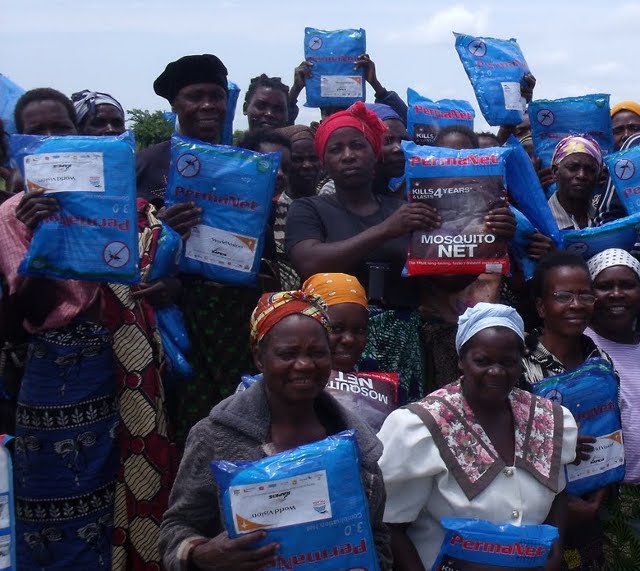
Women posing with their newly donated Mosquito nets

Mr Kalenga issued the directive in Solwezi yesterday during the launch of the 454,815 Insecticide Treated mosquito Nets door to door distribution to be conducted in all the seven districts in the province.
He noted with sadness that according to the 2010 malaria indicator survey results revealed a reduction of 31 percent household ownership and use of ITNs in North-western and 33 percent reduction usage by children under the age of five.
Mr Kalenga urged community leaders such as Chiefs, Headmen and community volunteers to emphasise messages that promote and increase awareness on the correct usage of the nets at household level.
He added that there is need to encourage positive behaviour change on the use of ITNs correctly and consistently if the malaria related Millennium Development Goal is to be attained.
Speaking at the same function, Anglican Church Central Africa Archbishop Albert Chama said the church will continue partnering with government in ensuring that the country attains a malaria free status.
Zambia Anglican Council and Society for family Health has partnered with government to distribute the long lasting ITNs procured by the global funding to communities in the province as a malaria prevention intervention.
http://www.lusakatimes.com/2011/07/10/mosquito-nets-reportedly-catching-fish-making-wedding-dresses/

Friday, 17 June 2011

MALNUTRITION: Harvesting Momentum to Improve Nutrition in Zambia

Rakesh Katal of Concern tells how the program protects crops from natural disasters such as flooding and drought.


Zambia’s economy continues to show encouraging growth, which now stands at seven percent. And in the past year, Zambia’s agricultural sector produced a record food surplus, with a grain harvest of 2.8 million tons that literally overwhelmed storage capacity. This surplus was underpinned by subsidies for small-scale farmers, generous minimum price guarantees offered by the Zambia’s Food Reserve Agency and good rainfall in previous years. Nonetheless, the very poorest and most vulnerable families are still struggling to survive.
The terrain in remote areas of Zambia is rough; to reach communities you must cross rivers, wetlands and vast swathes of sandy territory. Concern is the only development organization working in some of these remote areas, such as districts in the Western Province.
These districts are characterized by poor infrastructure, few or no services, and high dependency on natural resources for livelihoods. The soil and forests are under tremendous pressure from very heavy use, as well as from droughts and flooding.
Reaching marginalized groups and implementing programs at the required scale to alleviate poverty is a challenge: our human and financial resources are stretched to capacity. But we have evidence of what works—and we know that adequate investment in interventions in nutrition, livelihoods, and agriculture would significantly reduce poverty and hunger.
Concern is showing farmers how to restore the soil and at the same time diversify their crops to provide better nutrition for their families and produce a surplus that they can sell in the marketplace. We work with communities to set up natural resource committees and natural resource “user groups,” whose initiatives—in conjunction with efforts by local state officials—include canal clearing to prevent flooding. We have also prioritized establishing disaster management committees in communities to protect against future damage from droughts and floods.
We face significant obstacles, but I see signs of progress and momentum every time I visit a farming village. I know that what we’re doing works when a farmer shows me how his harvest and income have improved, and when a person living with HIV is no longer isolated because she has access to support groups and a source of income to live a healthy and productive life. I have seen communities minimize their vulnerability to disasters, and begin to view themselves as participants in development, rather than as passive recipients.
As I prepare to attend the upcoming “1,000 Days to Scale Up Nutrition for Mothers & Children: Building Political Commitment” meeting in Washington, D.C., I am excited to join civil society leaders and government officials to rally greater investment to save lives. I welcome this opportunity to share experiences and ideas for supporting the SUN Roadmap.
I hope to act as a voice for people like Wamunyima Iluya, an extremely poor farmer in rural Senanga District. He shared his story of change with me, saying, “Before, we were farming according to tradition, but we have learned ways to improve harvests and make farming a more profitable business.”
Beyond the June 13th meeting, my team and I will continue to work at national level in Zambia, collaborating with Government agencies such as the Ministry of Agriculture and Cooperatives, the Ministry of Health, and the National Food and Nutrition Commission (NFNC). For instance, the NFNC is developing Zambia’s new Food and Nutrition Strategic Plan, a policy dialogue in which Concern actively participates.
These are exciting and encouraging times in Zambia in terms of nutrition. Under the Sixth National Development Plan, the Zambian Government aims to “improve the nutritional status of the Zambian population through the provision of quality nutrition services and increased availability, access and utilization of quality and safe foods.” Concern is committed to playing its part in making this aspiration become a reality.
In collaboration with local partners, the Government, and the International Food Policy Research Institute (IFPRI), Concern has launched the “Realigning Agriculture to Improve Nutrition (RAIN)” project, which targets women farmers and will help improve their nutritional status, as well as that of their families. The project is directly linked to the interventions outlined in the SUN Roadmap: working to prevent undernutrition and stunting by focusing on the critical 1,000 days from pregnancy to age two. We will share learning and evidence from this project on how best to link agriculture and nutrition with the international community.
My hope is that Concern’s programs contribute to efforts that make the growing international commitment to scale up nutrition a reality.
http://povertynewsblog.blogspot.com/search/label/Zambia

Saturday, 7 May 2011

MALARIA: Zambia: Door-to-door bednet distribution

Cecilia Katebe, Zambia National Malaria Control Centre Zambia uses community volunteers to help hang millions of bednets in homes to improve utilization rates.
Zambia’s National Malaria Control Programme (NMCP) is expected to distribute over 5 million nets in 2011, of which approximately three-quarters shall be distributed using the door-to-door distribution strategy in an effort to increase the usage of the nets being distributed. The remaining quarter will be distributed to pregnant women and children under five years of age through antenatal clinics. A high percentage of people in Zambia own bednets because of the government’s ongoing efforts to scale up the distribution of malaria control interventions, which, in addition to bednets, include indoor residual spraying and effective medicines. Though 64.3 percent of households own at least one bednet, the 2010 Malaria Indicator Survey (MIS) determined that only 42 percent of people were actually using the nets. The NMCC conducted a survey and found that there were a number of reasons for the low utilization rates. Many people said that they weren’t using the nets because they didn’t know how to hang them or they didn’t have the accessories to hang them; others said that they only use the bednets in the rainy season when mosquitoes are very visible.
The door-to-door campaign was launched in 2009 as a means of increasing utilization rates. During the campaign, Community Health Workers, Neighborhood Health Committee members, and other trained volunteers take the nets right up to individual houses and ensure the nets are hung properly before leaving the household. This also provides an opportunity to share important messages on malaria prevention and control.
In November 2009, a door-to-door distribution pilot was conducted in Chongwe District of Lusaka Province and a follow-up survey found that about 93 percent of households that had received nets during the pilot were using those nets. Based on these excellent results, it was decided that the door-to-door distribution strategy would be used to distribute the all the nets received in 2011.
During this year’s mass distribution, one volunteer will be responsible for 20 households in a village and, whenever possible, a volunteer will be chosen that also lives in the village and is a member of the community. This is really useful for several different reasons: the family will already know and trust the volunteer, they will be more likely to be honest about how many nets they need, and they will be more likely to allow them into their bedroom to help hang their nets. There is a high demand for bednets, but the challenge is being allowed into a bedroom to help hang a net. To address this issue, we’ve engaged traditional leaders to help people understand why this is important. The volunteers will then collect the data and bring it to the health center, where it is consolidated and used to determine how many nets a district needs. When the nets arrive, the volunteers will go back to the houses and distribute the nets, helping to hang them in each sleeping space in a household. To do this sort of distribution requires a massive effort with many people participating, so training is key.
Each volunteer visits the same house several times throughout the year. During their first visit, they note the number of sleeping spaces, how many people live in each house, and how many existing nets they have. An ITN database at the central level details all the nets that have been delivered to every district, the type of nets, the program under which the nets were distributed, and the month when the nets were received. This information is used for planning purposes and can produce a forecast that reveals areas of critical need.
Trainings for the upcoming distribution are started when it’s known that a shipment of nets is coming. Districts in need are then identified and a meeting with local stakeholders—including malaria task force committees, ministries, nongovernmental organizations, churches, and local leaders—is arranged. It is important to make sure the district office, with the support of the local partners, is able to handle the storage, distribution, and information-sharing once the nets are received. Health center staff, neighborhood health committees, relevant trainers, and door-to-door distribution volunteers are then trained. Through a strong partnership, coordinating body, and dedicated volunteers, millions of nets will be distributed this year and the work to protect Zambians from malaria will continue.
Door-to-door mass distribution is just one of the ways nets are distributed in Zambia. They are also distributed under the Malaria in Pregnancy Programme through antenatal clinics to pregnant women and children under age five, the Equity Programme to vulnerable populations like the elderly and the chronically ill by NGOs through the MOH, and through the World Bank-supported Community Malaria Booster Response programme.
http://www.macepalearningcommunity.org/newsletter_bednets.htm

Sunday, 24 April 2011

TUBERCULOSIS: MCP1 haplotypes associated with protection from pulmonary tuberculosis

Author: Christopher IntemannThorsten ThyeBirgit ForsterEllis Owusu-DaboJohn GyapongRolf HorstmannChristian Meyer
Credits/Source: BMC Genetics 2011, 12:34

The monocyte chemoattractant protein 1 (MCP-1) is involved in the recruitment of lymphocytes and monocytes and their migration to sites of injury and cellular immune reactions. In a Ghanaian tuberculosis (TB) case-control study group, associations of the MCP1 -362C and the MCP1 -2581G alleles with resistance to TB were recently described.
The latter association was in contrast to genetic effects previously described in study groups originating from Mexico, Korea, Peru and Zambia. This inconsistency prompted us to further investigate the MCP1 in order to determine causal variants or haplotypes genetically and functionally.

Results:
A 14 base-pair deletion in the first MCP1 intron, int1del554-567, was strongly associated with protection against pulmonary TB (OR = 0.84, CI 0.77-0.92, Pcorrected = 0.00098).
Compared to the wildtype combination, a haplotype comprising the -2581G and -362C promoter variants and the intronic deletion conferred an even stronger protection than did the -362C variant alone (OR=0.78, CI 0.69-0.87, Pnominal = 0.00002; adjusted Pglobal = 0.0028). In a luciferase reporter gene assay, a significant reduction of luciferase gene expression was observed in the two constructs carrying the MCP1 mutations -2581 A or G plus the combination -362C and int1del554-567 compared to the wildtype haplotype (P=0.02 and P=0.006).
The associated variants, in particular the haplotypes composed of these latter variants, result in decreased MCP-1 expression and a decreased risk of pulmonary TB.

Conclusions:
In addition to the results of the previous study of the Ghanaian TB case-control sample, we have now identified the haplotype combination 2581G/-362C/int1del554-567 that mediates considerably stronger protection than does the MCP1 -362C allele alone (OR=0.78, CI 0.69-0.87 vs OR=0.83, CI 0.76-0.91). Our findings in both the genetic analysis and the reporter gene study further indicate a largely negligible role of the variant at position -2581 in the Ghanaian population studied.
http://7thspace.com/headlines/379706/mcp1_haplotypes_associated_with_protection_from_pulmonary_tuberculosis_.html

Sunday, 17 April 2011

POVERTY: Coca-Cola, SABMiller Now Measure Poverty Footprint


Leon Kaye : April 12th, 2011

Coca-Cola/SABMiller employees in Zambia, from SABMiller.com

Many multinationals have measured their carbon footprint and have assessed everything from their greenhouse gas emissions to how to streamline energy efficiency throughout the supply chain. Coca-Cola and SABMiller the past few years have taken a hard look at their water footprint–in Coca-Cola’s case, they have worked on water restoration projects on some of the world’s largest rivers; SABMiller is an example of how beer companies strive to improve their bottling plants’ water efficiency while struggle to achieve similar metrics throughout the supply chain–and in some countries is the bottler of CocaCola products.
Corporate social responsibility (CSR), however, is not just about the environment–that “S” in CSR is easily overlooked, but nonetheless critical. To that end, Coca-Cola and SABMiller, partnering with Oxfam America, recently released a report that measure’s the country’s poverty footprint.
At a higher level, the report both analyzes poverty through the looking glass of five dimensions of poverty. The framework that Oxfam and the beverage giants developed looks at five impact areas: macroeconomic factors, the companies’ value chain, local environmental practices, product development and marketing, and policies and relationships. This report takes those impact areas and evaluates how they affect locals’ livelihoods, health and well-being, gender and diversity issues, empowerment, and workers’ security and stability. Oxfam then applied this poverty footprint management methodology in El Salvador and Zambia. Both countries are similar in their social, geographic, and demographic diversity, and have similar characteristics in the Coca-Cola/SABMiller value chain from raw sugar production to the final consumption of Coca-Cola products.
Dozens of interviews over several weeks churned out some statistics that on one hand are impressive–but on the other show that much work needs to be done. The Coca-Cola/SABMiller value chain is work over US$100 million between the two countries, with 8000 jobs created as a result. The affects on employment magnify when considering that the products are sold in tens of thousands of retail outlets in both countries, most of which are run by women. While Coca-Cola and SABMiller appeared to have paid their fair share of taxes in Zambia and El Salvador, the over value chain could have had a larger impact on both countries. Coca-Cola and SABMiller’s local companies in both countries, however, often bought supplies from outside these countries’ borders because they were not available locally.
While most workers throughout the value chain make more than the national minimum wage, those who work at both ends of the value chain often do not earn sufficient wages to meet their daily needs. Not surprisingly, workers in Zambia’s sugarcane fields are vulnerable because of the seasonal nature of their work, and often lack formal contractual arrangements that would assure more of a fair wage. Farm workers fare better in El Salvador, but retail employees and even shop owners struggle to make a sufficient living.
The Oxfam poverty footprint report is a thorough analysis of the economic impact a large company has on the small countries in which it operates and the effects a large firm’s value chain can have on society. It concludes with two pages of recommendations, centered on enterprise development, women’s economic empowerment, and access to water. Now comes the hard part: following through and applying what the researchers at Oxfam, Coca-Cola, and SABMiller learned.
http://www.triplepundit.com/2011/04/coca-cola-sabmiller-measure-poverty-footprint/

Wednesday, 6 April 2011

POVERTY: ZAMBIA: Fishermen get hooked on farming

Kapoka, 5 April 2011 (IRIN)


 Photo: Guy Oliver/IRIN
A man builds raised beds for crops planted close to the waters of Lake Tanganyika

A village a few hundred metres from Lake Tanganyika, which holds nearly one-sixth of the world's available fresh water, has turned its back on fishing in favour of farming.
In just over two years Kapoka, with around 8,000 people in 1,000 or so households, has forsaken a traditional fishing culture that engaged three-quarters of its economically active inhabitants for generations. They had always cultivated a few crops - cassava, rice, sweet potatoes - now, 90 percent are farming.
Why the switch? "The fish are finished and there is money in farming," David Ngandu, who used to be a fisherman, told IRIN.
The Lake Tanganyika Integrated Management Project (IMP) - sponsored by the UN Development Programme (UNDP) and the Global Environment Facility, an independent fund - wants to alleviate pressure on Lake Tanganyika by reducing overfishing and erosion, which has led to increased sedimentation and pollution, and instead encourage sustainable farming practices.
Zambia's local implementing partner for the IMP is the ministry of tourism and environment, with assistance from the ministries of agriculture, forestry and fisheries.
A UNDP document, Safeguarding Africa's Freshwater Jewel: Lake Tanganyika, notes that the continent's largest body of fresh water is a "closed basin, it takes 7,000 years for water to get flushed through evaporation, making pollution permanent in relation to human life times."
The lake's waters are shared by Zambia, Burundi, the Democratic Republic of Congo (DRC) and Tanzania, with the hub of commercial fishing located in the north Zambian town of Mpulungu. All four countries are part of the IMP, established in 2008 with a US$13 million budget for the pilot phase, which runs until mid-2012.
Zambia receives $2.4 million, plus an additional $400,000 from UNDP, even though its territorial claim on the lake is 6 percent, Burundi's is 8 percent, the DRC controls 45 percent and Tanzania 41 percent.
With fishing it is catch today, sell, and then tomorrow there is no plan but fishing
The lake's biodiversity has few peers - more than 1,500 species of fish, invertebrates and plants - "50 of which are endemic, without close relatives outside the basin due to the very long history of isolated evolutionary processes at work," the UNDP document noted.
The fishing industry brought infrastructural development to Mpulungu, which lies about 10km south of Kapoka. It has an electricity supply - although erratic at times - an established commercial fish-packaging industry and roads that take the produce to large markets, including the Zambian capital, Lusaka, about 1,000km away.

Increasing yields
Kapoka’s community members acknowledge the greatest threat to their increasing agricultural bounty is the poor to non-existent road network, which means produce has to be transported to the nearest markets on foot, by canoe, or pack mule.
They have first hand experience of the effects of poor infrastructure on their produce. Hundred-year-old mango trees provide shade for villagers in the hot and humid lake basin, and in season the fruit carpets the ground more than 30cm deep. Some is eaten, but most is buried to produce compost because the market is too distant through the lack of road systems.
Near the village, Joseph Kalonga, a former fisherman, produced a first harvest in 2009/10 that was so impressive he became a role model for other maize farmers. He said he delivered 5,000kg of maize from one hectare, filling 100 bags with 50kg of maize each, which were sold for 65,000 Zambian kwacha ($14) per bag, a total of revenue of about $1,400. Zambia's average per capita income is $900 a year.
Kalonga has planted three hectares of maize for the 2010/11 season and his plants are standing tall and healthy. If this harvest is as successful as the previous one, he could reap $4,200 - more than four times the country's average per capita income.
"With fishing it is catch today, sell, and then tomorrow there is no plan but fishing. The money from maize gives a plan to plant next year, and plant a bigger area," he said. "Fishing is about catching fish; with farming you can buy fish and still have money for other things."
Parents are teaching their children about agriculture rather than fishing, and the diversity of crops produced by the villagers was in recognition of "climate change - we understand that if sometimes it just rains all the time, than maize will suffer, so we have to grow different crops," another former fisherman, Justin Mwimanzi, told IRIN.
Individual households decide which crops to grow, so the fields around Kapoka have been planted with sugar cane, okra, eggplant, sorghum and beans, as well as the traditional cassava, rice and sweet potatoes. Fallow fields have been planted with soil-improving crops such as Tephrosia Vogelii, an indigenous woody herb that improves soil structure. Its leaves can also be used to make insecticides.
The close proximity of the lake is good for paddy rice, but raised beds are dug against the drainage line for other crops close to the water's edge, so the roots do not become waterlogged, yet run-off into the lake is reduced.

 Photo: Guy Oliver/IRIN
Simon Simwinga, 30, a fish farmer on Vyatala farm, about 17km south of Zambia's port town of Mpulungu, rinses his mouth from his fish ponds

Another villager, Alan Sinkala, has opted for tomatoes, okra and eggplants, all cash crops. A quarter-hectare produces four tomato harvests per year - about 10,000kg - but the two wet-season crops yield the biggest dividends.
Simon Chisulo, the agricultural department’s crop husbandry officer, believes "the economy of the country starts with the household economy." He told IRIN that growing tomatoes in the wet season was very demanding because the hot and humid conditions in the lake basin encouraged diseases.
In the wet season, tomatoes fetch about 2,000 kwacha ($0.42) per kg, compared to $0.17 in the dry season. The annual tomato crop brings Sinkala about $3,000, two-thirds of it from his wet-season crop, despite the costs of fungicides.
Chisulo said not all farmers had adopted the new techniques, such as greater spacing and digging raised beds to ensure roots were above the water table, but the bigger yields of those who had done so provided the best incentive.
A 3.5km gravity irrigation channel, starting from the Izi Falls, situated on a nearby stream, is being built to feed "dry lands" higher up the basin. It will allow the Kapoka community to produce two crops of maize a year.
Pilot plots illustrating various growing techniques include crop rotation and inter-cropping, soil improvement crops and anti-erosion methods like terracing and planting vertiver grass, which has roots up to two metres long that bind the soil, slowing the movement of runoff water along the boundaries of fields. Chisulo said new techniques were being introduced each year, rather than all at once.
Vyatala farm, about 17km south of Mpulungu, has opted for organic farming techniques. "The idea is to reduce the amount of fertilizer required to add to the soil. The [input] subsidies will not continue forever, as you cannot be sure what the next government will do," Chisulo said.

New ventures
Upland rice, a hybrid requiring damp soil rather than a paddy, with turnaround of about 100 days from seed to harvest, is yielding about 60 bags with 50kg each from a one-hectare pilot plot.
Rice is in demand in Zambia and the other states on Lake Tanganyika, where it is taken by boat to the market and fetches at least 200,000 kwacha ($42) per 50kg bag. "It takes about three hours for a hundred bags of rice to be sold at Mpulungu's market," Chisulo said.
The 12 family members on Vyatala farm increased maize production on the same area of land from 150 bags of 50kg each in the 2008/09 season, to 200 bags in 2009/10 and are expecting a harvest of 250 bags in the 2010/11 season. They also started growing upland rice in 2011.
Soil-improving crops such as velvet beans (Mucuna pruriens), hemp and Tephrosia vulgarii are promoted. Simon Simwinga, 30, one of Vyatala's family members, told IRIN that the leaves of Tephrosia vulgarii used to be dried and crushed and then sprinkled into nearby rivers that flow into Lake Tanganyika to kill fish, but this practice had stopped.
The proximity of Lake Tanganyika, the world's second largest fresh water lake by volume, has influenced the diet of communities, and livestock rearing for meat is not widely practiced.
Four fish ponds have been built on the 43ha Vyatala farm, using a 10 million kwacha ($2,100) loan from the IMP, which has a US$300,000 revolving fund to provide loans for sustainable farming projects. It took 19 months to build the ponds by hand, which have been stocked with the Lake Tanganyika spotted bream, which is sourced from a fish laboratory in Kasama, about 200km south of Mpulungu.
The nutrient-rich water from the fish ponds is also used to irrigate fields.
The fish are harvested every three months and sell for between 15,000 kwacha ($3) and 20,000 kwacha ($4) per kilogram. There is a ready market for them in the local community, which is used to relying on fish from the lake.
http://www.irinnews.org/report.aspx?reportID=92380

Wednesday, 30 March 2011

POVERTY: ZAMBIA: Lake Tanganyika fishing industry adrift


 Photo: Guy Oliver/IRIN
Fishermen leave the northern Zambian town of Mpulungu for a night's fishing on Lake Tanganyika

MPULUNGU, 30 March 2011 (IRIN) - Fishing for a living on Lake Tanganyika has become a gamble, with the rising costs of fuel and the ever greater distances navigated to catch fewer fish stacking the odds against those working in the industry.
At dusk small fishing groups, comprising four one-man lamp boats carried to the fishing grounds aboard a mother boat, leave the port of Mpulungu in northern Zambia and return at dawn.
As darkness sets in, the lamp boats are deployed about 50 metres from the mother boat, where they float paraffin-powered lights on the surface, attracting zooplankton that in turn lure schools of pelagic fish, such as buka-buka and kapenta, into ring nets, and the catch is then hauled into the mother boat.
The storm that night was anticipated by the fishing crew as it rolled in from the west, but its ferocity was not.
The initial squall almost capsized the mother boat, while a hard rain churned the dark water into a white froth. In a few seconds, rain reduced visibility to a couple of metres and the swamped lamp boats disappeared from sight, while the crew on the mother boat clung to whatever was fixed on the open deck and lightning struck the water.
The helmsmen struggled for 30 minutes or more to start the outboard motor and turn the bow into the rising swell, but the spluttering engine signalled an end to a fishing trip that had managed to catch only enough fish for a single meal for the crew. The next day about 40 fishermen were missing, but it was thought the storm wind had blown the boats and their crews to the shores in a neighbouring country.
Four countries border Lake Tanganyika - Democratic Republic of Congo (DRC), Zambia, Burundi and Tanzania - and share territorial jurisdiction of the world's second largest fresh water lake by volume.

Diminishing returns
Davidson Syapila told IRIN that he started fishing a couple of years ago, when he bought a mother boat, four auxiliary boats with lamps, a reconditioned outboard engine and ring nets, and had repaid the US$2,000 price from catches of kapenta (Stolothrissa tanganicae) and buka-buka, a species of Nile perch, in a few months.
If we catch nothing, then we are paid nothing
Syapila takes 50 percent of the catch to pay for the boats, diesel, paraffin fuel, ring nets, fishing licences and other costs, and the proceeds from the remaining half are split among the crew. "If we catch nothing, then we are paid nothing," he said.
The general consensus among local fishermen, the Zambian fisheries department and commercial fish packaging firms is that there are "good and bad years", and fish stocks are declining, but there is no agreement on why.
Unlike other Zambian lakes, where fishing is restricted from December to February, there are no limitations on fishing in Lake Tanganyika, and the season is determined by other factors.
Using lamp boats prevents fishing when the moon is active, so crews only go out on about 17 days each month, weather permitting.
Large-scale commercial fishing began in the 1960s in Zambia, a decade after similar operations started in the northern reaches of the lake off Bujumbura, capital of Burundi. Zambian commercial fisheries caught a couple of thousand tons of pelagic fish annually, three-quarters of which were kapenta and the balance Nile perch (Lates niloticus).
Commercial fishing operations exported 46.6 metric tons of dried fish from Mpulungu in 2010 and about 74 metric tons of fresh buka-buka, Mpulungu fisheries department told IRIN. Information for industrial exports of fresh kapenta for the year was not available.
Stocks of the three large species of Nile perch - the apex predators - soon dwindled, allowing the smallest of the Nile perches, buka-buka, to flourish and become commercially viable, along with two species of kapenta (Limnothrissa miodon and Stolothrissa tanganicae).

 Photo: Guy Oliver/IRIN
Kapenta from Lake Tanganyika are washed at the Ngwenye market in Mpulungu

Millions of people in the four countries with access to Lake Tanganyika rely on it, and it is estimated about 30,000 to 40,000 catch its fish. A baseline survey in the four countries will determine how many earn a living from the lake and the types of fishing equipment they use, so as to establish uniform regulations and practices.
Daniel Sinyinza, a biologist at the department of fisheries, told IRIN that buka-buka used to be caught throughout the year, "but this started changing in the mid-1990s and now between April and October you don't get buka-buka any more."

Environmental changes
Lake Tanganyika is regarded as one of the world's most biologically diverse lakes and reaches depths of about 1,470 metres, making it the second deepest after Lake Baikal in Siberia. Its waters are stratified with cold bands, a feature of tropical lakes, but below about 250 metres the water is anoxic - devoid of oxygen.
In May, June and July, the southeasterly "kapata" wind blows across the lake, causing "upwelling". This mixes some of the water layers and forces algae into the oxygenated water, which zooplankton then feed off and are in turn are consumed by pelagic fish.
During those months the waters turn green, and some have argued that because "buka-buka are a visual predator" they were not active, and that was why the catches tailed off, but this explanation did not address why they used to be caught during this period in the past, Sinyinza said.
He said the surface water had warmed by as much as two degrees centigrade since the 1960s, and there were some suggestions that the strength of the kapata wind had also decreased, making it more difficult for the lake's colder and warmer layers to mix.
The change in fishing patterns led to a different approach - fishing company trawlers were mothballed and local fishing operators became virtually the sole suppliers of commercial freezing and packaging plants in Mpulungu, which export to markets in Zambia’s Copperbelt Province, the capital, Lusaka, and other urban areas.
Buka-buka have sold for between $1.60 and $1.80 a kilogramme in 2011, while "in other years it used to sell for about 2,000 [Zambian] kwacha [about $0.42] a kilogramme," Sinyinza said, "Less fish, a higher price."
Better prices do not mean greater rewards. Many expeditions end without any profit to pay the fuel costs to fund the next trip, so commercial packaging operations are providing loans to pay for fuel, with a first option on any catches.
While large-scale fishing operations using trawler-type vessels all but disappeared as catches diminished and profits declined, companies had invested hundreds of thousands of dollars in infrastructure, cold rooms, and generator systems to compensate for erratic electricity supplies. Some fishing jobs have been swapped for factory jobs.
There are plans to build a canning factory in Mpulungu and ship the fish to markets in DRC and Tanzania.
Zambia and Burundi hold the smallest territorial claim to the lake, which measures 673km along its north-south axis and has an average width of 50km. DRC controls 45 percent and Tanzania 41 percent, but the focus of commercial activity on the lake is Mpulungu, land-locked Zambia's only port.
"The Congo [DRC] is in complete chaos and doesn't have any chance of organizing anything on water," said a commercial fishing operator. "There is no electricity on the Tanzanian side of the lake and Burundi's fishing industry closed down because of over-fishing."
One fisheries expert said three-quarters of the fish passing through Mpulungu came from waters outside of Zambia's territorial control. Commercial fish buyers told IRIN they did not ask where the fish came from, and were not compelled to do so.
Martin Pearce, a fisheries officer at the Zambia’s department from 1979 to 1991 who still lives in Mpulungu, told IRIN it was important to determine origin to assess fish population levels.
"It is very difficult to control fishing when you have human suffering around the lake. You cannot tell a fisherman not to fish... It's important to control fishing, but even the developed world has had poor results [controlling fishing] one way or another."
The district fisheries officer Lloyd Hambiya told IRIN research, rather than speculation, would determine fishing stocks, including possible hydro-acoustic surveys, following completion of the baseline survey.
"The stocks are dwindling but we need to establish the actual factors leading to that. We need more research," he said.

Destroying the future
A commercial fishing operator told IRIN that "2008 through to 2010 were good years, but 2007 wasn't, and neither is 2011. If fish stocks dried up tomorrow, the whole of Mpulungu would have to be moved."
There are fishing regulations, like a minimum net mesh of 8mm, and a ban on using mosquito nets for fishing, using beach seines, or ring nets from the shore, and “kuntumpuloa”, the practice of chasing fish into nets by banging the surface of the water.
The widespread use of mosquito nets destroys future fish stocks, as the small mesh allows nothing to escape.
"A man came the other day with crates of undersized fish and tried to sell them to me," a manager at a commercial packaging plant told IRIN, "but what I am going to do with it? All I see in the crate is less fish for next year."
Commercial operators supply markets that demand adult buka-buka and full grown kapenta - about the size of sardines - but size is not a consideration at Mpulungu's Ngwenye market and undersize fish are routinely sold.

Measures against illegal fishing
Lousebo Anamunda, a fisheries officer in Mpulungu, told IRIN that in 2010 more than 20 people were prosecuted for fishing without licences or using illegal fishing techniques.
The cost of fishing licences varies from 20,000 kwacha ($4.20) to one million kwacha ($212) per year and commercial packaging operations are charged a levy of 330 kwacha ($0.07) per kilogramme.
I don't have any statistics for this year yet. But by the look of things it is bad
Anamunda told IRIN that only six of the 10 positions in the department at Mpulungu were filled, and their only boat to carry out enforcement of fishing regulations did not have a "very reliable" engine.
The boat checks on regulation compliance about one day a month, and officers visit communities about two weeks of the month to inform villagers of legal fishing techniques and conservation methods.
A backlog in license payments meant the boat "may go out for four days of a month" to ensure that licenses had been paid, she said.
The department had established a conservation committee staffed by volunteers to do spot checks to ensure that undersize fish were not being sold at Ngwenye market, but it was suspended in late 2010.
Anamunda said the unpaid volunteers "were issuing spot fines to offenders rather than confiscating the illegal [undersize] fish so offenders could be prosecuted... and the fines were not given to fisheries either."
"I don't have any statistics for this year yet," she said. "But by the look of things it is bad."
http://www.irinnews.org/report.aspx?reportID=92318

Saturday, 12 February 2011

POVERTY: China's economic invasion of Africa

Xan Rice guardian.co.uk,  6 February 2011

A million Chinese people, from engineers to chefs, have moved to work in Africa in the past decade. How has the trade boom changed their lives?


Chinese civil engineer in Nairobi Photograph: Sven Torfinn/Panos Pictures

Chinese civil engineer Liu Hui, who is overseeing the construction of a highway between Nairobi and Thika.
In December 1999, a 24-year-old Chinese man called Zhang Hao left behind the freezing winter of his native Shenyang city to fly to Uganda. Zhang was nervous. He spoke no English. The journey was not even his idea, but that of his father, who had worked in Uganda a few years before on a fishing project involving the Chinese government.
"If you want to start something – and be the boss – Africa is the place to do it," Zhang's father had told him when he asked for business advice.
Zhang had quit university to travel to east Africa, but he did not need a degree to spot easy money-making opportunities as soon as he set foot in Kampala: goods that were available cheaply in every city in China were either expensive here, or unavailable. He started by importing shoes. Then schoolbags. Then fishing nets, nails and bicycles.
"I imported everything. At that time they needed everything!" recalls Zhang, an affable man with rimless glasses.
His business grew quickly; he made money and local friends. But after a few years he grew weary of the long buying trips to China. So he and his wife bought a large plot of land in Kampala. On it they constructed a spectacular Chinese-Korean restaurant, with private dining areas, karaoke rooms and a giant 500-seat dining hall. To the side of the restaurant they built a bedroom, which became their home. The business prospered, and soon he started additional enterprises including a bakery, a firm selling flat-screen televisions and a security company.
"Chinese don't think, they just try without studying the market too much. Otherwise, the chance is gone," he says.
At the site of each new enterprise, Zhang built a room for his family – he had a son in 2007 – to sleep in. They literally live at work. It has paid off. Zhang says he is now the biggest Chinese employer in the country, with 1,200 local staff. He has even been offered a Ugandan passport, but has refused, just as he has declined to take an English first name.
"I am Chinese, and we need to build a Chinese name here – to let people know that our country is not like before. We are richer, catching up the world."
Few Ugandans need reminding of that. When Zhang arrived in 1999 there were only a few hundred Chinese in the country, including embassy staff. Today, the most conservative estimate is 7,000, from the petty traders who have taken over whole blocks of the central business district to the construction engineers changing Kampala's skyline and the sharp-suited oil executives who frequent Zhang's restaurant. It is a similar story across the continent. Figures are hard to come by, but a decade ago there were probably no more than 100,000 Chinese people working in Africa. Today, there are around a million.
The first Chinese reached Africa nearly 600 years ago during the Ming dynasty, when the armada of admiral Zheng He landed on the Kenyan coast. The next significant arrival was in the early 1900s, when 60,000 Chinese miners worked on the South African goldfields. Half a century on, Chairman Mao Zedong sent tens of thousands of agricultural and construction workers to Africa to enhance ties with countries emerging from colonialism.
But post-cold war migration concerns economics rather than politics. China-Africa trade grew from $6bn in 1999 to more than $90bn (£56bn) in 2009, roughly split equally between imports and exports: Africa's natural resources – oil, iron, platinum, copper, and timber – flowing east to feed China's factories, and finished goods, from flip-flops to trucks, travelling the other way. Last year, the trade is estimated to have topped $100bn. Chinese state involvement in the trade is crucial. Each year Beijing provides billions of pounds in grants and loans to African governments as a sweetener to secure raw material deals or to finance infrastructure projects that could benefit its companies.

That is what brought Liu Hui to Kenya. A slight, 41-year-old civil engineer, he was working for China Wuyi, a state-owned construction firm, in Fujian province in 2006 when he was called into his "leader's" office, and told he was needed on a project to upgrade Nairobi's main airport. Liu had never set foot outside China. He was reluctant to leave his wife and seven-year-old son. He knew as little about Kenya as Zheng He's sailors. "My image was: very poor, dry and hot," says Liu. "But if my company wanted to send me somewhere, what could I have done? You have to show your capacity for work."
On arrival, Liu found that Nairobi was neither dry nor too hot. When the airport contract finished, he was assigned to oversee the construction of a highway between Nairobi and Thika, a pineapple-growing district to the north-east.
Liu lives at China Wuyi's main site office, a four-storey building alongside the highway. Though the commute to work consists of a flight of stairs, the day is long – from 7.15am to 6pm. The pace of work is often frustrating, and can be complicated by language difficulties; Liu speaks in halting English, and knows a few phrases of Swahili. "Chinese work very hard, very quickly," he says. "But here we are training local people to do the work, and if someone does not understand, he works slowly. You have to watch."
Most evenings Liu and his Chinese colleagues – there are about 100 on the road project – watch DVDs on their laptops or chat to family and friends over the internet. But they do get out occasionally, for coffee or dinner in nearby malls. Liu says he intends to return to China for good – his bosses permitting – when the road project finishes, in order to spend more time with his family.
But for Wang Lina, seated in her shop in downtown Nairobi, a few miles away, family is the reason she is here. The child of "normal worker" parents, Wang grew up with few thoughts of leaving Benxi, an industrial town nearly 600 miles north-east of Beijing. But in 2003, when she was 21 and newly married, her husband's uncle approached them with a proposition. A few years before he had travelled to Kenya to set up a home furnishings company. Now his business was expanding fast, and he was looking for family members to help run it. Wang and her husband agreed to join him.
But she missed her friends. In Kenya she could not find any clothes to fit her. She was too shy to talk to local people. So, after a year, she and her husband quit and returned to Benxi. But soon his uncle came calling again, begging them to give it another try.
This time Wang found herself appreciating the upside of living in Nairobi. In Benxi, she had lived in a flat, but was now sharing a large house and garden with two other couples from the extended family. Instead of simply being a cashier in the store, Wang moved into design and sales. She works hard, often seven days a week, but has also found time to enjoy some of east Africa's best tourist attractions – a safari near Mount Kenya, a beach holiday in Zanzibar. She and her husband have saved enough to buy an apartment back home, which is the goal of many young Chinese who take jobs abroad, even though she has no intention of returning soon.
"My friends who now work in Beijing and Shanghai are so tired," she says. "There's no time to relax, it's always faster, faster! Things are slower here, and I like that. No hurry in Africa, that's what they say."
China's move into Africa has not all been driven from the east. Countries such as Uganda have actively courted Chinese companies, to good effect: in 2010 China replaced the UK as the biggest source of foreign direct investment. One of the largest firms to have set up in Uganda is ZTE, China's second-biggest telecommunications equipment company. Zhu Zhenxing, 32, is its MD in Uganda. Growing up in Jiangsu, along China's east coast, Zhu was certain about two things: he wanted to learn English, and wanted to be an international businessman. He was recruited by ZTE at a job fair, with the promise of a job abroad.
"I did not want to stay in my home area, or even in China," he says, puffing on a Dunhill cigarette. "I wanted to experience things, to grow. The further away the better."
So when he was asked to go to Abuja, the capital of Nigeria, Zhu did not hesitate. "Other people said: Africa is like this and like that. But I thought if other humans lived there, I could too."
He learned a lot. The corruption dismayed him. But Zhu liked Nigerians' optimism, "always talking and smiling, not worrying about tomorrow". He was so desperate to prove himself that he nearly burned out. He developed vitiligo, a disorder that causes loss of pigmentation. His face turned white "like Michael Jackson" and he was forced to return to China to recover.
He returned to Africa via Vietnam. In Uganda, he has grown ZTE's business exponentially – the company sold more than 500,000 handsets this year. Zhu looks the modern high-flyer – smart shoes, trousers with a Mont Blanc belt, a dress shirt and trendy black glasses. At weekends he plays golf with clients and Chinese embassy staff. But beyond that his lifestyle is far more modest than that of most expats. He and his staff all live in the same apartment block. A company vehicle takes them to and from work each day. His salary is good by Chinese standards but not comparable with those of his western competitors. Still, he has no complaints.
"We are still working towards being a world-class company," he says. "Our core competency is our low costs, so we must keep expenses down."
If there is one home comfort Chinese migrants in Africa can't do without it is their food. Most companies, including ZTE, bring over their own chefs. Xu Jianwen, 34, is one of them. Raised and trained in Sanhe, in northern China, he was working in a restaurant in Beijing when he heard that the China Road and Bridge Corporation, a state-owned construction giant, was hiring cooks. When he was offered a job in Uganda, his wife, with whom he has a young daughter, protested vehemently. But he won her over when he told her the salary – two and half times what he was earning in China. "Salaries in China are not enough," he says. "I had to come for the money."
His first job was to cook for 20 Chinese workers in Soroti, a small town in eastern Uganda. He had two local assistants but, lacking English, no way to communicate with them. At least the cooking was uncomplicated. Only five vegetables were available locally – aubergine, cabbage, potatoes, green peppers and tomatoes. "And there was no spicy sauce," he says. "I work every day, because people need to eat every day. I wake up at six in the morning and finish at seven. Every day is like that. I rest on Chinese public holidays."
Currently based at head office in Kampala, Xu plans to spend another two or three years overseas, saving all the while for "housing, education and food" for his family. He won't miss the mosquitoes, he says, but he will miss the people. "They are very nice. Friendly to Chinese."
That is not always the case. In parts of southern Africa there has been strong resentment towards Chinese traders, many of whom arrive on tourist visas and stay on illegally. In Zambia, the Chinese managers of a coal mine recently shot two Zambian employees who were protesting over pay, causing anger across the country. And in Sudan and Ethiopia, rebel groups have killed Chinese workers because they view them as proxies of the local government.
In Kenya, home to up to 15,000 Chinese, the main problem for some of the early migrants was a mistrust of their goods. Xu Hui gave up an editing position at the state news agency Xinhua to start a toy-import business in the mid-90s. But when he moved into computers, people did not trust the quality. He resorted to showing potential clients the labels on the computers they already owned that said: "Made in China".
Today Xu runs a successful business importing Great Wall-brand televisions and giant rolls of toilet paper that are repackaged locally. He regards Kenya as his home – he enjoys the "simple, healthy lifestyle", playing badminton at a sports club every week – and only reluctantly sent his family back to China for educational reasons. But though the attitude to Xu's products may have changed, he is aware that western attitudes to China's push into Africa remain largely negative – something he struggles to understand.
"Western countries also buy oil, and have mines around the world. People don't talk about 'grabbing', or 'new colonialism' there. So why is it different for Chinese? We are not sending our armies to places and saying: 'Now sell us this!'" Xu says. "If you can't compete with us, you find an excuse. It's like two children fighting, and the losing one crying to his parent about funny tricks."
In fact, there is competition now on lots of levels. Every month thousands of African merchants travel to cities such as Guangzhou and Yiwu to buy wholesale goods. And other Chinese firms, including state-owned companies, battle for local tenders.
This can be stressful for company managers. Just ask Dong Junxia, an earnest, smartly dressed woman. Since 2008 she has been in charge of the small Ugandan office of the China Railway Seventh Group Corporation, a subsidiary of CREC, one of the world's largest construction companies. She worked on road-building projects in difficult environments in Tanzania and Liberia, with some success. But in Uganda her company had yet to win a large tender. Dong seemed ashamed, and insisted that her name and that of her company stay out of this story.
"I have progressed professionally [in Africa], but suffered loss in being away from my family. In western culture it's different. Being with the family is the priority. Chinese sacrifice themselves for the family. It is hard to decide which is more important."
But a week later she called to say that her name could be used. She sounded exuberant: her company has been awarded a large contract to build a road. "After two years of hard work! You must understand how good that feels."
http://www.guardian.co.uk/world/2011/feb/06/chinas-economic-invasion-of-africa

Friday, 4 February 2011

POVERTY: Putting fraud in global health spending in context


By Michael Gerson michaelgerson@washpost.com

February 4, 2011

Digging in the garden of a health official in Mali, investigators discover more than 30 counterfeit "stamps" used to validate fraudulent invoices to the Global Fund to Fight AIDS, Tuberculosis and Malaria. The inspector general of the fund reports serious corruption in the programs of four countries - Mali, Mauritania, Zambia and Djibouti. A breathless Associated Press story concludes that "as much as two-thirds" of some Global Fund expenditures are being misspent. Germany and Sweden suspend their support. Some conservatives run with the story, which reinforces their preconceptions about foreign aid and fits the need for budget cuts. After all, in this view, two-thirds of Global Fund money is thrown down a rathole of corruption.
When scandals fit preexisting ideological narratives, they assume a life of their own. This particular narrative - the story of useless, wasted aid - is durable. It is also misleading and might be deadly.
The Global Fund controversy illustrates the point. The two-thirds figure applies to one element of one country's grant - the single most extreme example in the world. Investigations are ongoing, but the $34 million in fraud that has been exposed represents about three-tenths of 1 percent of the money the fund has distributed. The targeting of these particular cases was not random; they were the most obviously problematic, not the most typical. One might as well judge every member of Congress by the cases currently before the ethics committee.
The irony here is thick. These cases of corruption were not exposed by an enterprising journalist. They were revealed by the fund itself. The inspector general's office reviewed 59,000 documents in the case of Mali alone, then provided the findings to prosecutors in that country. Fifteen officials in Mali have been arrested and imprisoned. The outrage at corruption in foreign aid is justified. But this is what accountability and transparency in foreign aid look like. The true scandal is decades of assistance in which such corruption was assumed instead of investigated and exposed.
The Global Fund has a difficult challenge. It gathers resources from governments, foundations and individuals but relies on local partners to implement programs. When providing relatively expensive commodities - anti-retroviral treatments or combination drugs for malaria - through relatively unsophisticated structures, there are opportunities for corruption. So the fund audits every grant it makes, requires measured outcomes, cuts off ineffective programs and encourages whistleblowers. It was the United States - the fund's largest supporter - that pushed in 2005 for the appointment of a strong inspector general to fight fraud. He is now doing his job. It would be difficult to make similar claims of accountability for most domestic programs in America.
The response of the fund to these cases of corruption has been, so far, serious. With fraud concentrated in training programs, all training activity has been suspended. Tighter expensing procedures are being implemented. The fund is double-checking expenditures in high-risk countries. It is also proposing an independent review of its financial-control mechanisms. The corruption in places such as Mali is not representative, but it is also not unique. There will, no doubt, be more cases exposed and more reforms needed.
But American policymakers should keep two things in mind. First, the fund is not expendable. It supports about two-thirds of the global effort against malaria and tuberculosis, and about a quarter of the fight against HIV/AIDS. Since 2002, it has helped detect and treat 7.7 million cases of TB, distribute 160 million insecticide-treated nets and put millions of people on AIDS treatment. These are not the results of a fundamentally dysfunctional program.
Second, the fund is the primary method by which America spreads the burden of encouraging global health to other nations. About a third of its funding comes from the United States. The rest is raised elsewhere. If the fund was diminished or discontinued, American health commitments around the world would need to dramatically increase - at least if we want to avoid complicity in a global tragedy.
In a scandal, the first response is anger. In global health, corruption kills. The most important response, however, is to make sure the right people get punished - not an African child who needs a bed net, or the victim of a cruel and wasting disease. They had no part in the controversies surrounding the Global Fund, but depend, unknowingly, on their outcome. An overreaction to corruption can also cost lives.

http://www.washingtonpost.com/wp-dyn/content/article/2011/02/03/AR2011020305176.html

Friday, 28 January 2011

POVERTY: Zambia: Nawakwi ‘salutes’ Rupiah over poverty admission

Masuzyo Chakwe :  21 Jan. 2011,
Nawakwi - economic growth does not match what is happening in the ground Nawakwi - economic growth does not match what is happening in the ground

EDITH Nawakwi has 'saluted' President Rupiah Banda for admitting that the recent economic growth is not translating into significant reductions in poverty.
In an interview, Nawakwi, who is opposition FDD president said it was good that President Banda had started realising what was happening on the ground.
“I salute you (President Banda) and welcome to the club. What are we going to do now that we belong to the same club?” she said.
Nawakwi said the economic growth registered did not match what was happening in the ground.
“People are living in abject poverty. You just need to go to Kuku compound which is water logged and people are living in water,” she said.
Nawakwi said what was happening in the country was growth amidst poverty. She said Zambians were being denied an opportunity to get involved in the development of the country. She cited the construction of the stadium in Ndola which was solely being done by the Chinese.
She said the fact that Zambians were not fully involved meant that the much talked about growth was going out of the country.
Nawakwi said most Zambians were ending up with empty stomachs and most affected were the many young university graduates without jobs.
She said there were many young people who had failed to proceed to grade eight because their parents and guardians could not afford to pay for their education due to lack of jobs.
“Just go to Ng’ombe compound and ask how many are not able to proceed to grade eight,” she said.
Nawakwi said there was need to rethink and redirect the course of development in Zambia. She said the profits that most foreign investors were making were not for the Zambian people and the treasury but went back to their respective countries.
Nawakwi cited mining companies who packed their backs and left when copper prices were down. She said President Banda had to start pleading with them to re-open the mines.
She said countries like Angola and Ghana were developing infrastructure using China but the problem in Zambia was that investment was usually in the short term, looking at what had happened with the mobile clinics.
Nawakwi said if other countries were able to develop infrastructure using the same resources from China, why should Zambia not do the same?
President Banda on Tuesday said Zambia’s recent positive economic growth was not translating into significant reduction in poverty levels.
President Banda said this in a speech read for him by Vice President George Kunda during the Zambia Comprehensive Africa Agriculture Development Programme (CAADP).
President Banda said poverty levels in the country were acute especially in rural areas where the dwellers had been left out of the main economic realm of activities.
On Vice-President George Kunda’s campaigns on tribal lines in Southern Province, Nawakwi said he did not have issues and should not be taken seriously. Nawakwi said Zambia could not afford to have a president from each province.
She said issues of tribalism should be condemned as this could bring about conflicts.
“There is poverty in Lealui, if you look at Western Province, where can you see development?” she asked.
Nawakwi said the government must realise that the people of Western Province had been crying for development for long time.
And commenting on Sata’s call for the opposition to unite, Nawakwi said Zambians first needed to be told what was happening to the pact.
She said Zambians should be told whether there was a pact or not before Sata could appeal to other parties.
Nawakwi said Sata should state what the agenda was for unity so that people could understand where this was coming from.
http://www.postzambia.com/article_image.php?image_type=article&id=17502

Monday, 27 December 2010

Global Fund - timely oversight or trigger happy

Bill Brieger : 26 Dec 2010

In the past year the Global Fund to fight AIDS, TB and Malaria (GFATM) has suspended grants in Mauritania, The Philippines, Zambia, and Mali. In fact one grant to Mali was terminated. Efforts to identify high risk grants are underway.
Some are saying that the Office of the Inspector General (OIG) of GFATM is finally showing some teeth, while others worry that actions to suspend and terminate will harm the very persons that the Global Fund was set up to help. At the recent 22nd GFATM Board Meeting the Executive Director provided the following comments based on OIG work:
Based on recent OIG findings in a number of countries, activities involving cash transfers for training events and associated costs, including per diems, travel, meal and expense payments, are in many cases posing a high risk of misuse
The OIG has identified five countries where measures to protect Global Fund-financed drug shipments from theft need to be implemented
The Secretariat and OIG agree that LFAs have not been sufficiently focused on the identification of fraud risks and actual fraud in Global Fund-financed programs, and may not currently have the capacity to address these risks
Prior to the recent Board meeting, one wonders whether the communication between the Secretariat, the Executive Director and the Office of the Inspector General were clear and efficient. A 6th December 2010 memo entitled “Joint communication on Inspector General matters” mentioned that, “The Inspector General and the Executive Director of the Global Fund have initiated sincere effort towards collaboration to follow up on recent findings by the Inspector General as well as to take steps to permanently strengthen grant oversight.”
The memo concluded that, “The Global Fund, by nature of its mandate, sometimes has to work with entities with weak programmatic and financial capacity, and to operate in environments where there may be a paucity of financial controls and lack of oversight systems. The Global Fund’s risk management systems are constantly improving. Recently discovered fraud has made the Secretariat determined to redouble its efforts to improve these systems.”
In some cases of suspended grants the Global Fund is looking for alternative Principal Recipients to manage the funds or find alternatives to ensure services to those in need do not cease to be served. The concern about the Local Fund Agents is valid since the Global Fund, unlike other international agencies, does not have country offices or provide technical assistance.
Several years ago I worked with a team in Nigeria to design and deliver adolescent and youth peer education on reproductive health through community based organizations (CBOs). The initial effort focused on how to organize and train peer educators and the technical aspects of reproductive health. Eventually it became obvious when one CBO leader was using her personal bank account to keep project funds that the local CBOs needed as much technical assistance in establishing and maintaining proper financial and accounting procedures as they did in organizing peer based reproductive health education.
The Global Fund operates in a scale thousands of times larger that our small peer education projects, but the basic principle remains. Don’t condemn local organizations for poor financial performance if you did not try to help them develop better financial and accountability procedures in the first place.
Currently 22% of grants are considered to be poor performers. Too much is at stake in reaching 2015 and beyond to simply say to poor performers, “sorry, your funds are suspended.”
http://www.malariafreefuture.org/blog/?p=1135