Showing posts with label East Africa. Show all posts

Saturday, 11 February 2012

MALNUTRITION: East Africa: Fears of a new drought as La Niña returns

JOHANNESBURG, 10 February 2012 (IRIN)

 Photo: Kate Holt/IRIN
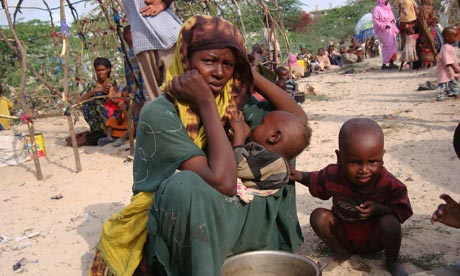
Families queue for food at a feeding point in Mogadishu last year

The climatic conditions linked to the drought in the Horn in 2011 have persisted, and some early warning officials say the aid community should brace themselves for a possible re-run of last year's food crisis.
However, in their forecast, the World Meteorological Organisation (WMO) says they expect the impact of the La Niña to wane over March to May 2012, which is the major rainfall period for pastoral and agricultural areas of northern Kenya, southern Ethiopia, and most of Somalia, accounting for 50-60 percent of annual rainfall.
“That is the official line, but the latest modeling suggests that the [La Niña ] conditions seem quite similar to 2011,” said an early warning official. “The message out there is to be prepared to respond before it is too late.”
La Niña occurs when the surface of the central and eastern Pacific Ocean - the world’s largest body of water – cools, and has a climatic impact in other regions of the world.
According to the Famine Early Warning Systems Network (FEWS NET) , “the western Pacific is currently exhibiting a sea surface temperature and rainfall pattern which is similar to patterns experienced during the drought years of 1984, 2000, 2004, 2007, 2008, 2009, and 2011. This analysis suggests that if these conditions persist, eastern Kenya, southern Somalia, and southeastern Ethiopia may experience dry conditions.”
But the current La Niña is “relatively weaker” than the one recorded in 2011, said Rupa Kumar Kolli, chief of the World Climate Applications and Services Division at WMO.
He noted that the WMO forecast was a global outlook, and various local factors would come into play when looking at the event’s impact regionally. “For instance conditions [temperature and rainfall patterns] in the Indian Ocean would be a factor that would influence rainfall patterns in the Horn.”
The Greater Horn of Africa Climate Outlook Forum, which monitors such local conditions, is meeting from 27 to 29 February in Rwanda and will provide greater forecast clarity, said both Kolli and FEWS NET.
http://www.irinnews.org/report.aspx?reportID=94842

Saturday, 16 July 2011

MALNUTRITION: East Africa food crisis was not inevitable and solutions exist

14 July, 2011 : Ed Pomfret : Oxfam Great Britain
The drought in East Africa is an urgent humanitarian crisis, but one which also highlights the underlying problems people face in having sustainable and affordable access to food.
It was well known that failing rains would affect farmers, pastoralists and other communities, yet governments haven’t done enough to protect them. Now their lives and livelihoods are being devastated.
Those at risk of going hungry haven’t received the help they need through this difficult time, and plans made to protect them were not good enough. Harvests have failed, livestock numbers have depleted and the price of food has risen beyond the reach of many.
But the food crisis in East Africa was not inevitable and the solutions exist to ensure that crises on this scale are avoided. The crisis must be a wakeup call to governments and the international community to address the issues that make people vulnerable to hunger in the first place.
We must plan for the future now. This includes investing in small scale food producers (both pastoralists and farmers), protecting their rights to land and other natural resources, and crucially providing them with the support they need to cope with a changing climate, price rises and other shocks. Communities must have a say in the decisions that affect them, and better support must be put in place to protect vulnerable people. It’s no coincidence that the worst affected by this crisis are those who have been most neglected.
Oxfam is calling for a transformation in the way we grow and share food so that everyone always has enough to eat now, and always. In a world with enough to eat there is no good reason why anyone should go hungry. The problem we need to overcome is the way we grow and share food.
http://blogs.oxfam.org/en/blog/11-07-14-food-crisis-east-africa-grow

Friday, 15 July 2011

MALNUTRITION: Horn of Africa: La Niña blamed for east African drought

Thursday 14 July 2011La Niña blamed for east African drought
Environmentalists call for the development of early warning systems to help countries prepare for adverse weather

  MDG : Drought in East Africa , Kenya
Carcasses of cattle lie on the ground near Lagbogal, Kenya, earlier this week. Scientists are blaming La Niña for the drought, which is the worst seen in the Horn of Africa for more than 60 years. Photograph: Sayyid Azim/AP

As parts of the Horn of Africa experience their driest periods in 60 years, pushing the numbers needing aid to beyond 10 million, some have been quick to blame climate change.
But no single event can be attributed to climate change, which involves long-term (decades or longer) trends in climate variability. There is, however, consensus in attributing the drought to the particularly strong La Niña event. The impact of climate change on the intensity and frequency of La Niña and El Niño in future is unknown.
IRIN spoke to two experts, an environmentalist and a scientist, who have worked extensively in the region.
Philip Thornton, a senior scientist who works part-time with the Nairobi-based International Livestock Research Institute (ILRI) and the University of Edinburgh-based Institute of Atmospheric and Environmental Sciences, has done some pioneering work on projections of climate-change impact in eastern and southern Africa.
He told IRIN via email that projections of the climate change impact in east Africa were "a problem" as the authoritative inter-governmental panel on climate change's (the IPCC) fourth assessment report "indicated that there was good consensus among the climate models that rainfall was likely to increase during the current century.
"But work by other climate scientists since then suggests that ... certain Indian Ocean effects in east Africa may not actually occur.
"Some people think that east Africa is drying, and has dried over recent years; currently there is no hard, general evidence of this, and it is very difficult as yet to see where the statistical trends of rainfall in the region are heading, but these will of course become apparent in time."
The IPCC's fifth assessment report will be released in 2014.
Jan de Leeuw is the operating project leader in the vulnerability and sustainability in pastoral and agro-pastoral systems within ILRI's people, livestock and environment theme. He points out that this La Niña event is one of the strongest since the 1970s. But he says La Niña, along with El Niño, appear in cycles that "we don't understand".
What we do know is that La Niña started to develop in August 2010. It cools surface waters in the central and eastern Pacific Ocean, while allowing warmer water to build in the eastern Pacific. "The pool of warm water in the east intensifies rains in Australia, the Philippines, and Indonesia. Domino-style, this pattern also increases the intensity of westerly winds over the Indian Ocean, pulling moisture away from east Africa toward Indonesia and Australia. The result? Drought over most of east Africa and floods and lush vegetation in Australia and other parts of Southeast Asia," according to the US government's National Aeronautics and Space Administration.
De Leeuw writes: "La Niña events were common from 1950 till 1976. Since then we had two decades [until about 1996] with fewer events of lesser depth. This has changed since then and over the last 15 years or so we have had more frequent La Niña events."
Events as deep as the current La Niña occur once in 20 or 30 years, writes De Leeuw. "We are in a period now of more frequent La Niña events, but such a situation was there from 1950 till 1976 also."
Thornton has the last word when he says research attention must focus on developing effective early warning systems and ways to help people affected by these events, who have no use for "academic" consideration of the linkages with climate change to cope better with the current levels of weather variability, "whatever happens in the future".
http://www.guardian.co.uk/global-development/2011/jul/14/east-africa-drought-la-nina

Wednesday, 13 July 2011

MALNUTRITION: EASTERN AFRICA: Too soon to blame climate change for drought

ADDIS ABABA, 12 July 2011 (IRIN)

 Photo: Jaspreet Kindra/IRIN
Ali Abdi, 60, a pastoralist in Bisle, Shinile zone of Ethiopia's Somali region, says it is the worst drought he has seen in his lifetime

As parts of the Horn of Africa experience their driest periods in 60 years, pushing the numbers needing aid to beyond 10 million, some have been quick to blame climate change.
But no single event can be attributed to climate change, which involves long-term (decades or longer) trends in climate variability. There is, however, consensus in attributing the drought to the particularly strong La Niña event. The impact of climate change on the intensity and frequency of La Niña and El Niño in future is a big unknown.
IRIN spoke to two experts, an environmentalist and a scientist, who have worked extensively in the region:
Philip Thornton, a senior scientist who works part-time with the Nairobi-based International Livestock Research Institute (ILRI) and the University of Edinburgh-based Institute of Atmospheric and Environmental Sciences, has done some pioneering work on projections of climate-change impact in eastern and southern Africa.
He told IRIN via email that projections of the climate-change impact in East Africa were “a problem” as the authoritative Inter-governmental Panel on Climate Change’s Fourth Assessment Report “indicated that there was good consensus among the climate models that rainfall was likely to increase during the current century.
"But work by other climate scientists since then suggests that ... certain Indian Ocean effects in East Africa may not actually occur.
"Some people think that East Africa is drying, and has dried over recent years; currently there is no hard, general evidence of this, and it is very difficult as yet to see where the statistical trends of rainfall in the region are heading, but these will of course become apparent in time.” [see Unpacking La Niña]
The IPCC's Fifth Assessment Report will be released in 2014.
 Photo: ILRI
Rainfall in East Africa related to El Niño Southern Oscillation points to severe La Niña phase

Jan de Leeuw is the operating project leader in the vulnerability and sustainability in pastoral and agro-pastoral systems within ILRI’s People, Livestock and Environment theme. He points out that this La Niña event is one of the strongest since the 1970s. But he says La Niña, along with El Niño, appear in cycles that “we don’t understand”.
What we do know is that La Niña started to develop in August 2010. It cools surface waters in the central and eastern Pacific Ocean, while allowing warmer water to build in the eastern Pacific. “The pool of warm water in the east intensifies rains in Australia, the Philippines, and Indonesia. Domino-style, this pattern also increases the intensity of westerly winds over the Indian Ocean, pulling moisture away from East Africa toward Indonesia and Australia. The result? Drought over most of East Africa and floods and lush vegetation in Australia and other parts of Southeast Asia,” according to the US government’s National Aeronautics and Space Administration.
De Leeuw writes: “La Niña events were common from 1950 till 1976. Since then we had two decades [until about 1996] with fewer events of lesser depth. This has changed since then and over the last 15 years or so we have had more frequent La Niña events.”
Events as deep as the current La Niña occur once in 20 or 30 years, writes De Leeuw. “We are in a period now of more frequent La Niña events, but such a situation was there from 1950 till 1976 also.”
Thornton has the last word when he says research attention must focus on developing effective early warning systems and ways to help people affected by these events, who have no use for “academic” consideration of the linkages with climate change to cope better with the current levels of weather variability, “whatever happens in the future”.
http://www.irinnews.org/report.aspx?reportID=93204

Friday, 1 July 2011

MALNUTRITION: East Africa: 'It's because of the drought'


Andrew Wander  22 Jun 2011


Climate change is causing devastating droughts across East Africa - leading to an end of the pastoral way of life.

Many tribes across East Africa are having to leave their pastoral way of life for urban poverty because of severe droughts [Andrew Wander/Save the Children]

Whether you ask about the carcasses of livestock baked white in the sun, the gaggle of people crowding around the district commissioner's door, or the wards of malnourished children lying listlessly in hospital beds, the explanation given is always the same.
"It's because of the drought", they say.
The failure of rains across arid parts of East Africa has brought misery to millions of people, affecting almost every aspect of life.
In this dry, dusty part of the world, every drop that falls helps people scrape a living from the land. If the rains don't come for a season people go hungry. If they fail twice in a row, as they have in Kenya's impoverished north eastern province, they begin to starve.
At the hospital in Wajir town, the paediatric ward is full of young mothers clutching the tiny, wasted forms of their children.
Doctors estimate admissions for severe malnutrition in children have risen by at least 25 per cent in recent months, and fear that the dozens of referrals they have seen could be the tip of a large and deadly iceberg.
"Some parents are reluctant to bring their children to the hospital because it is such a long journey, or they don't recognise the symptoms of malnutrition. Some think they can cure the problem by praying - they don't realise the children need treatment. Children could be dying because of this and we wouldn't know about it," says Dr Moses Menza, the chief medical officer at the hospital.
He is talking at the bedside of two-year old Bashara, the daughter of nomadic cattle grazers who wander the desert four hours to the west of Wajir town. There is no need for Menza to explain what is wrong with her; her sunken features and twig-like limbs tell their own desperate tale.
Bashara is here with her grandmother, Amina Mohamed; her parents left her in the village and drove their animals to more fertile ground as the drought began to bite. She should have been safer there than out on the plains, but when the livestock began to die, the villagers found themselves with nothing to feed their families.
As always, it was growing children like Bashara who were hit hardest.
"The animals are the way we earn money and how we get food," Amina says, as she waves the flies off the starving child's tiny face. "Now they have died we have nothing to eat and nothing to sell. We have no milk any more, so we cannot feed the children."
Save the Children has treated thousands of drought-affected children for malnutrition in Kenya alone, and believes that across the region, in neighbouring Somalia and Ethiopia, more than millions of children could be at risk over the next three months.
"When these people lose their livestock, they lose their source of food, their livelihood and their savings in a single stroke," said Matt Croucher, Save the Children's regional emergency manager for East Africa.
"We can only imagine the desperation such families feel at not being able to give their children enough to eat and drink to stay healthy. They need help now, before this crisis turns into a catastrophe."

Changing climate
East Africans are no strangers to drought conditions. Traditionally, the rains here have failed around once a decade, giving communities time to build up emergency stocks and to restore the condition of their livestock on the good years. But for the past decade, droughts have been coming more regularly.
The people here reckon the rains fail one year in every two now; consecutive failings, like this one, have the potential to totally destroy the herds upon which they rely.
With their prime assets gone, they lose both their source of food, and their sole source of income. Their nomadic lifestyle prevents them from growing crops; the animals they graze are their only means to survive. Now it appears that climate change is robbing them of that livelihood.
A study by the US Geological Survey, published earlier this year, linked the increased frequency of drought in East Africa with global warming, suggesting that there is more than bad luck behind the latest wave of hunger sweeping the region.
Faced with a changing climate increasing numbers of pastoralists are leaving the land, settling in permanent communities on the edge of towns like Wajir. A way of life that has persisted for thousands of years is slowly dying out.
Those who leave will find little in the way of work in the towns. That pastoralists are willing to opt for grinding urban poverty over the only work they have ever known is a testament to how bad the situation has become.
For those who remain, the next few months will be critical.
The next rains are not expected until October, and with livestock dying every day, the situation looks set to get worse before it gets better. Aid operations are chronically underfunded; Save the Children has less than half of the money it needs to respond to this crisis effectively.
In rural villages, there are already reports of children dying as a result of the extreme hardship they face.
Abdullah Alnoor lives in the remote village of Haragel, two hours drive from Wajir town. In April his two year-old son, Mohamed, died of pneumonia, after living almost all of his short life under drought conditions. Abdullah blames the changing climate for his son's death.
"He was born in a drought, and his mother was sick while she was pregnant with him. When he was born he was not well; he was a very weak child. Then two months ago he became ill again, and could not survive."
He pauses for a moment and shakes his head before uttering a familiar refrain. "It was because of the drought," he says.

Andrew Wander is Save the Children's emergency media manager and a former journalist with Al Jazeera.
http://english.aljazeera.net/indepth/features/2011/06/2011620123049438790.html

POVERTY: KENYA: Food crisis lands government in the dock

NAIROBI, 31 May 2011 (IRIN)

 Photo: Zahra Moloo/IRIN
Hundreds of Kenyans took to the streets in April 2011 to protest against rising prices (file photo)

Just as it declares a national disaster over drought, the Kenyan government is being sued over its alleged failure to respect a new constitutional right to food.
High prices and poor rains have left some 2.4 million Kenyans at risk of severe food insecurity, according to a report by the Famine Early Warning Systems network (FEWS Net) covering the period between April and September 2011.
"Food insecurity is anticipated to rise, after a brief respite from April through July, due to the impacts of the [expected] poor long rains [September-October]. Heightened food prices, rapidly depleting grazing resources, an expected increase in conflict and likely upsurges in livestock and waterborne diseases could severely accentuate food security per pastoral and marginal agricultural households after July,” the report states.
President Mwai Kibaki declared a national disaster on 30 May, and told cabinet ministers and MPs from the badly drought-affected North Eastern Province, to “expedite the process of availing foodstuffs and other vital supplies".
He also directed the Treasury to facilitate urgent importation of maize - the country's staple - to boost stocks held in Strategic Grain Reserves. These are set to run out in a few weeks, according to the National Cereals and Produce Board.
Kibaki said the Ministry of Water and Irrigation would receive an additional KSh600 million (US$7 million) to fund the drought response, while the Livestock Ministry would get KSh1 billion shillings ($12 million) to help cushion pastoralists’ losses.

Food is a right
Every Kenyan’s right to “be free from hunger, and to have adequate food of acceptable quality” is enshrined in Article 43 of the new constitution, overwhelmingly approved in a referendum in August 2010.
This clause is among several constitutional provisions being cited by the Consumer Federation of Kenya (COFEK), an umbrella group, in the landmark legal case it brought before the high court on 30 May.
"High fuel prices have resulted in very high and unaffordable transport costs … [and] have also resulted in very high and unaffordable cost of basic commodities, including all household goods such as unga [maize flour], the staple diet of a majority of Kenyans," Stephen Mutoro, the federation’s secretary-general, said in a statement to the court.
Heartened by a judge’s granting of urgent status to the case, Muturo told IRIN: “We are upbeat that we will win. A win for us will be a win for Kenyans and a win for the new constitution. We are trying to set a precedent, to tell Kenyans they should not wait for their rights to be given to them on a silver platter.”

Tipping point
"Throughout the world, the relationship between the rulers and the ruled is seeing dynamic change," Aly-Khan Satchu, a Kenyan business analyst, told IRIN on 31 May. "The new constitution was the tipping agent with respect to this in Kenya. The key issue for the Consumer Federation should be to achieve some alleviation at the bottom of the pyramid [the extremely vulnerable]. Urban East Africans spend the highest percentage of anyone in the world on food."
Satchu said the inflationary impact in Kenya was twice as high for those earning $100 or less.
"These price points [kerosene and food] are creating unprecedented stress and I think it's a very poor bet to bet on the tolerance level of the people," Satchu said. "It would be far more intelligent to ameliorate the impact."
Overall, the price of food and non-alcoholic beverages is up 20 percent on a year ago, according to government data.

 Photo: Siegfried Modola/IRIN
Urban East Africans spend the highest percentage of anyone in the world on food, according to an analyst (file photo)

"Food prices are being driven by demand and supply; the supply is capped while demand continues to expand," he said. "Financial speculators have jumped on this trend, further amplifying the acceleration. Fuel prices are the most sensitive to geopolitical risk, especially in oil-producing countries."
Satchu said the country's "food and fuel architecture is outdated and optimized for racketeers and profiteers". He said the government should clean up its “Augean stables because each misspent coin brings North Africa [recent people's uprisings] and a tipping point closer."
In recent years, well-connected businessmen with no milling capacity were granted licences to import subsidized grain, which they went on to sell at vast profits to bona fide millers.

Optimism
However, Michael Makohka, a food security specialist with Farming Support International, a Kenyan-based research and development organization, told IRIN Kenya's precarious food insecurity was not without hope.
He said the expected depletion of strategic grain reserves could be alleviated in about a month when farmers in parts of the country begin to harvest green maize and Irish potatoes.
"Right now, people have started harvesting beans; by the end of the coming month [June], green maize will be ready in lowland areas like the Lake Victoria region and the coastal ecosystems," Makokha said. "This is likely to cushion the impact caused by the acute grain shortage brought about due to the expected exhaustion of the national strategic reserves.”
http://www.irinnews.org/report.aspx?reportID=92857

Thursday, 30 June 2011

MALNUTRITION: African drought pushes Kenya and Somalia into pre-famine conditions

Reuters in Geneva guardian.co.uk, 28 June 2011

Africa drought pushes Kenya and Somalia into pre-famine conditions
UN says that more than 10 million people are affected in areas of Djibouti, Ethiopia, Kenya, Somalia and Uganda


A displaced Somali woman A displaced Somali woman awaits humanitarian assistance from local residents in southern Mogadishu, Somalia. Photograph: Mustafa Abdi/AFP/Getty Images

The worst drought in 60 years in the Horn of Africa has sparked a severe food crisis and high malnutrition rates, with parts of Kenya and Somalia experiencing pre-famine conditions, the United Nations has said.
More than 10 million people are now affected in drought-stricken areas of Djibouti, Ethiopia, Kenya, Somalia and Uganda and the situation is deteriorating, it said.
"Two consecutive poor rainy seasons have resulted in one of the driest years since 1950/51 in many pastoral zones," the UN Office for the Coordination of Humanitarian Affairs told a media briefing. "There is no likelihood of improvement until 2012".
Food prices have risen substantially in the region, pushing many moderately poor households over the edge.
A UN map of food security in the eastern Horn of Africa shows large swathes of central Kenya and Somalia in the emergency category, one phase before what the UN classifies as catastrophe/famine – the fifth and worst category.
Child malnutrition rates in the worst affected areas are more than double the emergency threshold of 15 per cent and are expected to rise further. High mortality rates among children are also reported.
Drought and fighting are driving ever greater numbers of Somalis from their homeland, with more than 20,000 arriving in Kenya in just the past two weeks, the UN refuge agency UNHCR said on Friday. It voiced alarm at the dramatic rise, noting the average monthly outflow had been about 10,000 so far this year.
Almost half the Somali children arriving in refugee camps in Ethiopia are malnourished, and those arriving in Kenya are little better, Byrs said.
UN humanitarian appeals for Somalia and Kenya, each about $525m, are barely 50 per cent funded, while a $30m appeal for Djibouti is just 30 per cent funded, she said.
http://www.guardian.co.uk/environment/2011/jun/28/africa-drought-kenya-somalia-famine

Saturday, 18 June 2011

MALNUTRITION: East Africa faces 'world's worst food security crisis'

8 June 2011


 .Somali women wait to receive food rations in Mogadishu. Photo: February 2011 Some households "are unable to access the basic food supplies",
The world's worst food security crisis is continuing in the eastern Horn of Africa, a US agency has warned.
The Famine Early Warning Systems Network (Fewsnet) said areas of particular concern were in Ethiopia, Kenya and Somalia.
It said large-scale emergency assistance was urgently needed "to save lives and treat acute malnutrition" in the region.
It also stressed that the current humanitarian response was "inadequate".
In a statement, Fewsnet said the eastern Horn of Africa "has experienced two consecutive seasons of significantly below-average rainfall, resulting in one of the driest years since 1995".
It said that crops had failed and local cereal prices remained very high.
"This is the most severe food security emergency in the world today," the statement said.
In southern Ethiopia and some pastoral areas of Somalia, the agency said, "poor households are unable to access the basic food supplies needed for survival".
Fewsnet also said that recent nutrition surveys suggested that global acute malnutrition remained above 20% in the region, and more than seven million people needed humanitarian assistance.
In Kenya, the government has declared the drought and food crisis a national disaster.
In late May, consumers in the country took the government to court in a landmark case, claiming that their constitutional right to be free from hunger had been violated.
Every Kenyan's right to "be free from hunger and to have adequate food of acceptable quality" is protected in Article 43 of a new constitution, approved in a referendum last August.
The BBC's international development correspondent, Mark Doyle, says that in another sign of the severity of the crisis, farmers in the region are so desperate to raise funds that they are selling scrawny livestock - which represent their biggest asset - at low prices.

http://www.bbc.co.uk/news/world-africa-13691898

Tuesday, 31 May 2011

POVERTY: Rising food prices increase squeeze on poor

31 May 2011
Wheat grains 
The price of key crops could rise by up to 180%, Oxfam says Continue reading the main story

Rising food prices are tightening the squeeze on populations already struggling to buy adequate food, demanding radical reform of the global food system, Oxfam has warned.
By 2030, the average cost of key crops could increase by between 120% and 180%, the charity forecasts.
It is the acceleration of a trend which has already seen food prices double in the last 20 years.
Half of the rise to come will be caused by climate change, Oxfam predicts.
It calls on world leaders to improve regulation of food markets and invest in a global climate fund.
"The food system must be overhauled if we are to overcome the increasingly pressing challenges of climate change, spiralling food prices and the scarcity of land, water and energy," said Barbara Stocking, Oxfam's chief executive.

Women and children
World food prices have already more than doubled since 1990, according to Food and Agricultural Organization (FAO) figures, and Oxfam predicts that this trend will accelerate over the next 20 years.
In its report, Growing a Better Future, Oxfam says predictions suggest the world's population will reach 9bn by 2050 but the average growth rate in agricultural yields has almost halved since 1990.
According to the charity's research, the world's poorest people now spend up to 80% of their incomes on food - with those in the Philippines spending proportionately four times more than those in the UK, for instance - and more people will be pushed into hunger as food prices climb.
Chart

The report highlights four "food insecurity hotspots", areas which are already struggling to feed their citizens:
Guatemala, where 865,000 people are said to be at risk of food insecurity because of a lack of state investment in smallholder farmers who are highly dependent on imported food
India, where people spend more than twice the proportion of their income on food than UK residents
Azerbaijan, where wheat production fell 33% last year because of poor weather, forcing the country to import grains from Russia and Kazakhstan; food prices were 20% higher in December 2010 than the same month in 2009
East Africa, where eight million people currently face chronic food shortages because of drought, with women and children among the hardest hit
Among the many factors continuing to drive rising food prices in the coming decades, Oxfam predicts that climate change will have the most serious impact.
Ahead of the UN climate summit in South Africa in December, it calls on world leaders to launch a global climate fund, "so that people can protect themselves from the impacts of climate change and are better equipped to grow the food they need".
The World Bank has also warned that rising food prices are pushing millions of people into extreme poverty.
In April, it said food prices were 36% above levels of a year ago, driven by problems in the Middle East and North Africa.

'Minority profiting'
In its report, Oxfam says a "broken" food system causes "hunger, along with obesity, obscene waste, and appalling environmental degradation".
It says "power above all determines who eats and who does not", and says the present system was "constructed by and on behalf of a tiny minority - its primary purpose to deliver profit for them".
It highlights subsidies for big agricultural producers, powerful investors "playing commodities markets like casinos", and large unaccountable agribusiness companies as destructive forces in the global food system.

Oxfam wants nations to agree new rules to govern food markets, to ensure the poor do not go hungry.
It said world leaders must:
increase transparency in commodities markets and regulate futures markets
scale up food reserves
end policies promoting biofuels
nvest in smallholder farmers, especially women

"We are sleepwalking towards an avoidable age of crisis," said Ms Stocking. "One in seven people on the planet go hungry every day despite the fact that the world is capable of feeding everyone."

'Market works'
However, the report's emphasis on the importance of small farmers was challenged by Nicola Horlick, a leading British investment fund manager who has invested in farmland in Brazil, in a debate with Ms Stocking on the BBC's Today programme.
She said large mechanised farms still provided some job opportunities for local workers and created spin-off industries.
"You cannot reply on a whole lot of smallholders to feed the world - it's not going to work," she said.
"It is really important in my view that we have more investment going into farmland. There are huge tracts of farmland... that aren't being farmed."
She said the market worked because shortages increased potential profits from investing in food, which would in time being supply and demand back into balance.
http://www.bbc.co.uk/news/world-13597657

Sunday, 29 May 2011

MALARIA: Africa


*Kenya: Chase for Profit Hampers Malaria Drugs Subsidy *
On the streets of Nairobi, James Odhiambo goes from one pharmacy to he next in search of anti-malarial drugs marked with the Global Fund's logo of a green leaf. He is looking for this specific brand because he understands that it is more than 10 times cheaper than the same drug produced by different manufacturers.
http://allafrica.com/stories/201105250668.html

* Nigeria: Edo Govt Tasks Women on Malaria Scourge *
Edo State Government has advised women in the state to utilise the insecticide treated mosquito nets that had been freely provided by the government to fight the malaria scourge.
http://allafrica.com/stories/201105250268.html

* Nigeria: Malaria - Yobe to Distribute 1,300 Mosquitoe Nets *
In its bid to control malaria, Yobe State Government is to distribute more than 1,300 Mosquito Nets to the 17 local governments in the state next month.
http://allafrica.com/stories/201105240930.html

* Tanzania: Malaria Test Success Drives Up Antibiotic Use *
Antibiotic misuse has soared in an African capital as an unforeseen consequence of improving the diagnosis of malaria, according to a study.
http://allafrica.com/stories/201105231019.html

* Tanzania: Anti-Malarial Therapy Not to Sell Above Tsh 1000 *
The Government has subsidized the costs for the combine therapy anti-malarial drugs by more than 93 percent. Now its full dose will only cost Tsh 1000.
http://allafrica.com/stories/201105241334.html

* Ghana: Join War On Malaria - Minister Tells Sports Personalities *
The Minister for Youth and Sports, Hon. Clement Kofi Humado, has called on all sporting associations in the country to join the war on malaria to make the quest towards achieving the Roll Back Malaria
(RBM) of near zero death by 2015 a success.
http://allafrica.com/stories/201105241291.html

* Nigeria: Govt to Ban Mono-Therapy Malaria Drugs *
The Federal Government has hinted that in the nearest future, it would ban all mono-therapy drugs used in malaria treatment in Nigeria as they are no longer effective following resistance of the drugs by Nigerians.
http://allafrica.com/stories/201105240732.html

* Kenya: Marginal Profits Hamper Malaria Drug Subsidy *
On the streets of Nairobi, James Odhiambo goes from one pharmacy to the next in search of anti-malarial drugs marked with the Global Fund's logo of a green leaf. He is looking for this specific brand because he understands that it is more than ten times cheaper than the same drug produced by different manufacturers.
http://allafrica.com/stories/201105210027.html

* Angola: Tomboco Registers Over 5000 Cases of Malaria *
About 5,575 cases of malaria, registered from January to March this year, were notified by the health authorities in Tomboco District, northern Zaire Province.
http://allafrica.com/stories/201105231182.html

* Angola: New Malaria Fight Strategy Reduces Death *
The health services in central Huambo province recorded a drop in the rate of death caused by malaria in the first quarter of this year from 222 in 2010 to 58, as a result of new strategies in the fight against the disease.
http://allafrica.com/stories/201105191040.html

* Angola: Technicians Finish Training on Rapid Malaria Test *
About sixteen laboratory technicians from the northern Uige Province finished on Thursday, in this city, a training programme on handling new equipment for testing malaria, ANGOP has learnt.
http://allafrica.com/stories/201105200574.html

* Nigeria: Demystify Malaria Diagnosis And Treatment, Local Experts Urged *
Nigerian medical experts have been urged to demystify the diagnosis and treatment of malaria as part of strategies to reduce the burden of the disease in the country.
http://allafrica.com/stories/201105180136.html

* Kenya: Pneumonia And Malaria Rated Top Killers Last Year *
Preventable malaria defied sustained government efforts meant to keep it at bay to kill the highest number of people last year.
http://allafrica.com/stories/201105180003.html

* Nigeria: Lasg, NGOs Walk Against Malaria *
As part of activities to mark this year's World Malaria Day, the Lagos State Ministry of Health in collaboration with health related NGOs held a walk and free malaria screening/awareness creation exercise
which took off from Maryland and culminated at Kosofe Local Government Area Headquarters.
http://allafrica.com/stories/201105170743.html

* East Africa: Official Calls for Harmonisation of Policies on Malaria *
Member states of the East African Community are urged to harmonise policies to ensure elimination of malaria in the region.
http://allafrica.com/stories/201105160291.html

Saturday, 7 May 2011

POVERTY: 'Push–pull' pest control to reach more African farmers

Mercy Adhiambo : 26 April 2011
Children with napier grassFlickr/ILRI
Napier grass produces a gummy substance that traps freshly hatched stem borers


[NAIROBI] A farming technology that uses intercropping to repel insect pests from food crops has been given a new lease of life by a programme to expand its uptake.
The 'push–pull' strategy intercrops cereals with a repellent plant bordered by an attractive trap plant. For example, maize can be intercropped with desmodium, which repels ('pushes') pests such as the maize stem borer away from the crop, and bordered by Napier grass, which lures ('pulls') stem borers so they lay their eggs in the grass instead of the maize.
Napier grass also produces a gummy substance that traps freshly hatched stem borers so only a few survive to adulthood.
Since its development in 1997, the technique has helped nearly 40,000 farmers in East Africa. Maize yields have increased by up to 3.5 tonnes per hectare, bringing 300,000 people out of hunger and poverty, according to the International Centre of Insect Physiology and Ecology.
The centre has now launched a project to disseminate the technique more widely and to find new push and pull plants with drought and temperature tolerance.
The Adaptation and Dissemination of Push–Pull Technology (ADOPT) initiative, launched last month (30 March), will benefit a further 50,000 farmers living in dry areas vulnerable to climate change in Ethiopia, Kenya and Tanzania. ADOPT has received €2.9 million (US$4.2 million) from the European Union.
"Push-pull is a modern conservation agriculture technology that does not require the use of insecticides or pesticides," Zeyaur Khan, the project's principal investigator, told SciDev.Net. "We hope to have about one million households benefiting from the technology by 2020."
Khan and colleagues developed the low-cost technology in collaboration with Rothamsted Research, United Kingdom, and various national programmes in East Africa.
Kenyan farmer Remjus Bwana said the technology has made his farm more productive. "After adopting this technology, I have seen a remarkable improvement," he said.
However, both desmodium and Napier grass struggle in dry conditions.
"We have started doing new research that will enable us get new species of trap and repellent plants that can withstand high temperature and drought conditions in arid and semi-arid areas of Africa. We are collecting desmodium seeds and grasses from different parts of Africa to see which ones are more resilient," said Khan.
But Ken Giller, a plant scientist at Wageningen University, the Netherlands, said that claims about the push–pull system are overstated. "I do not think that they have yet seen sustained adoption — just farmers experimenting with the technology," he told SciDev.Net.
"Climate change in East Africa is indicating a wetter climate, rather than drier," Giller said. He added said that rigorous adoption studies should be carried out before promoting such technologies.

(Informed) Comment
anjorin, Unibuja, nigeria ( Nigeria ) 4 May 2011
Do not be deceived. This cultural method is an insufficient and unreliable method of insect pest management. Integrated Pest management is more sustainable.
DR .S.T. Anjorin: Plant Pathologist, University of Abuja. Nigeria
http://www.scidev.net/en/news/-push-pull-pest-control-to-reach-more-african-farmers-1.html

Sunday, 10 April 2011

POVERTY: KENYA: Livestock dying as drought deepens

ISIOLO/MANDERA, 6 April 2011 (IRIN) -

 Photo: Melvin Chibole/ActionAid : Acoording to a recent UN assessment, the drought ravaging East Africa has left eight million needing food aid

Thousands more heads of livestock have died in Kenya’s arid Northeastern province as La Niña drought conditions worsen and water shortages become more acute.
Drought monitoring and assessment reports indicate that the hardest-hit areas are Marsabit, Moyale and Mandera. Livestock farmers in the three regions have lost more than 17,000 animals since January, according to officials from the Kenya Red Cross Society (KRCS) and the government’s Arid Lands and Resource Management Project (ALRMP).
Mass deaths of livestock began in February, but the average daily loss of animals has risen in the last three weeks as crucial water sources dried up. Many of the remaining water sources are contaminated, leading to increased incidents of water-borne diseases such as typhoid, amoeba and diarrhoea.
A recent assessment by the UN found that the drought ravaging East Africa had left eight million needing food aid, 1.2 million in Kenya.
KRCS Marsabit coordinator, Abdi Malik, told IRIN that many families are becoming increasingly vulnerable to hunger and hardships related to the crisis. “The most recent assessment conducted on the drought clearly shows that the situation is very serious compared to conditions in January,” he said. “More than 70 percent of an estimated 300,000 people are affected now and the figure will rise unless it rains. We expect more animal deaths. Thousands are weak and the few water sources are drying up. Pasture everywhere is exhausted.”
He added that the water shortage and depletion of boreholes had led to a mass migration of pastoralist families from Marsabit and Moyale to Forole in Ethiopia. He said the Red Cross was providing water to primary schools to prevent their closure and to support supplementary feeding programmes.
Jirma Duba, a resident from Marsabit, said water shortages had caused deadly conflicts. Fighting between the Rendille, Borana and Gabra communities over scarce water sources and grazing areas have resulted in the deaths of 12 people. A number of resource-related killings was also reported along the Isiolo and Samburu borders.
Thousands of residents from Mandera have also migrated from grazing areas and trading centres, according to the Rural Agency for Community Development and Assistance (RACIDA). Mohamed Dualle, coordinator of RACIDA, fears the situation will be even worse in April.
“We have not received a single drop of rain and yet the rains were expected two weeks ago. We are faced with a humanitarian crisis. A significant number of deaths, mainly of children, pregnant women and elderly people can be attributed to hunger, dehydration and lack of water,” he said. “Banisa, a rich grazing area and a trading centre with more than 18,000 people and surrounded by 16 villages, is almost deserted now. The only dam which has served the whole population for last seven years dried up last week.”
He added that livestock owners with large herds of animals had migrated to the nearest water point, 123km away, and livestock traders that have lost their businesses are also likely to move.

 Photo: Anthony Morland/IRIN :
Migration of pastoralists with their livestock has led to a shortage of animals in local markets

Rising prices
The World Food Programme (WFP) has appealed for more funds to deal with the crisis in the coming months. Josette Sheeran, the director, said WFP “has only 44 percent of the resources it needs to feed 5.22 million people in Kenya, Somalia, Ethiopia, Djibouti and the Karamoja region of eastern Uganda from April to September”.
An increase in staple food prices, particularly in far-flung areas, has worsened the situation in Kenya, according to ALRMP: 1kg of beans in Sericho, Isiolo, has increased from 50 shillings to 80 shillings (US60 cents to about $1) since January and milk has risen from 40 shillings (50 cents) per litre to 60 shillings (72 cents) per litre.
Mass migration of pastoralists with their livestock has led to a shortage of animals in local markets, triggering a price increase and a loss of income for those whose livelihoods depend on the trade. In Mandera, Wajir and Garissa, households have had to sell three to four goats to purchase a 90kg bag of maize, rather than the average of one or two goats.
Hussein Ali, a local leader and an elder from Jericho, said water was even more costly than food in the area. “A 20l can of water is selling at 60 shillings. It’s more expensive than a kilo of maize flour,” said Ali. “A number of families have sent their children to the Daadab refugee camps to be registered as aliens from Somalia in order to get relief food.”
The UN Office for the Coordination of Humanitarian Affairs said drought conditions, once periodic in nature, had now become a “predictable emergency” and an emergency response was no longer sustainable. Pastoralist leaders said large-scale measures adopted by the government to address the crisis were insufficient and unsuccessful.
http://www.irinnews.org/report.aspx?reportID=92393

Monday, 28 March 2011

MALNUTRITION: Geneticists and smallholders in quest for perfect cattle for East Africa

Maina Waruru : 24 March 2011
Kenyan cow The majority of smallholders in East Africa lack access to the best quality breeds
Flickr/angela7dreams

[NAIROBI] Dairy farmers in East Africa could soon benefit from superior, affordable cattle breeds through a US$1 million research project.
The Dairy Genetics East Africa (DGEA) initiative aims to help smallholders take full advantage of the region's booming dairy sector and improve their incomes by giving them access to top quality breeds better suited to their local environments.
The International Livestock Research Institute (ILRI) will collaborate with the University of New England, Australia, and non-profit consulting firm PICO Eastern Africa (PICOTEAM), to collect information from Kenyan and Ugandan farmers about which breeds they prefer and why, and collect genetic samples from the animals those farmers currently own.
DGEA will also examine environmental factors such as rainfall and water availability, temperature and available feed resources, to match breeds to local ecological zones.
At the end of the three-year project partners hope to develop a business plan in collaboration with the private sector, through which better quality animals will be bred and sold to smallholders at affordable prices.
"This innovative idea seeks to address historical constraints to dairy development in East Africa more broadly," said Ed Rege, a project leader at PICOTEAM.
The majority of smallholders starting dairy farming or wishing to breed or replace their cows do not have access to breeds that best match their production environments, said Okeyo Mwai, the project's coordinator at ILRI.
Many farmers also lack evidence-based knowledge about which breeds are most appropriate for their production systems or where to obtain them, he said. They usually buy new cattle from their neighbours or large commercial farms — but these are often ill-suited to their local conditions, he added.
"This project aims to use on-farm data to assess the performance of the various dairy cattle genotypes, in order to determine how they perform under a range of farm conditions," said Mwai.
Mathew Kibaara, a private veterinary practitioner and Kenya's former deputy director of veterinary services, welcomed the initiative but warned it would take more than the planned three years to produce results.
"Three years is not adequate to carry out a field study on the cows kept and reasons for preferences, conduct genotyping to come up with improved breeds and have them ready for sale," he told SciDev.Net.
http://www.scidev.net/en/news/geneticists-and-smallholders-in-quest-for-perfect-cattle.html

Monday, 21 February 2011

POVERTY: EAST AFRICA: La Niña-induced drought “to affect millions”


 Photo: Anthony Morland/IRIN
The the La Niña phenomenon is keeping East Africa drier than usual and has sparked food-security concerns in areas lacking irrigation, including parts of Somalia, Kenya, Ethiopia and Tanzania

NAIROBI, 18 February 2011 (IRIN) - Since November, East African countries have registered serious drought conditions that are likely to worsen in coming months. According to data recently released by the World Meteorological Organization (WMO), the La Niña weather effect is largely responsible.
WMO said the phenomenon might last up to four more months and emphasized that it was already possible to notice “some very dry parts of eastern Africa” amid harsher weather conditions than normal for this time of year.
La Niña is the name given to the cooling of the surface of the central and eastern Pacific Ocean that occurs every two to five years. It keeps East Africa drier than usual and sparks food-security concerns in areas lacking irrigation, including parts of Somalia, Kenya, Ethiopia and Tanzania.
Kenya and Somalia are among the countries already affected. “Some areas in the North are a disaster right now,” said Mohamoud Duale, director of the NGO Rural Agency for Community Development and Assistance (RACIDA). In northern Isiolo, Marsabit, Moyale and Samburu districts, at least 150,000 people urgently need food aid, most of them women, children and the elderly.
Duale was in Nairobi for the media briefing, Drought in Kenya: When will it ever end?, sponsored by Oxfam, Cordaid, Care International, Save the Children, VSF-Belgium and Reconcile.
The assistant minister in the Kenyan Ministry of State for Special Programmes, Mahmoud Ali, was also at the event and stressed that the government was providing food assistance to one million Kenyans while the World Food Programme (WFP) was distributing food to another 1.6 million people.
“The total population affected by the La Niña phenomenon is about five million people, hence the need to provide food to an additional 2.4 million persons,” he added. Ali also pointed out that to minimize the drought effects the government had reallocated KSh9.5 billion (US$118 million) to the affected areas, mainly in northern Kenya.

 Photo: Anthony Morland/IRIN
Officials says at least 150,000 drought-affected people urgently need food aid in Isiolo, Marsabit, Moyale and Samburu districts in northern Kenya

Among the new measures are 57 trucks to assist in the delivery of relief commodities to affected areas, livestock vaccinations, construction of scale pans and dams and distribution of aqua tabs to purify water.

Emergency aid
But, on the ground, people are dealing every day with the drought effects without much change to their situation. “Two deaths from starvation were registered in the North of Kenya recently. People are migrating to Ethiopia or Uganda to survive. It is already a crisis,” said Duale.
Despite being considered one of Africa's leading agricultural nations, drought is not new to Kenya. A drought from 2007 to 2009 led to a spike in food prices and threatened the economy.
In Somalia, water resources and pasture conditions have deteriorated further, triggering more livestock migration and increasing competition among pastoralists. “River levels are currently below-normal for this time of the year and are expected to further decrease until the next rainy season in April,” according to the Somalia Drought Watch Bulletin January 2011, published by the UN Food and Agriculture Organization.
An estimated 2.4 million Somalis require emergency humanitarian assistance because of civil unrest and food insecurity, according to the UN. Another drought is also likely to increase the number of internally displaced persons (IDPs); Somalia already has an estimated 1.4 million IDPs.
“We have to act first, instead of reacting. There will be more droughts in the future, but they do not have to bring disaster. We need to tackle drought before it starts, not wait until it is too late and people are already suffering,” said Safia Abdi, programme officer at Cordaid.
In Ethiopia, the National Meteorology Agency reported that a “moderate to strong” La Niña phenomenon was likely to continue, potentially until June, resulting in below-normal rains in many areas, except in the west and southwest, where they are expected to be normal.
Tanzania, the second-largest economy in East Africa, is also starting to feel the effects. This week, the government extended nationwide power rationing. The Energy and Minerals Minister William Ngeleja told parliament that rationing was expected to end in January, but falling water levels at hydropower stations had increased the power deficit. Most of Tanzania’s electricity is hydropower-generated. Some lawmakers considered the shortfall a “national crisis”.
http://www.irinnews.org/report.aspx?ReportID=91966

Wednesday, 15 December 2010

MALARIA: Uganda Malaria Indicator Survey shows progress - is it enough?

 Bill Brieger : 14 Dec 2010

The Uganda Malaria Indicator Survey for 2009 is now available for reading. The report helpfully provides charts that distinguish levels of key indicators from the 2006 Uganda Demographic and Health Survey with the current data. While there has been clear progress, most indicators fall below the 80% targets set by the Roll Back Malaria Partnership for 2010.

uganda-mis-2009-nets.jpg

The chart of the right shows that sleeping under any insecticide treated bed net the night prior to interview tripled for children under five years of age and quadrupled for pregnant women, the 2009 levels do not achieve RBM goals. Even when one looks only at households that actually possess these treated nets, one finds that use is less than ideal.


The report provides some reasons for low net usage…
The most common reason cited for non-usage was that the net was not hung (58 percent of households), especially in North East region (99 percent). Sixteen percent reported that the net was not used because it was too hot, and 11 percent said the net had too many holes or was too old.
There were also wide variations in ownership and use across different parts of the country, meaning that program managers need to look more indepth at possible regional factors that discourage access to and use of nets.
The East African countries were among the pioneers to introduce intermittent preventive treatment with sulphadoxine-pyrimethamine for pregnant women. Again we see that RBM targets are far from being met in Uganda, although progress over 2006 is evident.

16% of pregnant women got two doses in 2006
45% got one dose in 2009
32% got two doses in 2009
95% of pregnant women attended ANC with a skilled provider at least once in 2009

Clearly problems of procurement, supply and stock keeping and missed opportunities are preventing achievement of this goal.
The malaria case management picture was not cheering. Among children under five years of age with a reported fever in the two weeks before the survey …
60% took any antimalarial drug
23% of took an ACT
14% took ACT same or next day
Chloroquine and SP were still being used
Uganda is not in a unique situation. Even countries benefiting from the Global Fund, the US President’s Malaria Initiative and other major partners like Unicef, DfID and the WOld Bank are having a challenging time with managing commodities, improving service quality and attracting clients to avail themselves of malaria services.

2010 ends in 17 days. How many places will have achieved the RBM 80% targets? More importantly, what can the international partnership do to meet the needs?
http://www.malariafreefuture.org/blog/?p=1115

Sunday, 29 August 2010

MALARIA: East Africa’s Operation Mamba III bolsters fight against counterfeit medicines

A combined international operation across East Africa targeting counterfeit medical products and pharmaceutical crimes has resulted in the seizure of at least 10 tons of counterfeit and illicit medical products and more than 80 arrests of individuals suspected of involvement in the illegal manufacture, trafficking or sale of counterfeit and diverted medical products.
Involving police, customs and drug regulatory authorities across Burundi, Kenya, Rwanda, Tanzania, Uganda and Zanzibar, Operation Mamba III (July-August 2010) was co-ordinated by INTERPOL and undertaken under the umbrella of the World Health Organization’s (WHO) International Medical Products Anti-Counterfeiting Taskforce (IMPACT). Forensic assistance was provided by the laboratories of the Singaporean Health Science Authority, and the operation also included support from the World Customs Organization. It was the third such operation in as many years aiming to curb the manufacture and distribution of counterfeit medical products in East Africa.
The head of INTERPOL’s Medical Products Counterfeiting and Pharmaceutical Crime (MPCPC) unit, Aline Plançon, said that stemming the tide of fake, dangerous and diverted medical products required close collaboration between the health sector, law enforcement, international organizations and non-governmental organizations. She encouraged in this area ‘the development of a more systematic exchange of information to pool expertise, experience, resources, intelligence and technical support’.
“Operation Mamba III demonstrates that by working together collectively, countries can take concrete action on the ground to curb a crime that is still low-risk and high-profit for the criminals involved while representing a very real danger to the general public.”
The two month-long operation saw some 300 premises checked or raided across the participating countries and investigations are still on-going following the seizure of counterfeit essential medicines such as vaccines, anti-malaria drugs and antibiotics. Law enforcement agents also seized significant quantities of government medicines that were diverted to illegal re-sale markets.
With counterfeit and unregulated medical products becoming increasingly prevalent, sophisticated and dangerous to the public worldwide, particularly in Africa, “Operation Mamba III will also have served as a necessary platform to build up the awareness, resources and educational efforts which will play an essential role in making significant progress against counterfeiters in the coming years,” continued Aline Plançon, adding that the East African Community Secretariat had a key regional role to play in this respect.
Representatives of the participating countries will meet in Zanzibar next week (1-2 September) in order to review and draw on the results of Operation Mamba III, and to further harmonize the region’s approach against counterfeit and unregulated medical products.

http://www.interpol.int/Public/ICPO/PressReleases/PR2010/PR065.asp

Friday, 20 August 2010

MALARIA: Can Malaria Be Beaten?

Jeremy Laurance 05 Aug 2010 The Independent
When I see a packet of malaria pills I think of that famous Clint Eastwood line from Dirty Harry, delivered as he pointed his .44 magnum at a bank robber and neither of them could remember how many shots he had fired, or whether there was still one left in the chamber. "The question you have got to ask yourself is: do I feel lucky? Well, do ya, punk?"Actually, I do. Lucky enough not to have to take the nasty, expensive little things on my periodic visits to Africa and other malarial parts of the world. Now I find myself being asked to reconsider after X Factor star Cheryl Cole's unpleasant encounter with a mosquito in Tanzania. Such is the power of celebrity.I based my view on a Lancet paper published in the 1990s by London's Hospital for Tropical Diseases which assessed the chances of contracting malaria, for those not taking prophylactic drugs, at 0.6 per cent for an average two-week holiday in East Africa. The authors described this as "high" and in public health terms I suppose it is - the Health Protection Agency points out that more than 1,500 people are diagnosed with malaria in the UK each year having acquired it abroad.But it didn't seem high to me - and I disliked the way commercial travel clinics pushed expensive injections and other protective measures at frightened travellers without quantifying the risks. So for the last 15 years I have followed a rough rule of thumb: if I am slumming it or travelling into the bush, I take the pills; if I am staying in four-star hotels in town, I don't bother. My impression is that many regular visitors to Africa do the same. Public health doctors may demur - and Ms Cole's story undoubtedly strengthens their case. She had spent only six days in Tanzania and had, reportedly, taken anti-malarial drugs that provide 90 per cent protection. How unlucky is that?Doubly unlucky because - and this is the real story about malaria - in many parts of the world it is declining, rapidly. About 2.5 billion people live in malarial areas around the globe, and the disease kills almost a million of them every year, mostly children. Changes in the incidence of the disease may go unnoticed by tourists but have huge significance for the local population. Now Cheryl Cole, who first visited Tanzania last year on a charity expedition to Mount Kilimanjaro, has helped focus attention on their plight in a way she could hardly have anticipated.In coastal Kenya, not far from where she was holidaying, cases of severe malaria in children have fallen 90 per cent in the last five years. Similar falls have been reported from other locations across Africa and the world.In certain islands in the Philippines malaria has been eliminated. Mexico is said to be close to eradication, and some countries in Central and South America are moving in the same direction. Morocco was recently declared malaria-free by the World Health Organisation, helping boost the tourist trade there.Sub-Saharan Africa, which bears 70 per cent of the disease burden, presents a much tougher challenge. Yet even here there have been spectacular advances, as in coastal Kenya. Last week, the African Leaders Malaria Alliance announced that malaria cases and deaths had been cut by up to 80 per cent in 10 African countries since 2000, including Ethiopia, Ghana, Rwanda, Zambia and Zanzibar.Among malaria specialists, where gloom prevailed a decade ago, the buzzword now is "elimination": no more malaria deaths by 2015 and no more malaria a decade or two after that. As the Lancet noted last month, "previously cautious malariologists, released from a 40-year collective depression... have been invigorated."How has this change of heart come about? Some call it the Bill Gates effect. Almost three years ago, the world's biggest philanthropist threw down a challenge to the global health community to eliminate malaria in his lifetime. Sceptics responded that his dream would only be realised if he were cryo-preserved. Yet his call had a galvanising effect.The Foundation that he leads with his wife, Melinda, has not only given grants of dizzying size to the search for a malaria vaccine, the distribution of bed nets and other measures, it has also brought a new vigour to the entire aid industry. Its speed and flexibility leaves larger bureaucracies like the UN standing, and where it goes others follow. It has been described as a new type of multilateral organisation, introducing entrepreneurial flair to a sector submerged in red tape.Some complain that Gates is seeking to replicate the world domination he achieved with Microsoft in another, albeit altruistic, sphere. These critics say the new entrepreneurial aid business he has spawned is undemocratic, overly powerful, and is leading to empire- building, wasteful competition, fragmentation and duplication. Why should Bill Gates decide which sorts of vaccines get developed? they ask.There is no denying, however, the impact of Gates's interest on the bottom line. Today's funding for malaria, from all sources, exceeds $10bn (£6.3bn) - a hundredfold increase in little more than a decade. Celebrities from Senegalese musician Youssou N'Dour to David Beckham have joined the cause. Politicians Bill Clinton and Tony Blair have become involved through their respective aid foundations, followed by a growing queue of corporate donors and public figures who bring clout, profile and funding. This week, Andrew Mitchell, the International Development Secretary, published the UK's business plan for malaria, opening a consultation on the best ways of supporting the fight against the disease.Malaria - for so long the poor relation to Aids in terms of global attention, despite claiming more lives in many countries - is suddenly glamorous.The tools for elimination are to hand. More than 200m insecticide-treated bed nets have been distributed since 2000, and are estimated to have saved 1m lives, according to the Roll Back Malaria Partnership. Ban ki-Moon, the UN Secretary General, said that with the delivery of a further 150m bed nets by the end of this year "universal coverage of malaria prevention can be achieved". Vast funds have been invested in indoor spraying against mosquitoes, in distributing more effective artemesinin-based drugs against the disease, and in developing a vaccine, with one candidate, made by the UK-based pharmaceutical manufacturer GlaxoSmithKline, in final (phase III) human trials.But meeting Gates's challenge will be a tough task. Optimists, such as Sir Richard Feachem of the Malaria Elimination Group, point to the "shrinking map" of malaria, which included the US and the UK in 1900 (when malaria was endemic in the Kent marshes). Today, 108 countries in the world are malaria-free. One hundred countries have continuing malaria transmission, and of these, 39 are embarked upon malaria elimination. The remaining 61 are striving to control malaria, but it is Feachem's hope that they too can be persuaded to switch to a policy of elimination.The task is immense. In 2008, malaria killed 863,000 people. Almost 90 per cent of those who died were in Africa, and of those, almost 90 per cent were children under five, according to the WHO. Children are especially vulnerable because they have undeveloped immune systems; the WHO estimates the disease kills 3,000 children a day.The world has been striving to eliminate malaria for more than half a century - with faint success. The Global Malaria Eradication Programme was launched in 1955 but it quickly became apparent that its ambition was not achievable in sub-Saharan Africa. In the late Sixties the strategy switched from eradication to long-term control; people with fever caused by the disease were treated with the then standard drug, chloroquine. But as resistance to the drug grew, malaria deaths rose through the 1970s and 1980s. By the early 1990s the strategy was recognised as a disaster.Throughout the 1990s, as nations wrung their hands over Aids, efforts were made to refocus attention on malaria. The world's health ministers launched a global declaration in Amsterdam in 1992 to control the disease, with a focus on Africa. The latest drive against the disease began 10 years ago, when leaders of countries across Africa signed a declaration in Abuja, Nigeria to "halve the malaria mortality for Africa's people by 2010". Initially progress was slow; there were reports that instead of declining, malaria was rising, by up to half in some areas. Accurate figures were hard to come by, and estimates were distrusted. What is not in dispute, however, is that over the last three years things have moved much more quickly, and more consistently in the right direction. The huge rise in the importation of bed nets and artemesinin drugs has saved millions of lives.Controlling malaria has come to be seen as good business, not just good charity. The disease is estimated to cost Africa $12bn a year - 1.3 per cent of its economic growth. If that sum could be saved, it would constitute the biggest boost to health and development in the continent's history. Eradicating disease boosts productivity, creates markets and stabilises governments.The future, however, is anything but certain. Though the 90 per cent fall in children with severe malaria on the Kenyan coast is impressive, the reasons are not obvious. Malaria has been in decline in this area for at least 15 years and some have suggested climate change is a factor. Meanwhile it is rising in upland areas around Mount Kenya, where incidence was previously low. Professor Robert Snow, who reported the Kenyan figures in The Lancet, said malaria had changed "from a major cause of childhood illness and death to a relatively minor problem" on Kenya's coast. But it was simplistic to attribute it to more bed nets and better drugs. "The truth is probably much more complex," he wrote.Critics also question the notion of "universal coverage" with bed nets - expected in Ethiopia and southern Sudan this year and everywhere in early 2011. How many nets can you hang in a small hut occupied by a large family? Some older children are always likely to go without. There have been distribution problems too: the rush to freight in bed nets has left thousands of them sitting in warehouses because there was no means of transporting them over the final miles.Malaria is concentrated around the equator, the "middle, wet bit" of Africa, with just seven countries accounting for two thirds of all cases: the Democratic Republic of Congo, Ethiopia, Kenya, Nigeria, southern Sudan, Tanzania and Uganda. While there have been gains in some, others such as Nigeria have done less well. With a population of 120 million, Nigeria contributes heavily to the global malaria burden.Even where success has been achieved, there is no guarantee it will be permanent. Zanzibar, the island off Tanzania that has become a luxury tourist destination, has eliminated malaria twice before but each time it has been re-imported from the mainland. Kenya has also slipped back, and in Congo the uncertainties multiply.Constant vigilance is essential. That requires stable, committed government. It is not always available. In Uganda, grants worth over $350m were suspended by the Global Fund over allegations of corruption (which are currently before the courts). In Tanzania a grant worth over $100m from the Global Fund was discovered unclaimed last year because it lacked a single signature.Countries worst affected by the disease have been reluctant to buy the new artemesinin-based drugs because of their cost. At $1 to $2 a dose, they are 10 times more expensive than chloroquine. Though funded by aid programmes today, governments wonder for how long that funding will last. There are fears about resistance too, signs of which have emerged on the Thai-Cambodian border. If the artemesinin drugs lose their potency, there is nothing else immediately in the pharmaceutical locker.Eradication may be the only way to combat resistance. The most taxing question, however, and one which divides the malaria community, is what penalties may follow success? Chris Drakeley, director of the Malaria Centre at the London School of Hygiene and Tropical Medicine, points out that enormous funds are required to eliminate the last few cases of a disease - witness polio, still defying efforts to wipe it from the planet."If malaria drops down the Top 10 list of worst diseases, what justification is there for putting in vast resources to eliminate it? In a situation where malaria had been controlled to a low level for a decade, you would have a large group of children with no immunity to the disease. The impact of an outbreak could then be devastating. There is an argument that some level of malaria is quite good - it maintains a level of immunity in the population."The best hope for the future is a vaccine. No disease has ever been eliminated without a vaccine. But malaria is not caused by a simple virus - it is an organism (a parasite) with a nucleus that is more complex than a virus.The front runner is GlaxoSmithKline's RTSS vaccine, currently being tested in 14,000 children in 11 African countries, with results due in 2012. Early trials suggested that it provided 30-50 per cent protection - far from perfect, but a lot better than nothing.Scientists are optimistic that it will provide a useful further weapon against malaria. But there will be many years yet of fighting before the war can be declared won.
http://www.independent.co.uk/life-style/health-and-families/features/can-malaria-be-beaten-2043383.html

Wednesday, 26 May 2010

MALARIA: signifficance of genetic diversity

Background
Populations of East Africa including Sudan, exhibit some of the highest indices of genetic diversity in the continent and worldwide. The current study aims to address the possible impact of population structure and population stratification on the outcome of case-control association-analysis of malaria candidate-genes in different Sudanese populations, where the pronounced genetic heterogeneity becomes a source of concern for the potential effect on the studies outcome.
Methods
A total of 72 SNPs were genotyped using the Sequenom(R) iPLEX Gold assay in 449 DNA samples that included; cases and controls from two village populations, malaria patients and out-patients from the area of Sinnar and additional controls consisting of healthy Nilo-Saharan speaking individuals. The population substructure was estimated using the Structure 2.2 programme. Results & Discussion The Hardy-Weinberg Equilibrium values were generally within expectation in Hausa and Massalit. However, in the Sinnar area there was a notable excess of homozygosity, which was attributed to the Whalund effect arising from population amalgamation within the sample. The programme STRUCTURE revealed a division of both Hausa and Massalit into two substructures with the partition in Hausa more pronounced than in Massalit; In Sinnar there was no defined substructure. More than 25 of the 72 SNPs assayed were informative in all areas. Some important SNPs were not differentially distributed between malaria cases and controls, including SNPs in CD36 and NOS2. A number of SNPs showed significant p-values for differences in distribution of genotypes between cases and controls including: rs1805015 (in IL4R1) (P= 0.001), rs17047661 (in CR1) (P= 0.02) and rs1800750 (TNF-376)(P= 0.01) in the hospital samples; rs1050828 (G6PD+202) (P= 0.02) and rs1800896 (IL10-1082) (P= 0.04) in Massalit and rs2243250 (IL4-589) (P= 0.04) in Hausa.
Conclusions
The difference in population structure partly accounts for some of these significant associations, and the strength of association proved to be sensitive to all levels of sub-structuring whether in the hospital or population-based study.

http://www.malariajournal.com/content/9/1/119