Showing posts with label New Zealand. Show all posts

Tuesday, 24 January 2012

POVERTY: New Zealand: Poverty trap set at birth - study


Simon Collins Jan 18, 2012
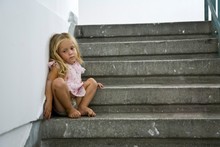
Wealth-gap problems are growing.
Photo / Thinkstock Wealth-gap problems are growing. Photo / Thinkstock

New Zealand researchers have put hard numbers to the adage that success breeds success - and failure breeds failure.
A long-term study of 1265 children born in Christchurch in 1977 has found that those whose families were poor in their first 10 years of life earned about $20,000 a year less by the age of 30 than those who grew up in rich families.
Those from poor families were more likely to leave school without qualifications, have babies before they were 20, commit crimes, go on welfare and have addiction and other mental health problems in adulthood.
Most of these effects were explained by factors which tended to vary in line with family incomes, such as parents' education, addictions, criminality and marital conflict and breakup, and the children's own intelligence.
But study director Professor David Fergusson said the effects of childhood income on later educational and career achievement persisted even after allowing for all other factors.
"So in a sense success or failure drives educational and economic success or failure, but the things that drive behavioural outcomes are not so much income and are more familial and personal," he said.
"It could be that competent, bright families transmit their skills to their children and also earn higher incomes.
"It could also be that being bred in a high-income family provides children with role models and resources for both educational achievement and career success."
Deputy Prime Minister Bill English and Maori Party co-leader Tariana Turia are setting up a ministerial committee on poverty under the Maori Party's post-election agreement with the National Party.
The study results are reported in a newsletter published by Children's Commissioner Dr Russell Wills, who has said that attacking child poverty should be the first of seven goals in an "action plan" arising out of a Government paper on vulnerable children.
The newsletter also reports a Social Development Ministry finding that in 2010, 26 per cent of children lived in "poor" families earning under 60 per cent of the net median income after housing costs - down from a peak of 30 per cent of children in 2001, but still roughly double the proportion in poverty during the 1980s when the children in the Christchurch study were growing up.
Professor Fergusson said children being born in poor families today might face even worse outcomes than their parents born in the 1970s and 80s because of the greater disparity in earnings.
The study asked detailed questions about people's lives which also enabled the researchers to diagnose whether they had depression, anxiety disorder, drug or alcohol addictions or anti-social behaviour.
On average, those from poor families had slightly more of these disorders than those from rich families.
Professor Fergusson said the study showed that income inequality and behavioural issues, such as parents' addictions, both had to be tackled to fix social problems.
"For example, increasing the income of substance-using parents may be counter-productive since it will give them more access to purchasing alcohol or drugs," he said.
A spokesman for Mr English said the poverty committee would focus on "providing opportunity through things like education and jobs and ensuring we are getting the best results from the hundreds of millions of dollars already being spent on social service delivery".
Schooling
Almost 40 per cent of those in the poorest fifth of families left school without qualifications, compared with fewer than 10 per cent of those in the richest fifth.
Pregnancy
A third of those from the poor families but fewer than a tenth of those from rich families fell pregnant, or got someone pregnant, before they were 20.
Crime
A third of those from poor families, but only a sixth from rich families, committed a violent or property crime between the ages of 18 and 30.
Welfare
20 per cent of those from poor families, but only 4 per cent from rich families, spent some time on welfare before they were 30.
Income
Those from poor families earned an average of just under $40,000 a year by age 30, while those from rich families averaged $60,000.
http://www.nzherald.co.nz/nz/news/article.cfm?c_id=1&objectid=10779433

Monday, 23 May 2011

TUBERCULOSIS: New Zealand: trying to eradicate bovine tuberculosis from wildlife, mainly possums

19 May 2011


The Animal Health Board will begin an aerial 1080-poison drop this week in the central North Island.
The Hauhungaroa Range is one of several areas where the board is trying to eradicate bovine tuberculosis from wildlife, mainly possums, over the next 15 years.
Hauhungaroa Range is located west of Lake Taupo.
Northern North Island regional co-ordinator Frank Pavitt says the TB control programme has made significant gains in the area, with infected herd numbers dropping to historic lows.
But possums continue to carry the disease and spread it to farmed cattle and deer.
The board announced earlier this week it is also planning an extensive ground and aerial bovine possum control operation north of Taupo.
The operation will cover about 5000 hectares near Wairakei.
http://www.radionz.co.nz/news/rural/75603/1080-drop-to-begin-this-week

Sunday, 19 December 2010

POVERTY: New Zealand poverty hits children's health levels

MICHELLE DUFF  14/12/2010
Last year, 2000 more children were admitted to hospital with poverty-related illnesses than during 2007-08. These included admissions for respiratory problems, infectious diseases, and other conditions with links to poor housing and economic hardship – and could have been prevented if children were taken to see a doctor earlier.
Children's Commissioner John Angus said it was critical that the Government and health sector work together to make basic healthcare more accessible for kids.
Families on benefits were more likely to postpone doctor visits because they were unaffordable – especially steep after-hours medical costs, he said. Ailments were left to get worse, often landing children in hospital.
In the 1990s, children bore the brunt of social welfare cuts and high unemployment, he said. This situation had been easing until the economic downturn.
"I think it is concerning ... it would be unfair and unwise if we let the consequences of this recession put this generation of children in the same situation. Not only do they suffer at the time, but, in future life, their health outcomes and education outcomes are adversely affected," he said.
The 2010 New Zealand Children's Social Health Monitor report, made public yesterday, also found the number of children living in households reliant on an unemployment benefit had tripled in the past year, to 16,380.
And the number of children living with all types of beneficiaries has leapt up by 32,275, to 243,884 in April.
Maori and Pacific Islanders are feeling the recession the most, with the highest jobless rates and poorest records of child health. Families are struggling to afford doctor visits, wet weather gear and proper footwear, and more are living in "severe" hardship.
The report was written by researchers at the Child and Youth Epidemiology Service, based at Otago University. Director Elizabeth Craig, a public health physician, said current social "safety nets" needed to be reconsidered in the light of the report. "It shows, with one in five of our kids relying on benefits, we need to think how we can protect our kids well."
If the Government responded with the proper social policies, the effect of the recession on children could be reversed, she said.
Social Development Minister Paula Bennett was unavailable for comment yesterday.
 
http://www.stuff.co.nz/national/health/4454458/Poverty-hits-childrens-health-levels

Saturday, 18 December 2010

TUBERCULOSIS: Epidemiology and Surveillance of Tuberculosis in New Zealand

Epidemiology of tuberculosis
Recent tuberculosis (TB) notification rates in New Zealand have been around 10 per 100,000. Incidence has decreased slightly in recent years to around 7 per 100,000.
Higher rates of disease in New Zealand compared to other developed countries may be attributed to socioeconomic deprivation and immigration from high-incidence countries. Over two-thirds of all TB cases in New Zealand are in foreign-born individuals.
The highest rates of disease are seen in individuals in urban areas, particularly Auckland and South Auckland
of non-European ethnicity, particularly ‘Other’ and Pacific People.

Type, management and outcome of tuberculosis cases
Two-thirds of TB cases are pulmonary. Of the extra-pulmonary cases, the most common sites of infection are lymph nodes.
Morbidity and mortality from TB have been declining in recent years.
Multi-drug resistance occurs in less than 1% of all TB isolates.

Surveillance of tuberculosis
Surveillance is important for supporting the local management of TB, monitoring disease incidence and identifying risk factors.
A medical practitioner who diagnoses or suspects a case of new or relapsed TB must, under the Tuberculosis Act 1948, notify the case to the local medical officer of health.

It is not a legal requirement for clinicians to notify the local medical officer of health about people receiving treatment for latent TB infection. However, clinicians are asked to report cases to the local medical officer of health, for monitoring purposes, if the cases are of latent TB infection that are, or are recommended to be, under treatment.
Recent changes to surveillance include alterations to the TB case report form; the production of an annual surveillance report for TB (see the Public Health Surveillance website, http://www.surv.esr.cri.nz)

DNA fingerprinting of all isolates.
Recent improvements to the system include: laboratory notification of positive results to identify un-notified cases.

For the latest epidemiological information, see the Public Health Surveillance website (http://www.surv.esr.cri.nz/).
http://www.moh.govt.nz/moh.nsf/indexmh/tuberculosis-control-nz-guidelines-2010

Tuesday, 14 September 2010

POVERTY: We're scoring some wins in poverty battle

Norman Gillespie
September 9, 2010
The fight is not futile, with new figures showing the poor are faring better.
'SOME people are rueing these floods but others are really thankful,'' a Benalla resident said after last weekend's deluge. He was referring to the devastation caused by the floods, but also reflecting the excitement felt by many at the end of the dry spell that has devastated parts of rural Victoria for most of the past decade.
Natural disasters, such as Victoria's floods, the earthquake in New Zealand and further abroad in Pakistan, cause great torment. Loved ones are injured or even die, homes are destroyed and lives are turned upside down. The psychological scars can cause long-term problems. The rebuilding is not just physical - it is often an equally difficult mental challenge.
The destruction in New Zealand and Victoria is lamentable, but it pales into insignificance compared with the devastation Pakistan is facing. Up to 20 million people are affected by the floods there. The equivalent of our total population has lost loved ones, homes, businesses, crops and, in many cases, their hopes for the future.
Yet amid the disaster, for some a new light is shining. Dan Toole, UNICEF's regional representative for south Asia, saw this when he visited the affected area in the midst of the crisis. ''One moment of hope - school has started in one camp and about 180 children are sitting and learning on the first day. The class includes many small girls who are in school for the first time.''
Crises bring great sadness, but they can also bring hope. We saw this in Aceh following the damage wrought by 2004's Boxing Day tsunami. After almost 30 years of a brutal civil conflict, Acehnese independence fighters were locked in a seemingly interminable struggle with the Indonesian military.
The tsunami brought great pain to many in Aceh, where more than 168,000 people died. But it also forged a path for an unlikely peace that still holds.
UNICEF's Progress for Children report, released this week, reveals that the situation for the world's children is improving although the statistics are still shocking.
In 1990, up to 30,000 children under five were dying every day due to the impacts of poverty. This is one of the most urgent crises facing humanity and to turn it around is one of our greatest challenges.
In 2000, the world signed up to the 15-year action plan to halve poverty and set up the Millennium Development Goals.
Australia has refocused its aid program around the goals and it is having a real impact. In East Timor in 1990, more than 180 of every 1000 children born would not see their fifth birthday. That number has now almost halved to 93.
It is an incredible achievement, but still means that almost one in 10 East Timorese children will not live to see their fifth birthday. By 2015, we want that figure to drop to 61, a goal that is far from reality. Things are getting better but we still have a lot more work to do.
As data improves, we are seeing, too, that the improving statistics also hide an important new understanding. The divide between the rich and poor in developing countries is growing.
Children from the poorest quintile in developing countries are more than twice as likely to die before reaching their fifth birthday.
More than 84 per cent of the 884 million people who lack access to clean drinking water are in rural areas, and children from rural areas and poorer families are less likely to attend school.
What we also now know is that a $1 million investment in reducing under-five mortality in poorer countries would avert at least 60 per cent of these deaths.
These statistics tell us that we need to better target our aid to the poorest and most underprivileged in poorer countries. With an equity-based approach, millions more lives can be saved. By providing simple and cost-effective interventions to the most vulnerable communities, it is possible to provide children, including girls, with education, immunisations against preventable diseases and access to clean water.
The 8 million children affected in the current flooding in Pakistan are among the poorest in the world. Their parents are mostly subsistence farmers or running small businesses, living hand to mouth.
As we deal with the crises in our communities here in Australia and new opportunities are born from them, the floods in Pakistan provide an opportunity, too. Once the acute needs of the people affected are met, we can look at the longer-term structural inequities and offer these people and their children a hand up to a better life.
The challenges to build a more equitable society in which we live by our commitments to the Child Rights Convention are great. Yet we can and are achieving them. A fairer world is not only possible - it is becoming a reality.


Norman Gillespie is the chief executive of UNICEF Australia.

http://www.smh.com.au/opinion/society-and-culture/were-scoring-some-wins-in-poverty-battle-20100908-1519a.html