Showing posts with label Food Security. Show all posts

Wednesday, 7 December 2011

MALNUTRITION: Scaling up innovations to fight hunger

29 November 2011

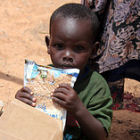
Child in Somalia receiving food distributed by FMSC and GAiN Flickr/Feed My Starving Children (FMSC) Source: Nature

Childhood malnutrition can be prevented using available knowledge to improve food security

Building sustainable food security, rather than concentrating on food aid, is a better way to help the people most vulnerable to food crises, says Josette Sheeran, head of the UN World Food Programme (UNWFP).
"Food aid has saved millions of lives, but it cannot, by itself, solve hunger," she says. The UNWFP is shifting its focus towards building local capacity to deal with future crises compounded by ongoing food price volatility, climatic changes and conflict.
Sheeran points to programmes underway in several countries that aim to "transform the fight against hunger" by developing and scaling up innovative ideas and tools at the grassroots level.
For example, in Cameroon — where 2.8 million people are food insecure — the UNWFP makes a one-time donation of ten tonnes of cereal to each community granary but also trains farmers in management and financial aspects of food storage. Community members can withdraw stocks with little interest and replenish them from their own crops, while funds from the interest and sales help with buying more stock.
In Pakistan, food technologists have created a chickpea paste fortified with micronutrients, which requires no water or cooking — helping to guard children from irreversible damage caused by malnutrition. And in Palestinian territories, 'digital food vouchers' delivered to mobile phones have helped increase local dairy production by 30 per cent, as well as helping people to buy nutritious food.
"Ending hunger does not require major scientific breakthrough," says Sheeran. "For the first time in history we have the scientific knowledge, programmes, tools and policies to defeat hunger but we need global political will".
http://www.scidev.net/en/agriculture-and-environment/food-security/opinions/scaling-up-innovations-to-fight-hunger-1.html

Thursday, 14 July 2011

MALNUTRITION: ETHIOPIA: Floods pose new threat to food security

ADDIS ABABA, 14 July 2011 (IRIN)
 Photo: Ben Parker/IRIN
Expected flooding between August and September could exacerbate food insecurity for up to 4.5 million Ethiopians (file photo)

While the ongoing drought has seriously undermined the food security of up to 4.5 million people in Ethiopia, a threat posed by expected flooding during the second half of 2011 could exacerbate the situation, say meteorological officials.
Ethiopia's meteorological agency has forecast normal to above-normal rainfall during the June-September rainy season, with the risk of flooding in western, northwestern and central areas. Areas around Lake Tana in Amhara region, parts of Gambella and along the Awash basin in Afar region are likely to be affected by floods.
"Parts of these areas, particularly in low-lying [areas] and near riverbanks, could face flooding as we usually anticipate in this season," said Diriba Koricha, the director of Forecast and Early Warning Department at the agency.
However, "as the season progresses in August and September, swift but heavy rainfalls could result in flooding anywhere", he said, adding that further preparation was needed to prevent any humanitarian crisis.
Launching an appeal on 11 July for drought aid, Ethiopia's Agriculture Ministry said the country's food security situation had deteriorated since the beginning of the year to the La Niña-induced drought currently ravaging parts of the country.
The country requires US$398 million for food and non-food aid between July and December 2011.
The government made the appeal as humanitarian actors reported funding shortfalls.
Judith Schuler, World Food Programme (WFP) Ethiopia spokeswoman, said many of its food assistance activities in Ethiopia "face significant funding shortfalls".
WFP has a shortfall of 120,000MT of food, equivalent to about $112 million, until the end of the year.
"Due to this lack of funding, WFP reduced food rations in relief operations in certain areas of the country from March onwards," said Schuler.
A recent report by the UN Office for the Coordination of Humanitarian Affairs in Ethiopia indicated that food rations had been allocated without vegetable oil and with a reduced amount of corn-soya blend.
Schuler said: "In order to resume full rations for all people badly hit by the drought, new contributions are urgently needed. Compounding the issue is time: from the moment a contribution is confirmed, it takes between four to five months until the food arrives in the country."
Between January and June, WFP assisted 269,300 moderately malnourished Ethiopian children under five through the targeted supplementary food (TSF) programme for malnourished children under five and pregnant and nursing mothers.

 Photo: Jane Some/IRIN Ethiopia's food security has deteriorated since the beginning of the year due to drought (file photo)

Somali refugees
The food needs are not just limited to Ethiopians; an influx of refugees from Somalia to Ethiopia has also been recorded.
"Numbers are increasing on a daily basis, and the nutritional status of the refugees upon... arrival is worrying," said Schuler, adding that a March/April survey had found malnutrition rates of 45 percent among newly arrived children under five at a camp in Dolo Ado, at the border between Kenya, Somalia and Ethiopia.
At least 55,000 new Somali refugees have been recorded in Ethiopia since January, according to the UN. The UN Refugee Agency, UNHCR, has set up a new camp to help them.
Eastern Africa is experiencing what the UN has described as the most severe food crisis in the world today.
On 4 July, international charity Oxfam GB made a £50 million ($80 million) appeal for drought-hit eastern Africa, saying at least 12 million people had been pushed "into a fight for survival".
"The aid effort faces enormous hurdles; there is not enough money to buy food in the quantities required and the price of maize has risen by up to 40 percent since a year ago in the region," Jane Cocking, Oxfam's humanitarian director, said. "The cost of fuel needed to transport food to the epicentre has also shot up."
On 1 July, the NGO, Christian Aid, also launched an emergency humanitarian appeal to help provide water, food and animal feed in the region.
"People are desperate and if we don't act now we could be looking at one of the worst humanitarian situations the world has seen in a long time," warned Nick Guttmann, Christian Aid's humanitarian director.
http://www.irinnews.org/report.aspx?reportID=93225

Friday, 17 June 2011

POVERTY: Head of USAid: one of his biggest challenges is to persuade Americans that foreign aid is in their interests

Madeleine Bunting 15 June 2011
Rajiv Shah is one of the most powerful men in development policy – and one of the youngest. He arrived at the helm of the US development agency USAid just short of 37, as the highest ranking Indian-American in any presidential administration. Six days into the job, Haiti's earthquake struck and he was plunged into an intense three months of one of the biggest US aid initiatives in recent decades.
Nor has the pace or intensity of the job eased much since, but in London on Tuesday he was delighted as an audience of academics and activists – not usual enthusiasts for US aid policy – at the London School of Economics congratulated him several times for his commitments on food and health initiatives, in particular the US pledge of $450m to the Global Alliance on Vaccines and Immunisation (Gavi) on Monday.
The appreciation must make a change from the fierce battle in Washington over USAid's budget, which is the target of a House of Representatives bill for $121m in cuts. At a time of economic hardship in the US, opinion surveys show aid's unprecedented unpopularity. One of Shah's biggest challenges right now, he told the Guardian, is persuading the American people that aid is in their interests.
"On the logo of USAid, it says "from the American people", but our work has to be seen as "for the American people", Shah argues. "Development is a fundamental part of our national security. It is extreme poverty – the realities of access to water and food – which creates the long-term drivers of our insecurity. Most wars are fought over scarce resources, and that is going to accelerate in the future. The food spike of 2008 led to food riots and instability. Bob Gates [the outgoing secretary of state for defence] has said, 'It is cheaper to do development than to send soldiers'. Admiral Mike Mullen [chairman of the joint chiefs of staff] is one of our strongest advocates."
In fact, the Pentagon has been a stalwart defender of USAid's budget in the current battles on Capitol Hill. An interesting contrast to the UK, where the defence establishment has been eyeing the aid budget with envy – and some resentment. Shah's defence of aid in terms of national interest reflects Barack Obama and Hillary Clinton's overhaul of US foreign policy, which was spelled out in the Quadrennial Diplomacy and Development Review late last year. Shah in part attributes the increased emphasis on aid to the experience of Afghanistan and Iraq, where the military has recognised the crucial role of governance and development to an exit strategy.
On Afghanistan, Shah is defiant of the many critics. Last week a congressional report damned USAid's programme there, and said much of the $18.8bn of funding had been "poorly spent" and was unlikely to prove durable. Afghanistan and Pakistan are the top two recipients of USAid by a large measure.
"It's been costly. We've lost 300 people working for USAid or our partners in eight years and it's cost a lot of money, but we have gone from 900,000 children in school to 7 million. Two and half million of them are girls. Health access has gone from 9% to 64% with huge falls in morbidity. Five million have moved out of poverty, with economic growth rates of 8%-10%. Agricultural productivity is up by 50%-70%. A huge amount has been achieved.
"Now our challenge is how to make that sustained as we embrace the transition. It's been a tough environment, and we have trebled staff in Afghanistan to improve accountability and audit our partners because of concerns about corruption."
But the subject that is probably closest to Shah's personal interests is food security. For seven years, he was director of programmes at the Bill and Melinda Gates Foundation on agriculture. And well before that, he remembers as a small boy visiting India for the first time with his parents from his home in suburban Detroit and experiencing with shock the slums of Mumbai and the acute human suffering he saw there. That childhood experience is what has driven his career.
"The 2008-09 food crisis pushed 100 million people back into poverty. We have been here before. In the late 60s, Paul Ehrlich was warning of a population bomb in which millions would starve, but that led to US agronomist, Norman Borlaug and his work on the green revolution – which has saved hundreds of millions of lives. We have learned a lot now about the environmental degradation it caused.
"But Africa was bypassed, and in 2006 the US was spending only $240m of its aid budget on agriculture, less than 3%. We have now increased that to $1.2bn in a programme, Feed the Future, which is working in 20 countries. The aim is to lift more than 18 million out of poverty and ensure that 7.1 million children are no longer malnourished."
Shah sees a big role for the private sector in this programme but also emphasises that the biggest impact on poverty will come from reaching small-scale women producers. USAid is working with co-operatives in countries such as Uganda.
"This is a structural challenge in global development: there are agrarian economies where large numbers of families devote 70% of their income to food, and that makes them highly susceptible to price shocks. A huge risk."
He believes that the right combination of technology and political will can have a huge impact in tackling this challenge, and points to the past as a reminder of what aid can achieve. "The Marshall plan for Europe after the second world war, the green revolution and oral rehydration are three examples of initiatives which have saved millions of lives. The last was the invention of USAid when diarrhoea was ravaging families in many developing countries and much of the effort was focused on extending healthcare services. But a simple rehydration solution given to mothers has empowered them to save their children's lives. It's one of the greatest success stories of aid. Not only does it save lives, it reduces the disease burden of stunted development."
On such subjects, Shah is a powerful advocate for aid, but question him on controversial aspects of US development policy, such as subsidies to US cotton farmers that hit west Africa so badly, and he becomes vague – an indication of how USAid can find its work undermined by other government department policies such as on trade or agriculture.
He was also evasive about the International Aid Transparency Initiative, which the US has not signed up to. Instead, he points to a new website he has set up to track all USAid spending, but he acknowledges it doesn't track other US government departments' aid spend.
He has instituted a big reform of USAid, but perhaps even more influential on policy has been the Arab spring. He admits that it has shaken up how the agency works and who it works with. There needs to be a greater focus on smaller, grassroots organisations instead of larger, well-established institutions; less bureaucracy and fewer rules; more flexibility and risk-taking to back innovation. At the same time, Shah repeats frequently that he wants to show results for every taxpayer dollar spent. It all adds up to a demanding agenda.
http://www.guardian.co.uk/global-development/2011/jun/15/rajiv-shah-america-aid

Wednesday, 1 June 2011

POVERTY: India: NAC members protest against plan panel's move for new poverty line

Nitin Sethi, May 24, 2011,
NEW DELHI: A spoon, 25 grams of dal, half a slice of bread, some washing powder and a torn piece of kurta, in total worth Rs 20. That is what three key National Advisory Council members -- Jean Dreze, Aruna Roy and Harsh Mander -- brought for the deputy chairman of Planning Commission Montek Singh Ahluwalia on Monday protesting against the Rs 20 per day person expenditure poverty line it has decided upon as a cut off.
The three NAC members led a group of about 60-70 noisy protestors carrying dozens of packets – all worth Rs 20 – and asked the Planning Commission members to survive a day in Delhi on the contents and shouted slogans waving placards mocking the poverty line
The presence of the trio, who have been locked in an argument against the 'fiscal prudence wallahs' in the government while pushing for an expansive food security bill, marked a scaling up of the battle between the two sides.
http://articles.timesofindia.indiatimes.com/2011-05-24/india/29577569_1_food-security-bill-poverty-line-nac-members

Monday, 30 May 2011

POVERTY: AID POLICY: New mechanism to boost food security

JOHANNESBURG, 30 May 2011 (IRIN) -

 Photo: Manoocher Deghati/IRIN
Communities need help to get back on their feet

Since April the humanitarian community has been gearing up to deploy a new mechanism aimed at combining expertise on food aid and agricultural assistance to boost food security and make food insecure communities hit by a disaster more resilient.
A 2010 evaluation of the “cluster approach” conducted by the Global Public Policy Institute (GPPI) and Groupe Urgence, Réhabilitation, Développement (URD) recommended the setting up of a new global food security mechanism or “cluster”, to support disaster-affected food insecure communities.
Its coordinator, Graham Farmer, said the new cluster is led jointly by the UN Food and Agriculture Organization (FAO) and the World Food Programme (WFP).
One of the tools deployed by aid workers in emergency responses to such things as floods, droughts or earthquakes is the “cluster approach”, first implemented in 2005. A “cluster” consists of groupings of UN agencies, NGOs and other international organizations around a sector or service provided during a humanitarian crisis.
The cluster approach currently encompasses 11 clusters or sectors such as logistics, water and sanitation, early recovery and nutrition. Agriculture as a separate cluster will cease to exist under the new scheme.
GPPI’s Julia Steets explained the rationale behind the December 2010 decision to set up the new cluster: “Everybody in the field agrees that one of the greatest challenges [during a humanitarian crisis] is implementing a proper `early recovery’ approach - introducing recovery and development aspects into relief work as early as possible and strengthening transition.”
This is especially true of food assistance, where short-term food interventions, if not managed properly, can undermine long-term ones, she added, creating dependency and slowing recovery.
This is especially true of food assistance, where short-term food interventions, if not managed properly, can undermine long-term ones, she added, creating dependency and slowing recovery
The global food security cluster will ensure there are “no missed opportunities” - for example by distributing seeds at the same time as food aid if disaster strikes just before the planting season.
“It could be the implementation of a cash-for-work programme [as an emergency response] which involves repairing agriculture infrastructure such as dams or roads damaged during a crisis to get the community prepared for the next planting cycle,” said Farmer.
The agricultural cluster is normally one of the most under-funded, thus adversely affecting prospects for recovery, said Steets. Bundling agriculture with food aid, “usually by far the best funded”, would help increase support and funding for long-term solutions, she added.
Almost 80 percent of the population in developing countries, which are most susceptible to natural disasters, depend on agriculture for food and income.

Tapping into local knowledge
Generally, the role of global clusters is to strengthen preparedness and build capacity of the aid response, explained Farmer, and “that is what we intend to do”. The national or local level clusters make sure response to a crisis is effective and that all NGOs are on the same page.
But the most innovative aspect of the new global food security cluster could be that, unlike other clusters, it will choose its priorities according to the needs of existing local and national clusters, said Steets. In doing so it will endorse a bottom-up approach - something the GPPI/URD evaluation called for.
The GPPI/URD evaluation said the exclusion of national and local NGOs - and often the failure to link with, build on, or support existing coordination and response mechanisms - was a major failing of the cluster system.
This was largely because of insufficient analysis of local structures and lack of “clear transition and exit criteria and strategies”, said the evaluation report. “As a result, the introduction of clusters has in several cases weakened national and local ownership and capacities,” it pointed out.

Overwhelmed
In many countries, the food security clusters "were actually among the best attended and most concrete clusters of all, precisely because they reacted to demand, rather than being imposed from above," said Steets. "Yet, the poor people who managed those clusters were often overwhelmed, because they had no formal time allocated for this task and had no support structure, etc."
Steets said the new global food security cluster “can from the very beginning draw on a local structure and respond to its needs. And this is absolutely the way the global cluster should go: Start by talking to existing local food security [or similar] clusters - both at national and at local level - and find out what kind of support they would need, be it in terms of policy-making, guidance, training, surge capacity, pre-positioning or what have you.
“It would be a real disaster if they missed this opportunity and went ahead creating tools and guidance that could end up being irrelevant to the field.”
Farmer said they did intend to consult. The global food security cluster will be holding its Inception Meeting on 30-31 May.
http://www.irinnews.org/report.aspx?reportid=92846

Monday, 23 May 2011

MALNUTRITION: Malawi: Creating a climate for policy change

Blessings Chinsinga : 19 May 2011
Maize farmer, Malawi Flickr/Swathi Sridharan

Malawi must diversify away from maize to adapt to climate change

A conflict between climate adaptation and food security policies shows we must create the right conditions for change, says Blessings Chinsinga.
The adverse effects of climate change on the livelihoods of the rural poor can no longer be ignored. They are threatening to cause tremendous damage to agriculture, which is a critical source of income for most people around the world.
This alarming prospect has triggered a wide range of actions to manage the adverse effects of climate change. These actions are both short- and long-term — communities have to build the capacity to deal with the immediate effects of climate change, and must also adapt to rapidly changing livelihoods over the longer term.
But adaptation does not happen in a vacuum. The context in which policy changes take place matters a great deal and has an important role in shaping adaptation processes. And the right analytical tools can uncover opportunities to ensure that adaptation policy produces effective and sustainable outcomes.
In Malawi, the smooth implementation of crop diversification as an adaptive strategy is constrained by a conflict with food security — a conflict fuelled by the competing interests of key stakeholders.

Diverse views
Malawi's economy is largely based on agriculture, which provides nearly 40 per cent of the GDP. Maize is grown on up to 90 per cent of the country's cultivable land, and is an important part of the diet and the main source of livelihood.
Malawi has the highest per capita consumption of maize in the world. But climate change poses a huge threat to maize cultivation, and higher temperatures have already reduced global yields in some parts of Africa.
Crop diversification is one adaptation strategy promoted in the country, and I worked with colleagues from Chancellor College at the University of Malawi to explore the process of implementing this and to identify relevant policy 'spaces' — opportunities to shape adaptation policy depending on the pattern of relationships among key stakeholders.
The National Consultative Group (NCG), a creative tool formed as part of the project, provided a relaxed atmosphere for discussion among policymakers and entrepreneurs from civil society organisations, government departments, donor agencies and the media — groups that subscribe to widely different views about adaptation to climate change.
The aim was to build some consensus towards a shared vision about the nature of the problem, what needs to be done to deal with it, and the likely consequences of taking no action.
There was no dispute about the potential of crop diversification as an adaptation strategy. It was seen as a guarantee of food security and a way of boosting soil health and improving the nutritional status of farmers. For most donors, crop diversification is a crucial means of "improving the nutritional status of a society wedded to maize".
But competing interests and views about crop diversification in relation to food security made it difficult to turn the promise of crop diversification into reality.

The politics of maize
In Malawi, cereals and legumes other than maize are hard to find in seed markets, mainly because of the coinciding interests of the government, seed companies and donors.
Communities in Malawi equate food with maize. Farmers have said that "maize is food and if we do not grow it, we fear we will not have food".
This has entrenched the government's view that maize is the best means of achieving food security. Maize is so important that some scholars characterise Malawi's politics as the politics of maize.
As a result, while constantly making references to the ideals of crop diversification, the main preoccupation of the government is to achieve food security using high-yielding maize varieties.
Even a major fertiliser subsidy programme, introduced by the government in 2005, has failed to change the politics of food security, even though it was designed to promote crop diversification. The programme is dominated by maize.
The seed companies are interested in securing a ready market for their hybrid products, and donors are keen to promote a local seed supply driven by the private sector.
Diversification away from maize is held back even more by severe land and labour constraints, limited productivity and a lack of lucrative markets for alternatives to maize. It is estimated that 49 per cent of smallholder farmers own no more than a hectare of land.
Policy engagement and influence is therefore not merely a question of generating robust scientific evidence and making it available to policymakers. It is as much about new evidence as it is about creating the right conditions for policy change to encourage adaptation.
And to do that, we need analytical tools that help us understand the strategic partnerships, coalitions and alliances that facilitate or impede the use of scientific evidence in policymaking.
Blessings Chinsinga is associate professor at the Department of Political and Administrative Studies at the University of Malawi.
http://www.scidev.net/en/opinions/creating-a-climate-for-policy-change-in-malawi-1.html

MALNUTRITION: Bolivia: Quinoa Questions -- Production and Food Security

 Emma Banks, : May 17, 2011

In January and March 2011, several English-language press outlets ran stories on quinoa production in Bolivia. National Public Radio and the Associated Press reported on quinoa as a development project, hailing its benefits to farmers in the altiplano region of Bolivia. The New York Times article focused on quinoa’s rising popularity abroad making it less affordable for low income Bolivians. Both AP’s “Quinoa’s Popularity a Boon to Bolivians,”[i] and the Times’ “Quinoa’s Global Success Creates Quandary at Home” highlight the complex relationship between food security and economic development in Bolivia, although with differing perspectives.
The impact of rising food prices is complex and encompasses food security and sovereignty debates, issues that are difficult to address thoroughly in brief articles. Until a comprehensive study provides insight into rising quinoa prices, it is difficult to make strong affirmations. The impact of quinoa production and export must be understood both within the framework of global food security issues and specific local contexts. While these articles presented some important issues, challenging local conditions that affect quinoa consumption and production also substantially affect income generated by this crop.
Quinoa fetches a guaranteed high price affording farmers economic stability. This economic power has also translated into political power though producers’ associations and cooperatives. Since the 1970’s, these organizations have worked toward greater producer control of the market, spurring other political actions such as blockades and protests for greater economic and environmental rights in quinoa-growing regions.[ii]

Missing key aspects of the “quinoa quandary”
Unfortunately, the Independent article, “The Food Fad That’s Starving Bolivia,” and several online reposts of the Times piece misrepresented the complex relationship between malnutrition and rising quinoa prices by encouraging North American and European consumers to stop buying Bolivian quinoa. Although the Times never suggested this solution for Bolivian malnutrition, a letter to the editor advocated that exact idea.[iii] Adam Sherwin made glaring and easily avoidable errors in the Independent, for example citing the North American Aztecs when he should have mentioned the Andean Incas. Furthermore, whole paragraphs of Sherwin’s article are copied almost word for word from the Times’ piece, yet Sherwin manipulated its conclusions.
He further incorrectly argued: “There is a potential threat to South America’s farmers – quinoa can thrive in the wet climes of Bolton as well as Bolivia. An increasing number of Britons are cultivating their own supply of quinoa in kitchen gardens and allotments,”[iv] suggesting that small-plot quinoa production in North America and Europe threatens Bolivian farmers’ income. In doing so, he implies that buying Bolivian quinoa negatively affects Bolivian consumers, yet growing it at home negatively affects Bolivian farmers. He thus conflates consumption and production issues, with no supporting analysis., and misrepresents the role of international consumers..

Complications of price-based analysis
Simon Romero and Sara Shahriari wrote in the Times: “Fewer Bolivians can now afford [quinoa], hastening their embrace of cheaper, processed foods and raising fears of malnutrition in a country that has long struggled with it.” By ‘processed foods,’ the authors clarified that they meant simple carbohydrates such as white flour and rice, rather than canned or pre-prepared products with chemical additives that provide lower nutritional value. However, less nutritious white rice and wheat actually require cheaper, simpler processing than the costly, complicated procedures necessary to make quinoa edible. Raw quinoa must be soaked, rolled, and rinsed to remove the bitter resin covering its seeds.
It’s important to understand comparative food prices accurately presented by the Times in context. Quinoa does on average cost U.S. $4.85 per kilo in Bolivia, compared to white rice at about $1.10. However, quinoa is more filling than rice and as a result, generally is eaten in smaller portions. For example, many people add small amounts of quinoa to soups and stews. Furthermore, the Bolivian government subsidizes staples including wheat and rice, artificially lowering prices. Currently the Morales administration struggles with how to keep food prices affordable while satisfying producers’ needs (See “Ongoing, Unresolved Issues Likely to Perpetuate Tensions in Bolivia”).
Furthermore, rising food prices are a global problem, and virtually all staples have increased in price in Bolivia. For example, rice prices have almost doubles during the last five years.[v] While most pasta often costs less than quinoa, prices vary greatly. Some pasta varieties – particularly whole-grain and more nutritious types – cost over $5.00 per kilo, more than quinoa. These prices do not reflect rising international costs, but domestic consumption preference; there is lower demand for the more expensive varieties.
While quinoa is extremely healthy, Bolivia also produces other highly nutritious seeds and grains, including kañawa[vi] and amaranth. Both are increasingly available in flours, granolas, and baked goods. Encouraging production of these grains and seeds for domestic consumption could provide alternatives to high priced quinoa for Bolivians. These grains are not yet widely grown for export, and could therefore remain economical in the national market. Quinoa is not the only nutritious part of the typical Bolivian diet, and with properly managed development and nutrition programs the Bolivian government could expand production and consumption of quinoa alternatives.
It is crucial to compare current malnutrition levels to statistics from the 1970’s – when quinoa production for export initially accelerated – to accurately analyze its effect on farmers’ nutrition. The causes of malnutrition in the altiplano, a historically poor and under-served part of the country, are multi-faceted and linked to harsh agricultural conditions, poor infrastructure (which makes food products from the rest of the country less accessible and more expensive), and low economic opportunity.
Families make complex choices between keeping quinoa for their own consumption or selling it to invest in education, housing, small businesses, and other food staples. In fact, most quinoa-producing families still eat quinoa at least once a week, and others do so daily. [vii]

Harsh Production Conditions Help Explain Higher Prices
Farmers face additional challenges, both in growing and selling quinoa. Smugglers take quinoa into Peru, selling it at a higher price without benefitting Bolivian producers. Some of this quinoa later makes it way to international markets, giving the bulk of profit to Peruvian sellers.
Periodic droughts in the altiplano, which will likely increase with global warming, can kill crops or delay production. Furthermore, altiplano soils are dry and lacking in nutrients, making organic and sustainable farming a challenge. However, many farmers continue to practice organic techniques since organic quinoa fetches a higher market price.[viii]

The importance of a balanced historical perspective
Quinoa production is far more robust than it was before the 1970’s.[ix] It is crucial to examine long-term trends to understand why quinoa is such a valuable resource.[x]
In general, the quinoa boom greatly benefits farmers in spite of little state support. [xi] According to Kevin Healy, “The fact that some indigenous quinoa pioneers had to seek out adequate technologies for quinoa processing in neighboring Peru is a testimony to the low public status which quinoa agricultural development faced for various decades of the modern era despite Bolivia’s position as the world’s premiere quinoa producer.” [xii]
The Times article links to the United States Agency for International Development (USAID) website when it cites “American foreign aid organizations” that helped farmers start growing quinoa for export (along with European groups). However past projects, many funded by (USAID), often encouraged farmers in the altiplano to grow wheat[xiii] instead of traditional crops. In the 1950’s and 1960’s, these projects largely failed, especially as farmers could not compete with low-cost wheat from of U.S. food assistance programs.[xiv] Furthermore, international aid organizations and the Bolivian government continued to encourage both wheat and rice production – helping to explain its continued prevalence in the Bolivian diet.
In fact, the smaller, more pragmatic U.S. Interamerican Foundation and various European organizations helped support farmers’ initiatives to significantly enhance their income through export. USAID support only began within the last five years, after production and export circuits had been established and prices had already increased.

Personal preferences matter
Quinoa production and consumption in Bolivia vary by local context and individual choice. According to Andrew Ofstehage, Bolivian quinoa farmers often make individual decisions. Some farmers prefer not to market their quinoa through co-ops because they gain greater benefits and avoid prohibitive transport costs. [xv] Instead, they sell to intermediaries or barter to enrich their diets with fresh fruits and vegetables, as well as other staples.[xvi]
As Romero and Shahriari suggest, quinoa consumption in Bolivia fluctuates by region and personal preference. They quote the Bolivian Vice Minister of Rural Development and Agriculture: “It has to do with food culture, because if you give the kids toasted quinoa flour, they don’t want it; they want white bread. If you give them boiled water, sugar and quinoa flour mixed into a drink, they prefer Coca-Cola.”[xvii]
Outside of the altiplano, Bolivians consume quinoa less frequently, especially in the lowlands, since it is not grown there nor considered a staple food, although this pattern has shifted due to highland migrants moving into the lowlands. Quinoa has been part of the diet in the mid-highland regions, such as Cochabamba, for centuries. In past decades, quinoa’s popularity declined among the upper middle classes in favor of wheat and rice that they perceive as more “sophisticated” and “upwardly mobile.” Ironically, the valorization of quinoa in North American and European markets has caused many up-scale Bolivian restaurants to begin serving quinoa and the middle and upper class to consume more of the grain.

Conflicting data complicates research
The lack of verifiable data complicates quinoa research. For example, the Bolivian government, quinoa producers’ associations and the United Nations Food and Agricultural Organization (FAO) all track quinoa production, yet release completely different statistics. Contraband quinoa smuggled into Peru, informal sales of quinoa, and lack of documentation in all quinoa-producing parts of Bolivia all further complicate tracking the percentage of quinoa exported versus sold domestically. This situation highlights the need for more careful and precise reporting on quinoa production and consumption.

Big picture: Food security and development are complex, global issues
Recent media coverage on quinoa lauds Bolivian rural development initiatives or highlight food security concerns. In reality, the “quinoa quandary” encompasses both approaches; examining it through only one lens obscures the multi-faceted nature of quinoa production and consumption in Bolivia.
Food security and sovereignty are ever evolving – neither term has a universal definition or scale of reference. Food security, at the most basic level, implies an adequate food supply to give all people proper nutrition. Proponents of food sovereignty, on the other hand, affirm that small producers and consumers should have influence in shaping food policy.[xviii] As a result, it is crucial to acknowledge the global scale and system that affects food prices and consumption choices.
Experts on food issues point to the need to consider the multiple hierarchies of power involved in food production and prices in order to understand how positive changes can be made.[xix] The Times published a letter to the editor that asserted: “While I appreciate being able to find such a nutritious and satisfying product on the shelves of my local supermarket, I’d gladly give it up to ensure that Bolivians can afford to eat it. Having foods from around the world is a convenient luxury so long as others are not paying a hefty price for it.”[xx] Foreign consumers of quinoa can stop buying the grain, but this change would actually intensify existing poverty and malnutrition by taking away Bolivian producers’ steady source of income. True food and economic security must be achieved simultaneously.
Bolivian quinoa production straddles the line between food and economic security. There is no easy answer to the problems created by rising food prices. However, the positive changes for quinoa producers cannot be ignored in the debate. As Healy explains:
Quinoa’s current boom would probably have been much weaker had the Quechua and Aymara producers themselves not organized producer associations to revitalize quinoa real (the most commercial variety of quinoa) back in the late seventies and eighties. In contrast to Peru where quinoa received a big boost from the national government, Bolivian state institutions with the exception of several agricultural research stations provided little support to producers for credit, marketing or processing nor promote recognition of its food value among Bolivian consumers.[xxi]
Just as they have pushed to expand the quinoa industry, Bolivian producers and consumers must be the catalyst to push for greater food security and sovereignty. Bolivian Government nutrition programs have begun to incorporate quinoa into school breakfast and new mothers’ subsidies,[xxii] finally recognizing the important role quinoa can play in food security. Quinoa farmers, government entities and funding organizations must work collaboratively to insure that quinoa continues to benefit both producers and consumers in Bolivia.
http://ain-bolivia.org/2011/05/bolivian-quinoa-questions-production-and-food-security/
Wednesday, 18 May 2011

POVERTY: BANGLADESH: Indigenous farmers face seed crisis

CHTBANGKOK, 12 May 2011 (IRIN)

 Photo: Courtesy of Christian Erni/IWGIA
Growing food is getting tougher in Bangladesh's

Farmers in parts of Bangladesh's southeastern Chittagong Hill Tracts (CHT) face a seed crisis that is undermining the food security of thousands, the World Food Programme (WFP) says.
"The challenge that the villagers are now facing is the lack of available seeds due to non-cultivation for two years," Christa Rader, country director of WFP in Bangladesh, told IRIN from Dhaka.
Seed prices in Sajek Union - about US$11 per kilo - have increased more than five times since 2006, while interest rates are up to 100 percent.
These two factors are contributing to CHT's food insecurity - estimated at more than 30 percent - according to the UN food agency.
"Over the last four years, the frequency of crises in Sajek has been intense" - starting with crop damage by the rodent attack during 2007-2008, restrictions on Jhum cultivation since 2009 and communal conflict in 2010, which continues in 2011, reports a WFP assessment conducted at the end of April.

No Jhum for Jummas
The seed crisis started when the region was infested by a rat population that bred four times faster than normal during the bamboo flowering season from 2007 to 2008.
The rodents consumed all the grains and cash crops from the fields and in storage, forcing people to eat seeds they would normally save for cultivation.
The following year, in 2009, the indigenous Jumma people, comprising 11 different ethnic groups, were forbidden from farming in forest areas of Sajek Union using their traditional shifting cultivation methods, also known as Jhum cultivation.
The United People's Democratic Front (UPDF), a political party based in the CHT, enforced the ban to protect the land from over-cropping resulting from an influx of Bengali settlers over the past three decades.
"What [the UPDF] did is to discourage Jhum cultivation in certain specified areas to protect the environment and animal habitats," Sachib Chakma, a member of the UPDF's central committee, explained.
But Jhum farming is also central to the way of life of the one million indigenous people living in the CHT.
"The very name of these people, Jumma, comes from their cultural tradition of shifting agriculture, locally known as Jhum. They were able to sustainably live for years using Jhum cultivation," Sophie Grig, senior campaigner at Survival International, a London-based indigenous rights NGO.
According to Survival, it was not possible to keep the land fallow for the five to eight years as required for soil to regenerate in shifting cultivation, but was instead cropped every two to three years. Moreover, the most fertile land was taken by Bengali settlers, further affecting the Jummas' ability to farm.
"The Bengali settlers took the most arable land away from the Jumma, internally displacing them further north into Sajek Union," Grig said.
Nearly 600,000 Bengali settlers have arrived in the CHT since the 1980s leading to land theft and forced relocation of more than 90,000 Jumma families as of 2000, according to the Internal Displacement Monitoring Centre (IDMC).
"The illegal taking over of indigenous peoples' land by Bengali settlers and the inclusion of their land in forest reserves [has led] to a decrease in the land available for doing shifting cultivation," said Christina Nilsson from the CHT Commission International Secretariat based in Copenhagen.

Land tensions
In a further shock to local livelihoods, recent clashes at the end of April over land led to nearly 100 Jumma houses being burned down.
"All their movable assets, including rice and seeds, perished in the fire, leaving them without food," said Chakma.
And with the price of seeds increasing, many farming families could well find themselves in greater debt if they borrow at today's interest rates, resulting in what WFP warns could become a "famine-like situation" unless livelihood options improve.
"The situation is critical," Rader said. "People may have to sell all their livestock and other assets in order to eat."
http://www.irinnews.org/report.aspx?reportID=92692

Tuesday, 10 May 2011

MALNUTRITION: Africa: Food Prices Rise to Highest Levels Since 1984

5 May 2011 An excerpt from the Africa Progress Report 2011:
Even though several African countries are on the verge of meeting their MDG targets for hunger reduction, the continent as a whole continues to be the world's most food-insecure region. Hunger and malnutrition remain pervasive in many countries, and rising food prices are compounding the situation for millions across the continent, particularly in zones of protracted conflict and in fast-growing urban areas.

Volatility of Food Prices
Food prices are higher now than at any time since 1984. Even though the World Bank's Food Price Watch sees Sub-Saharan Africa less exposed to risks related to soaring food prices as domestic food production is increasingly replacing imports and recent harvests have been good, the price spikes have deepened existing macro and micro vulnerabilities. On the macro level, countries with a high share of food imports and limited fiscal space like Burundi are driven deeper into current-account deficits and the possibility of social unrest as they become unable to use subsidies and price controls to shield their populations from inflation.

Africa Progress Panel

This graph published in the Africa Progress Report 2011 shows how steady African growth was interrupted by the global financial crisis in 2009 but is expected to regain its momentum through 2011.

On the micro level, higher prices make life even more difficult for Africa's poorest, who already spend between 60 to 80 per cent of their income on food. Faced with reduced access to food and increased vulnerability to the seasonality of local food prices and markets, households are forced into unavoidable compromises, such as choosing cheaper (often less nutritious) food, selling productive assets, withdrawing children from school, forgoing healthcare, or simply eating less than they need.
The recurrence of food-related crises over the last few years has focused international attention on the tragic state of food security in Africa and given rise to a number of supportive initiatives such as the G8's L'Aquila Food Security Initiative, the Global Agriculture and Food Security Program, and the World Bank's Global Food Crisis Response Program. The French G20 Presidency has also prioritized food security, and especially the moderation of speculative trading in food commodities, for the 2011 Summit in Cannes. It is planning to host the first ever meeting of the Group's Ministers of Agriculture before the Summit. In addition, there are attempts to create more transparency of food stocks held by large exporters to avoid panic caused by market uncertainty about the availability of essential commodities.

Structural Barriers to Food Security
At the same time, the fact that the number of Africans suffering from hunger had already been on the increase well before prices spiked suggests that chronic and structural problems rather than mere price fluctuations continue to underlie much of the continent's food insecurity. These problems include: disadvantageous international trade rules and subsidy regimes; a debilitating lack of essential infrastructure such as irrigation and storage systems; inadequate agricultural research; a lack of improved seeds, fertilizers, and plant protection material; poor soil and water management systems; poor access to credit and marketing services; as well as inefficient and wasteful agricultural value chains.
Agricultural productivity is also affected by social realities such as persistent poverty and insufficient access of women to land and other essential resources.
These structural barriers are increasingly compounded by global trends. In the short-term, the gap between the continent's domestic food supply and demand will widen as global consumption patterns continue to shift towards meat products, and more profitable bio-fuels supplant food crops. In the mid-to-long- term, the continent's food system will experience an unprecedented confluence of pressures, including through the reinforcing impacts of population growth, climate change and environmental degradation.

Agricultural productivity
Over the last year, African countries and their partners have increased their commitment to raise agricultural productivity on the continent, including through multi-stakeholder partnerships. For example, the Comprehensive African Agriculture Development Programme (CAADP) now has 25 signatory countries (seven more than last year) committed to spending at least 10 per cent of their national budgets on agriculture, to accelerate growth in the sector to at least 6 per cent a year. Nineteen countries have finalized Agricultural Investment Plans.
Practical efforts to boost agricultural production are beginning to yield results in many countries, including Ghana, Malawi, Mali, Mozambique and Tanzania. Focused international assistance and innovative partnerships, like the Alliance for a Green Revolution in Africa (AGRA), have helped governments to intensify production. Methods include: the introduction of high-yielding varieties of crops and improved techniques such as micro-dosing of fertilizers and drip irrigation; increased accessibility of production- enhancing inputs, credit and other financial services such as weather-indexed crop insurance; and improved markets and information.
The increasing engagement of the private sector, including through the promotion of agricultural growth corridors and agro-industrialization, will help to increase resources available for agricultural investments.
These successes remain too small to feed the continent. Global food production will have to increase by 70 per cent over the next 40 years to keep pace with population growth, and a significant part of that increase will have to come from Africa. There is an urgent need to scale up successful interventions, focus on Africa's army of smallholder farmers and increase emphasis on staple food crops. There is also a need to ensure that the growing foreign investments in Africa's arable land, sometimes referred to as "land grabs", are transparent, add to the continent's food security, benefit local farmers and communities, and avoid undermining social, environmental and governance systems.
The dire social consequences of the recent food crises have shown that efforts to improve agricultural productivity and connectivity on the supply side need to be complemented by better risk management, efficient social safety nets and targeted nutritional programmes on the demand side.
As with the implementation of agricultural development plans, national governments ultimately bear responsibility for this.
http://allafrica.com/stories/201105050350.html

Monday, 9 May 2011

MALNUTRITION: Agriculture, Forestry and Fisheries Minister says SA farmers should expand into other African countries.

BEKEZELA PHAKATHI phakathib@bdfm.co.za
2011/05/04


 Photo: Financial Mail

Agriculture, Forestry and Fisheries Minister Tina Joemat-Pettersson.
CAPE TOWN — South African farmers should expand their business interests into other African countries, Agriculture, Forestry and Fisheries Minister Tina Joemat-Pettersson said yesterday.
Speaking during a press briefing after a conference on rural poverty hosted by the United Nations’ International Fund for Agricultural Development (Ifad), Ms Joemat-Pettersson said expanding into Africa would enhance food security on the continent, not compromise it.
"We are not saying that our farmers should relocate or move their business operations from SA to other countries; they should use SA as a base and then expand their business operations into the rest of Africa," Ms Joemat-Pettersson said.
In her keynote address during the conference, Ms Joemat-Pettersson said an equitable ownership of land remained essential to safeguarding democracy in SA.
"Our government has tried to bring in this balance between land reform and food security and it’s a very tight balance — it’s like walking on a tightrope."
The minister also said it was not sustainable for the country to rely on a small group of farmers for its food requirements .
She said the continent was capable of improving food security and boosting economic growth through increasing support for smallholder farmers.
While Africa was still facing challenges in reducing poverty, "a vision of economic renaissance" led by smallholder farmers was beginning to take hold.
"There is a growing belief that Africa can produce enough not only to feed its own citizens, but to export a growing surplus to the rest of the world," Ms Joemat-Pettersson said.
She said SA was in the forefront of developing a railway system that would link the entire continent and allow farmers to take goods from road to rail across Africa.
The agricultural value chain had been identified in the New Growth Path as one of the key sectors to grow the number of jobs, she said.
Speaking at the same conference, the Ifad fund’s president, Kanayo Nwanze, said the African Union had recognised the central role of agriculture in reducing poverty when its members pledged to increase spending on agriculture to at least 10% of national budgets.
"This pledge was made in 2003 in Maputo. By last year, eight countries had met or surpassed that target; the continent as a whole has not," Mr Nwanze said.
To grow the agricultural sector, African countries also needed to maintain political stability, encourage more youths to turn to farming and, importantly, invest more in rural infrastructure, he said .
http://www.businessday.co.za/articles/Content.aspx?id=141630

Sunday, 10 April 2011

AFRICA: Opposition building to Great Green Wall

NAIROBI, 8 April 2011 (IRIN)

 Photo: Wikimedia Commons: The Sahel region: The Great Green Wall project was originally proposed by Burkina Faso’s Marxist leader Thomas Sankara in the 1980s

What’s green, controversial, 15km wide, 7,775km long, cuts across 11 African countries and is designed to reduce livestock deaths and boost food security for millions of people? Nothing yet, but the Great Green Wall project, a pipe-dream for decades, was recently endorsed by a swathe of African states stretching from Senegal to Djibouti.
An estimated 10 million people faced severe food shortages due to recurrent drought and climate change in the Sahel region last year. In Niger alone, the famine in 2010 left half the country’s population needing food aid and one in six children suffering from acute malnutrition. Some villagers in Niger described 2010 as worse than the 1973 drought that killed thousands of people, according to Malek Triki, West African spokesperson for the World Food Programme (WFP).
The Great Green Wall (GGW) project, originally proposed by Burkina Faso’s Marxist leader Thomas Sankara in the 1980s, was later resurrected by former Nigerian President Olesegun Obasanjo in 2005 before receiving approval by the African Union in December 2006. In June 2010, 11 countries involved signed a convention in Chad to further the development of the project, but the plan remained on standby until February when it was officially approved at an international summit in Bonn, Germany.
During the summit, the Global Environment Facility (GEF) set aside US$115 million to fund the wall. Mohamed I Bakarr, a senior environment specialist with GEF, told IRIN the wall “is in reality a metaphor to reflect the vision of African leaders for an integrated land-use system that addresses environment and development needs across all affected countries”. The GEF foresees the wall adopting a “mosaic” of “sustainable land-management systems with stakeholders, including grassroots communities, in all 11 countries implementing options that are appropriate to the local context”.
The plan entails each country implementing its own land, water and vegetation-management projects on up to two million hectares of land, under the framework of the UN Convention to Combat Desertification. Monique Barbut, CEO of the GEF, said in a statement it would not fund “an all-out tree-funding drive from Dakar to Djibouti”, but rather, would allocate the funding according to national priorities, which have yet to be finalized. In a paper adopted by the Sahara and Sahel Observatory (OSS) in 2008, alleviating poverty is said to be one of the wall’s principal objectives.
The paper outlines national and regional objectives, including consolidating and expanding existing greenbelts of trees, conserving biodiversity, restoring and conserving soil and promoting income-generating activities, as well as carbon capture and storage of 0.5-3.1 million tons of carbon per year.

Indigenous communities "threatened"
The project has faced opposition, despite its stated commitment to combating drought and desertification, which have exacted a heavy toll on the region as a whole. Wally Menne, a member of Timberwatch, the African NGO focal point for the Global Forest Coalition, told IRIN the organization was sceptical. “In our view it seems poorly conceived in terms of both ecological and socio-economic considerations. Its chances of being a success could be limited, and it may even cause more harm to the environment,” he said. The Global Forest Coalition campaigns for the rights of indigenous and forest people and for socially just policies.
An estimated 10 million people faced severe food shortages due to recurrent drought and climate change in the Sahel region last year
Menne added that the inclusion of carbon sequestration activities and the potential future development of REDD projects (Reducing Emissions from Deforestation and Forest Degradation) as components of the GGW would require converting suitable land within the belt to fast-growing foreign species of monoculture tree plantations and carbon sinks opposed by many indigenous groups in the Sahel. Growing plantations would also require displacing people living on land earmarked for the GGW and would lead to further depletion of scarce water sources.
A concept paper on the kinds of vegetal species to be included in the GGW states that the wall will run through both inhabited and uninhabited areas, but will be located in areas where the average annual rainfall is higher than 200mm. It also stated that the only species to be adapted to the wall would be "primarily those that are found, live and develop there".
However, in a statement to the Indigenous People’s of Africa Coordinating Committee, IPACC, Sada Albachir, director of Association Tunfa, a Tuareg human rights group in Niger, said that “international agreements in the past introduced alien invasive species into the Sahara, without tackling the root problems of poor governance, dangerous uranium mining, and a failure to conserve biodiversity and water security in the arid region. I think the idea of planting a Green Wall across Africa is not to be entertained by indigenous people living in the proposed sites, unless the project has been studied in collaboration with them and they are also involved in the implementation.”
The programme coordinator for the OSS, Jihed Ghannem, told IRIN such concerns were baseless. “The full participation of communities is essential,” he said.
Timberwatch’s Menne told IRIN: “In my experience, ‘consulting’ local communities usually means misinforming them about the potential impacts of a project by exaggerating how they will benefit, whilst neglecting to inform them of the negative impacts. When they say that local communities will be an integral part of the project, it normally means that they will be used to provide cheap labour.”
Part of the GGW concept plan includes a section on “Food for Work” designed to recruit unemployed workers in each country to help with the planting of the greenbelt in the Sahel. According to OSS, under the scheme, “members of the communities assuming responsibilities are paid in part at the time of planting. The remainder is paid two years later on the basis of the plant growth scale.” The plan also indicates that private businesses, including “initiators of safari parks, modern farming, ecotourist sites” will find “some economic opportunities” in the wall.
Menne said the wall could be a useful tool to combat desertification only if “viewed as an exercise in adaptation, rather than as an opportunity for climate change mitigation and making money from CDM/REDD carbon offsets as presently envisioned”.
According to Khadija Hassan*, representative of an indigenous people’s organization, the GGW might also interfere with migration patterns of pastoral communities and instead should incorporate ancestral systems of land management. “It would be best to protect what already exists in the region, stop the felling of trees in valleys and oases, repair damage caused by climate change, educate communities about REDD and restore livestock that has been lost,” she said. “I find the project is good, but too ambitious.”


Greenhouse farming in semi-arid Isiolo is helping improve the production of food crops


http://www.irinnews.org/report.aspx?reportID=92422

Monday, 4 April 2011

MALNUTRITION: NIGER: New approaches needed in tackling malnutrition

NIAMEY, 1 April 2011 (IRIN) -

 Photo: Claire Barrault/ECHO
Traditions around food often mean people do not eat the variety they need (file photo)

 Having experienced a series of droughts and food security crises over the past 40 years, Niger is now looking to move beyond simply countering emergencies, investing instead in development and recovery strategies - and changing gear in its efforts to feed a rapidly expanding, highly vulnerable population.
The need for new approaches in tackling malnutrition and chronic food insecurity has been one of the main themes of the Conférence Internationale sur la Sécurité Alimentaire et Nutritionnelle au Niger (CISAN), a two-day scientific and technical gathering in Niamey.
But is Niger ready to make the necessary changes? The country was at the epicentre of the Sahelian food crisis in 2010. Among those worst affected by the food shortages were children, with NGOs recording dramatic rates of severe acute malnutrition (SAM).
The government recognizes that tackling child malnutrition problems is crucial, and has been running an annual feeding scheme in partnership with the UN Children’s Fund (UNICEF) and the World Food Programme (WFP), targeting children aged 6-23 months. The programme reaches 200,000-300,000 children in a normal year, but the number shot past 600,000 in 2010 as the food crisis took hold.
“The timing is right,” said Guido Cornale, the UNICEF representative in Niger. He stressed that donors would be willing to invest more in nutrition interventions if they realized the country was serious about tackling malnutrition.
Development experts have warned that Niger requires long-term sustainable intervention if it is to avoid facing the same scenarios year in year out. Conference contributors emphasized the need to increase the quantity and quality of food and to secure better access to it, while also raising awareness about hygiene, the importance of a balanced diet and the nutritional value of different kinds of food.

Appeal for more resources
Dr Guero Maimouna from Niger’s Public Health Ministry (MSP) said the country had come through two crises in the past six years and had gained the necessary experience to take on bigger and longer-term interventions.
“But to do that we require resources. We are using our existing resources and money to handle the huge problem that we have at hand… We have a large population of malnourished children every year.”
Everyone is hoping the money that long-term interventions can attract will enable Niger to find sustainable solutions.
“You cannot rely on short-term emergency interventions - which are brought in at great cost - forever,” said Charlotte Dufour of the Food and Agriculture Organization (FAO). She stressed the importance of teaching people to do the best with what they had.

Traditional beliefs hamper progress
Recurring drought and the subsequent decline in agricultural production left Niger without food, but the main causes of malnutrition were traditional beliefs about food that prevented people from eating balanced meals, said Mele Djalo, head of health and social action in the prime minister’s office.
“For example, the Fula people, who live in the Maradi Region, do not eat fish; then we have ethnic groupings which consider chicken dirty; some don’t eat eggs, and so on. Creating awareness across these communities is a very difficult job and it requires resources,” she said.
The MSP’s Maimouna acknowledged that in some parts of Niger rations of fortified corn-soya blend, cooking oil and sugar were an attractive package for a family with no food or income: “They keep bringing their child back sick, as the mothers sell the rations given for the child.”
UNICEF’s Cornale said at the height of the 2010 food crisis they discovered that the monthly ration meant for a child lasted only a week. “We found that the families did not have any food and were consuming the rations.”
If you go to areas where there are no NGOs, there are no efforts under way to treat malnutrition
UNICEF then started a large cash transfer programme in the southwestern Maradi and Tahoua regions, targeting 35,000 households with about $126 each over three months to protect the children’s rations. An independent evaluation found the measure had been effective. “Families used 80 percent of the money to buy food,” Cornale said.
There are no national safety net programmes, but food was subsidized in times of crisis, and some emergency distributions were made.

Blanket feeding?
Conference participants debated whether communities should be trained to treat moderate malnutrition, which has a high incidence and affects almost half the children in some areas. An aid worker pointed out that communities were often unable to handle cases of malaria or even severe diarrhoea.
Stéphane Doyon, head of the Médecins Sans Frontières (MSF) nutrition campaign, said their research had shown it was more effective to provide blanket feeding for all children aged 6-24 months in vulnerable areas as a response to moderate chronic malnutrition, and rather use the limited resources, including personnel, to just treat children with SAM.
The mortality rate in children with moderate chronic malnutrition was 25 percent, while among those with SAM it was 75 percent.
Malam Kanta Issa of Forum Santé Niger (FORSANI), a local NGO comprising medical professionals, said there was a lack of budgetary support for improving health services. “If you go to areas where there are no NGOs, there are no efforts under way to treat malnutrition.” Aid workers pointed out that they had lobbied to get nutrition on the conference agenda.
Nevertheless, infant mortality has been a declining trend, and the UN Millennium Goal to reduce child mortality by two-thirds by 2015 might be the only one Niger is on track to achieve.
“There are 2,100 health posts in this country, which manage malnutrition in the rural areas,” UNICEF’s Cornale noted. “They seem to be doing their work.”


A breeder with cattle in the village of Danganari, 40km from Zinder in Southern Niger


http://www.irinnews.org/report.aspx?reportID=92344

Tuesday, 29 March 2011

MALNUTRITION: Pakistan: Support price mechanism takes toll on poor

Amir Zia: amir.zia@gmail.com: March 27, 2011
Finally the World Food Programme (WFP) has raised a red-flag over the abnormally high food prices in Pakistan, which is making life tough and bitter for majority of ordinary Pakistanis. Wolfgang Herbinger, WFP’s director in Pakistan, painted a grim picture about the food security situation in the country, where malnutrition levels are on the rise despite good agricultural crops.
One of the key reasons for the food-inflation remains the government’s decision to increase the wheat support price by more than 120 percent that indeed benefited big landowners, but proved a blow for the majority of people, especially belonging to the poor and fixed income groups.
But even before the WFP director made remarks on Pakistan’s food security in Geneva earlier this week on the sidelines of an international conference, there were rational voices in Pakistan that had been highlighting the issue.
In recent months, The News’ opinion pages carried several articles by leading economist and former advisor of the finance ministry Dr Ashfaque Hasan Khan, who questioned the people’s government “criminal” move of pushing the wheat support price to 950 rupees per 40 kilogram from 425 rupees in the early 2008.
“Empirical evidence suggests that a 10 percent increase in the support price of wheat increases the general price level by three percent. The more than 120 percent increase in the support price of wheat has pushed food prices up by 32 percent,” he told the scribe, explaining his point-of-view. “The support price mechanism has long lost its utility and remains beneficial only for big landowners. Today, the domestic wheat rates have surpassed international prices.”
But for a parliament dominated by mighty feudal lords and ladies and tribal chiefs, the temptation of increasing the wheat support price and giving huge subsidies on agricultural inputs remains too great. It is not just the lawmakers belonging to the ruling Pakistan Peoples’ Party (PPP), who reap the benefit of such decisions, but members sitting on the opposition benches also enjoy the windfall.
However, the gain of the landed political class remains a net loss for the ordinary people, who are now paying double the price for wheat ñ the main staple diet in Pakistan — compared to three years ago. No wonder, more and more people now find it difficult even to get two decent meals a day. Poverty is on the rise and so are incidents of suicides.
But economic experts belonging to the PPP say increasing the farm gate price of wheat and the government’s dominance of its market remains necessary to encourage farmers to grow this crop and prevent the smuggling of this commodity to Afghanistan, which remains impossible to stop because of the porous frontier.
“Yes, it has an inflationary impact, but that we have already factored it in,” says Kaiser Bengali, an advisor on finance to the Sindh Chief Minister. “To ward off the inflationary impact of the wheat price increase, the government is giving targeted subsidy to protect the poor. More than 4.6 million families are being given 1,000 rupees a month under the Benazir Income Support Programme (BISP).”
But in a country of more than 160 million people, this kind of subsidy remains insufficient as it leaves the ‘undeserving’ poor out of its ambit. The undeserving poor comprise all those working men and women — from domestic helps to daily wage earners and school teachers to policemen — who work on extremely low wages and are deemed unfit to receive alms, charity and government subsidies. Unfortunately, they comprise a bulk of the population.
The WFP’s warning should not be brushed aside by the people at the helm of affairs. It calls for a serious review of the support price mechanism, which now mainly serves the vested interests of agricultural landowners rather than providing a fair deal to the majority of Pakistanis and protecting their interest.
The thesis of some top government functionaries that big landowners only go for cash crops and it is the small farmers who benefit from an increase in support price is flawed and misleading.
According to Dr. Ashfaque Hasan Khan, the small farmers do not produce surplus marketable wheat and they remain unable to benefit from the government procurement centres because of their limited reach and delay in payments.
It is an irony for the country that despite a much-touted agricultural base and good wheat production, the basic food staple remains unaffordable for a vast number of Pakistanis. One of the options, which the government may now consider to beat food inflation and help the poor, is to keep the wheat support prices capped over the next couple of years. This will help gradually reduce the inflationary pressure. However, the ideal stance, in line with the free-market mechanism, would be to allow the market forces to determine prices of every commodity.
But will the vested interest allow the government’s financial managers to follow a sensible course? The record is disappointing so far.
http://www.thenews.com.pk/TodaysPrintDetail.aspx?ID=38262&Cat=3&dt=3/27/2011

Saturday, 26 March 2011

POVERTY: Food Security Aid Map

The recent financial and economic crises, as well as volatile food prices, have pushed millions of people into poverty and hunger. Estimates of the number of people suffering from hunger range from about 850 million to 1 billion worldwide. These alarming numbers should call attention not only to the importance of continued and adequate food aid for vulnerable populations, but also to the urgency of food security programs that reduce poverty and hunger in vulnerable countries. This site features the work of InterAction members and their partners to ensure all people have access to enough, safe and nutritious food
http://foodsecurity.ngoaidmap.org/

Monday, 14 March 2011

POVERTY: UGANDA: Food, water crisis looms for thousands


 Photo: Charles Akena/IRIN
A boy quenches his thirst at a mobile water point in northern Uganda. Forecasts by the meteorological department indicate that the country is headed for a long period of drought

AGAGO/AMURU, 9 March 2011 (IRIN) - Thousands of people in 36 of Uganda's 112 districts are at risk of serious food and water shortages due to drought attributed to the La Niña weather phenomenon.
Health officials have warned of outbreaks of diseases such as diarrhoea and dysentery, due to poor hygiene.
The situation requires urgent attention, says the Minister for Disaster Preparedness, Musa Ecweru. "We are experiencing food shortages; some families are [already] going without food."
The ministry has issued public alerts, warning of impending severe water shortages and famine in parts of the country.
Ecweru said the government was working out ways of securing money for relief food and identifying the worst-hit families.
Forecasts by the meteorological department indicate that the country is headed for a long period of drought. The department has predicted that La Niña conditions, which started in July 2010, will affect rainfall distribution in 2011.
James Magezi, a senior research officer at the meteorological department and assistant commissioner in the Ministry of Water and Environment, told IRIN several parts of the country were likely to experience abnormal rainfall patterns this year, with regions such as northern Uganda and Karamoja completely dry.
Magezi said sunny and dry conditions, characterized by higher-than-normal daytime temperatures, would occur across the country and were likely to continue up to mid-2011.

Poor rainfall
Although some rains are expected in March, Magezi said they were likely to be insufficient to support agriculture in many areas. Wells are already drying up in some of the 36 affected districts, forcing residents to walk long distances in search of water.
Richard Ongom, a resident of Lira Palwo in Agago district, told IRIN: "It takes several hours for the wells to fill up and we have to walk long distances to fetch water from rivers and streams."
He added that high daytime temperatures and strong winds made movement difficult. "The sun is too hot during the day and the blowing winds crack our lips; at night it is impossible to sleep inside the house because of the heat."
The drought-prone Karamoja region, in the northeast, is one of the areas hardest-hit by the La Niña effect, with households struggling to sustain livelihoods. Strong winds are destroying structures and movement is hampered by temperatures ranging from 35 to 38 degrees Celsius during the day.

 Photo: Charles Akena/IRIN
A dried up stream in Lamwo, northern Uganda

In the north, formerly displaced persons resettling in villages in the Acholi districts are experiencing frequent fire outbreaks and falling water levels in rivers.
Oxfam, an international NGO, warned of impending drought in East Africa as well as the Horn of Africa in an update for March, stating that the situation was "deteriorating quickly and could result in a major humanitarian emergency over the coming months".

Response
While noting that governments in the region had recognized the severity of the crisis and initiated remedial measures, Oxfam cautioned that "responses have generally come later than necessary and are focused on emergency measures such as trucking in water and de-stocking animals - buying up cattle that are too weak or low value".
The drought has also affected electricity generation in Uganda as water levels fall in rivers such as the Nile. Streams such as the Aswa, Ayugi, Unyama and Pager, all in Amuru and Kitgum districts, are drying up.
Pastoralists living along the cattle corridors in Nakasongola district and Bullisa, in Bunyoro region, have expressed concern over loss of livelihoods due to the shortage of pasture and water for their livestock.

Food security
Parts of the country were hit by torrential rains in 2010, causing water-logging and rotting of crops, a situation that has now affected food reserves.
"Where shall we get food; last year's harvest was very poor and the little we had we sold to raise money for family needs such as school fees and treatment?" asked James Onyut, a resident of Agago.
Unless the government intervenes, Onyut said, people were going to face tough times. "We pray the rains come early and remain normal so that we can harvest something good from the first season of March-July," Onyut said.
http://www.irinnews.org/report.aspx?ReportID=92146

POVERTY: ZIMBABWE: Dry spell ends prospect of good harvest

 Photo: Kate Holt/IRIN
Small farmers who lack irrigation have been most affected by the dry weather. A woman stands outside of her temporary home and dried up maize crop in Epworth, in Harare, Zimbabwe


HARARE, 11 March 2011 (IRIN) - A dry spell that has persisted for over a month, adversely affecting crops in many parts of Zimbabwe, could mean a lean year ahead for farmers.
"I am not even looking forward to picking a few green mealies [corn on the cob] to roast from my maize crop,“ said Merjury Mapanda, 55, a widow who looks after three grandchildren in Chirumanzu district, some 120km southeast of Gweru, capital of Midlands Province.
“All my sweat has gone to waste because the rains went away when the maize crop had reached a crucial stage and needed water very much," she said.
Mapanda planted her maize in early November 2010 and the crop was doing well until the end of January 2011, when the dry weather started.
"I assumed that the rains were giving us a break to tend our fields, but when the scorching sun persisted for more than three weeks, I became worried," she told IRIN. "The rains returned for only one day... up to now, we have had to watch as the crops wilted."
Even if the rains did return, it would be too late. "It is better to have the cattle and goats feeding on the crops because we are not going to harvest anything, with the exception perhaps of a few who planted early in October."
In the Goromonzi district in Mashonaland East Province, Josphat Ngwerume, 48, a communal farmer, had also been looking forward to a bumper harvest after a good start to the rainy season, but he has not been able to bring himself to visit his fields for the past two weeks.
"It reminds me of how much sweat I shed for nothing, and how much money I wasted. I harvested only enough to last me for three months last year and have been buying maize meal from the shops,” he told IRIN.
“It seems the situation is worse this year, and I don't know where I will get the money to buy food for the children."
Denford Chimbwanda, president of the Grain and Cereal Producers Association (GPCA), described the lack of rain as "devastating".
"Farmers are facing a very serious situation because of the dry spell. As an organization, we have done a preliminary assessment… and discovered that thousands of hectares of farmland on which different types of crops were being grown have been destroyed,” he told IRIN.
"Communal and resettled farmers are the most affected because they don't have irrigation facilities, but even commercial farmers will have their harvests crippled by the dry spell. The net effect of this is that Zimbabwe will have to depend on imports to meet its food requirements," Chimbwanda said.
Zimbabwe's 10-year economic crisis has taken a heavy toll on the country's agricultural sector. The high cost and shortage of inputs like seed and fertilizer saw steep declines in maize production, the main staple.
Harvests improved in 2009 and 2010, but about 1.7 million people are still food insecure and in need of assistance according to the UN Food and Agriculture Organization (FAO) and World Food Programme (WFP).
Innocent Makwiramiti, an economist based in the capital, Harare, said the need to import food would drive up prices, particularly maize, with a negative impact on the food security of poor households in rural as well as urban areas.
"They will not have enough money to buy adequate food, since the majority of them are already struggling to make ends meet," he noted.
However, Catherine Manase, spokesperson for the Food Security Network (FOSENET) a national NGO, told IRIN that while the dry spell had severely stressed crops, it was still too early to assess the extent of the damage.
"Assessments of the effects of the dry spell on food security are being carried out by various organizations, and it will not be possible to quantify the damage before they complete their studies," she said.
"The major problem is that farmers are no longer able to properly time their planting because of the changing climatic patterns, a situation that makes it vital for experts to trace the new trends and come up with conclusive recommendations on when to plant."
The Famine Early Warning Systems Network (FEWS NET), which monitors food security in the region, noted in its latest update that "a positive crop production outlook [for Zimbabwe] has been halted by low rainfall", with the southern half of the country most affected.
http://www.irinnews.org/report.aspx?reportID=92158

Monday, 21 February 2011

MALNUTRITION: Rapid growth in agriculture is not sufficient

By Jimoh Babatunde


India Prime Minister, Dr. Manmohan Singh, in New Delhi, said that rapid growth in agriculture, though necessary, is not sufficient to produce desirable nutritional and health outcomes among the socially and economically disadvantaged groups of the community.
Speaking at the inaugural session of the International Conference on Improving Health and Nutrition through Agriculture organized by the International Food Policy Research Institute, Dr. Manmohan Singh noted that malnutrition remains a serious problem in India and many developing countries.


Dr. Manmohan Singh

“Globally, nearly 1 billion people still go hungry. Nearly one in four children under age of five is underweight. The problem of hidden hunger—that is, deficiencies of essential vitamins and minerals, such as iron, Vitamin A and iodine — is also severe.”
While noting that the issue of nutrition is a serious challenge that has not received the attention it truly deserves, the Indian PM said malnutrition is not only a consequence of poverty, it is also a cause of poverty
“A malnourished child is more vulnerable to disease and less able to earn a leaving. The complexity of causes that underlie malnutrition calls for a multi-sectoral strategy to address the three key issues of availability, access and absorption.”
The Prime Minister added “experience has also shown that rapid growth in GDP in general and, even agriculture in particular, though necessary, is not sufficient to produce desirable nutritional and health outcomes among the socially and economically disadvantaged groups of the community.”
He said the fight against malnutrition must incorporates the issues of absorption of nutrition, health and hygiene, which in turn depend on many other factors such as the availability of clean drinking water, sanitation and also on the education and status of women in society.
“The Integrated Child Development Services is probably one of the oldest and largest programmes in the world to address the problem of child malnutrition.
“We have been looking at how to improve this programme and have recently added an element of direct cash transfers for pregnant and nursing mothers.”
Dr. Manmohan Singh disclosed that their first priority in India has been to ensure food security which in turn requires a high order of self sufficiency. “Cereals and pulses are the staple food of the people of India. We have naturally focused attention on ensuring adequate production of these products to meet the needs of our population.”
He added “Food grains however are only one part of the solution. With economic growth and changing dietary habits, demand for fruits and vegetables, milk and milk products, meat and fish, is steadily increasing. This is entirely natural. Good nutrition requires a balanced diet through multiple food sources.”
The Indian PM said agricultural diversification in food requires back up support in terms of viable delivery and marketing chains because much of the agricultural produce is perishable.
“Rapid growth in agriculture, particularly that which diversifies the food basket while ensuring adequate availability of energy and other basic nutrients, combined with other activities and initiatives in health, hygiene and women’s education will help overcome poor health, hunger and malnutrition.”
Speaking earlier, Shenggen Fan, Director General of the International Food Policy Research Institute (IFPRI) said agriculture is much more than just producing food and other products.
“It is linked to people’s well-being in many ways, and it has the potential to do much more to improve their nutrition and reduce their health risks. “
To work toward this goal, IFPRI organized the conference, “Leveraging Agriculture for Improving Nutrition and Health.” The event will bring experts together from all three sectors to take stock of current knowledge, share information and best practices, and build consensus on the actions most needed to move forward.
Agricultural scientists have traditionally focused on developing more productive crops and livestock and on reducing their susceptibility to disease. But the conference organizers contend that by incorporating nutrition as a goal, researchers and breeders could provide farmers with a wide range of healthier products. For example, breeding crops with higher levels of micronutrients like vitamin A and iron can potentially reduce death and disease, especially among women and children.
“Increasing crop productivity overall is not enough. A new paradigm for agricultural development is needed, so that agricultural growth leads also to improved nutrition and health,” said Fan.
Research suggests that agricultural growth, if done right, is the engine to reduce poverty in developing countries. But according to “The Nexus between Agriculture and Nutrition,” a paper released at the conference, individual subsectors within agriculture, such as staple crops or livestock, have different effects on development outcomes, including on nutrition and health, and policymakers need to pay attention to these differences.
Improvements in other factors such as land distribution, women’s status, rural infrastructure, and health status, can have a positive effect on nutrition, the paper contends. Complementary investments in rural roads, nutrition programs, and other targeted interventions can make a huge impact.
http://www.vanguardngr.com/2011/02/rapid-growth-in-agriculture-not-sufficient/

POVERTY: LESOTHO: Floods take heavy toll

THABA-TSEKA, 15 February 2011 (IRIN) -
From a distance, the fields of maize that cover almost every hillside in Lesotho's Thaba-Tseka District look green and lush. On closer inspection, the plants have a sickly yellowish hue and the heads of corn that should be ripening in time for the April harvest are nowhere to be seen.
For most of the farmers in this remote, mountainous district, and in many other parts of Lesotho, there will be no harvest this season. Heavy rains which started in December and are expected to continue through much of February have washed away top soil and nutrients and left fields waterlogged and weed infested.
The UN Food and Agriculture Organization (FAO) estimates that in some of the worst hit districts up to 60 percent of crops have been destroyed while nationally at least 4,700 livestock, mainly sheep and goats, have died. [ http://www.fao.org/news/story/en/item/50394/icode/ ]
Lesotho's mountainous topography and erratic weather mean it already produces only enough grain to meet about 30 percent of its needs. [ http://www.irinnews.org/Report.aspx?ReportId=86910 ] The country had increased its production of maize - the main cereal crop - and sorghum during 2010, but the heavy rains are likely to reverse those gains.
"It's going to affect food security in the worst way because Lesotho doesn't produce enough food as it is," Matsiliso Mmojaki, head of the national Disaster Management Authority (DMA), told IRIN.
Out of a population of just over two million, Mmojaki estimated 250,000 will need food assistance in the coming months.

Not a disaster?
In the village of Phaila, in Thaba-Tseka District, Tsepo Phaila, 31, watched one afternoon in early January as a river of water swept down a hillside, tearing up the trees he and his family had planted for firewood, and flooding their maize field. By the time the water receded, only a few broken stalks poked up from the mud.
"We can't plant there any more because the topsoil has washed away," Phaila said.
The family has one other smaller field where maize plants are still standing but are too rain-damaged to produce a harvest. "There's nothing we can do right now," said Phaila, explaining that the maize and the firewood provided the only source of income to support himself and nine other family members.
Many other households in the village and across northern Lesotho are facing a similar predicament, but the government has yet to declare the situation a disaster.
"Should we say because the government hasn't declared it a disaster, it's not a disaster?" asked Teboho Chalane, the Ministry of Agriculture's extension officer for Thaba-Tseka District. "A lot of people have been affected; there will be no maize for them, so we need to do something to make sure they get something to eat."
He added that if seeds could be distributed quickly, there was still time for affected households to grow vegetables before the start of winter. In the longer term, said Chalane, communities needed to become less reliant on maize and start keeping livestock such as poultry and pigs that could be bred and sold.
As for the fields of stunted maize plants, his advice to farmers was: "Take a scythe and cut them all down."

Costly response
Like many parts of Southern Africa, Lesotho had been warned to expect a heavier than usual rainy season due to the La Niña phenomenon, [ http://www.irinnews.org/Report.aspx?ReportID=90980 ] but Mmojaki of the DMA said "the intensity [of the rains] was just beyond our imagination; it has never really happened here."
A rapid assessment of the damage conducted in January found that in addition to the extensive crop losses, a number of roads had been washed away making some health facilities unreachable. Stocks of essential medicines, including antiretrovirals (ARVs) and drugs to treat diarrhoea, an outbreak of which had spread across the country, were running low.
The DMA has developed a contingency plan and submitted it to the government for approval. It includes urgent repairs to roads, bridges and water supply systems as well as assistance to farmers in the form of subsidies, seeds and fertilizers.
The plan comes with a price tag of US$68.5 million, an amount that economic policy head in the Ministry of Finance and Development Planning Motena Ts'olo said the government would struggle to raise at a time when the global economic slowdown and reduced revenues from the Southern African Customs Union (SACU) [ http://www.irinnews.org/Report.aspx?ReportID=90208 ] were already straining the national budget.
"The rain has created even more pressure and I don't know how we'll manage, but somehow we'll have to," she told IRIN.

Http://www.irinnews.org/report.aspx?ReportID=91925