Showing posts with label Ethiopia. Show all posts

Thursday, 1 December 2011

MALNUTRITION: Ethiopian child mortality, malnutrition rates drop


Nov 11, 2011 : Aaron Maasho

ADDIS ABABA (Reuters) - Ethiopia has more than halved its child mortality rates since 1990 through campaigns to increase the number of health workers and clinics throughout the country, government and aid officials said on Friday.
The Horn of Africa nation has long suffered from one of the world's highest death rates of children due to recurring droughts. Twenty years ago the mortality rate for those aged under five was about 20 percent.
"Today, according to the 2011 Ethiopian Demographic and Health Survey, that figure has been slashed by more than half to 8.8 per cent," said Keseteberhan Admassu, Ethiopia's State Minister of Health.
"Reducing malnutrition, which is an underlying factor in at least half of all under-five deaths, has had a profound impact on the survival rates of children," he told a gathering of representatives of United Nations agencies.
Keseteberhan said the nation-wide malnutrition rate has been slashed by 32 percent, with prevalence to being underweight dropping to 28.7 percent in 2010 from 42.1 percent in 2000.
The U.N. Children's Fund (UNICEF) attributed the reductions to increased access to health posts in remote and drought-stricken areas, and a growing number of health workers.
The number of health posts has surged to more than 9,000 in 2011 from a handful in 2004 with priority shifted towards food-insecure areas, UNICEF said.
"The vigorous training of health extension workers who are on the frontline in the work to provide integrated health, nutrition, sanitation and hygiene services to rural communities ... has paid off," said Ted Chaiban, UNICEF's representative to Ethiopia.
Across the Horn of Africa, a fierce drought is forcing more than 13 million people to rely on emergency food aid this year, according to aid agencies.
Some 3.7 million Somalis are at risk of starvation in the worst drought in decades, including some 2 million in rebel-held regions that most major humanitarian agencies cannot reach.
Though 4.5 million of Ethiopia's 80 million people are affected, the United Nations says Addis Ababa is better equipped to tackle the drought's impact on the impoverished country.
http://af.reuters.com/article/topNews/idAFJOE7AA0BD20111111?sp=true

Sunday, 27 November 2011

MALNUTRITION: Ethiopia: Concern over high levels of child malnutrition in Ethiopia refugee camps

Mark Tran, in Addis Ababa guardian.co.uk, Tuesday 22 November 2011


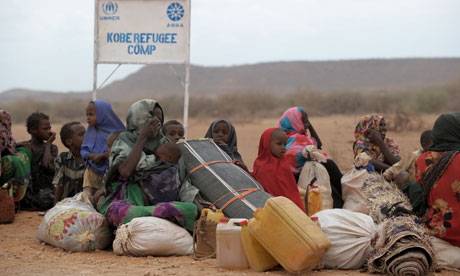
MDG : Somali refugees in Dolo Ado refugee camp in southern Ethiopia
Somali refugees at the Kobe camp inside Dolo Ado, currently home to around 137,000 refugees. Photograph: Roberto Schmidt/AFP/Getty Images

Children at the Dolo Ado refugee camps in southern Ethiopia are suffering from acute malnutrition despite plentiful supplies of special food for under-fives, say relief officials.
Dolo Ado is host to around 137,000 refugees, most of whom have fled Somalia because of the famine and conflict between al-Shabaab, the Islamist militants, and the transitional Somali government. Refugees have also come from Sudan, Eritrea and Kenya.
Besides high levels of malnutrition, the transit centre is heavily overcrowded, having to take care of 8,000 people who are awaiting the opening of a fifth camp. This camp was supposed to have opened by the beginning of November. Relief officials attribute the delay to the need to put in proper sanitation facilities, but hope the camp will be up and running any day now.
Construction work has been hampered by the excessively hard soil. Aid groups want to avoid a repeat of the experience of the fourth camp, which opened before proper sanitation was in place. The importance of sanitation has been thrown into sharp relief by the outbreak of cholera in the massive refugee complex in Dadaab, in Kenya.
As they await the opening of the fifth camp at Dolo, relief officials are concerned about the high levels of malnutrition among under-fives despite the free availability of Plumpy'nut, a peanut-based paste in a plastic wrapper for treatment of severe acute malnutrition.
"Maybe they're not eating it properly," said Giorgia Testolin, head of the refugee section of the World Food Programme Ethiopia. "The food is there, there is easy access, but why is the situation so bad? This needs to be investigated."
A report by USAid and the Famine Early System Network (Fewsnet) last month said refugees regularly sell Plumpy'nut, mainly to buy sugar, tea leaves, powder milk and meat from the market. Children were also reported to come to the market to exchange Plumpy'nut for sugar.
The number of refugees arriving at Dolo peaked in June and July at 2,000 a day, falling to 350 a day in October due to rains that hampered movement. In recent days, unexpected rains have shut off the camp to UN flights, although plenty of supplies are on the spot.
Relief officials are bracing themselves for a surge in refugee numbers to Ethiopia after the rains end and the escalation of fighting in Somalia, as Kenya sent in troops to pursue al-Shabaab. As of 20 October, Ethiopia was hosting 256,000 refugees.
"We don't know what will happen," said Testolin. "Maybe Kenya will close its borders and more refugees will come to Ethiopia."
If they do, they will head to Dolo, the easiest spot in Ethiopia for Somali refugees to reach. Most arrive with little but jerry cans of water, having sold off most of their assets to pay for transport or other expenses.
In positive news from Somalia, the UN reported on Friday that three areas in Somalia that were declared to be in a state of famine earlier this year have emerged from the crisis as a result of the big relief effort.
The UN Food Security and Nutrition Analysis Unit for Somalia said the situation had improved in the affected areas in the southern regions of Bay, Bakool and Lower Shabelle, and they were no longer famine zones.
However, the UN humanitarian co-ordinator for Somalia, Mark Bowden, said that famine persists in parts of the Middle Shabelle and in the Afgooye corridor, near the capital, Mogadishu, which hosts a large number of internally displaced persons.
Valerie Amos, the UN under-secretary-general for humanitarian affairs, said in a statement that "progress is fragile and needs to be sustained".
"While humanitarian agencies have helped bring food, nutrition, water and sanitation help to millions of people in the last few months, I remain extremely concerned by the critical situation in Mogadishu and other parts of south and central Somalia," said Amos, who is also the UN emergency relief co-ordinator.
http://www.guardian.co.uk/global-development/2011/nov/22/children-malnutrition-refugee-camps-ethiopia?newsfeed=true

Tuesday, 22 November 2011

MALNUTRITION: Ethopia: The Crisis Continues: Dollo Ado to Open its Fifth Camp


19 November 2011 - 5:01pm By Sam Piranty Share
 
Photo Credit: Sam Piranty Dollo Ado, Ethiopia:

An extremely high level of malnutrition is apparent in Ethiopia's Dollo Ado refugee camps, which continue to expand in response to the on-going crisis in the Horn of Africa.
Malnutrition and overcrowding remain a real cause for concern in Dollo Ado, a collection of refugee camps in south eastern Ethiopia. The four camps at Dollo Ado are already at capacity with a total polulation of 137,000. It is set to open a fifth camp this weekend, Bur Amino. Though yet unpublished, recent results from a survey conducted in both Kobe and Hilaweyn camps have revealed extremely high malnutrition rates that surpass the emergency threshold of 15%. The issue is complicated by the fact that there is actually a good supply of food available. The World Food Programme (WFP), who are facilitating the General Food Distribution in the camps are providing staples such as cereal, pulses, Corn Soya Blend (CSB), oil, salt and sugar with other NGOs supplying further complimentary foods.
With the Ethiopian government and Médecins Sans Frontières treating those diagnosed with severe acute malnutrition, the WFP aims to tackle those with moderate acute malnutrition. If the programme is followed correctly patients can recover within 60-90 days. The fulcrum around which the programme revolves consists of a premix made up of CSB plus, oil and sugar. Every week, this is given to the mother of each household to distribute to their family. It is a vital part of the recovery process and Giorgia Testolin, Head of Refugee Section for the WFP in Ethiopia, believes that with this already available there should not be such widespread malnutrition across the four camps in Dollo Ado and claims ‘there is something wrong at the household level of the consumption of food’. The precise problem is yet to emerge although it has been suggested that it could be do with the sale of some of the provisions refugees receive. Many sell some of the food they receive in order to purchase other food items and commodities both within the camps and the host communities. However, Testolin believes that the premix is not sold and that ‘we expect refugees to sell part of the food to buy what is not in the food basket provided by WFP. Such as milk, meat, tomatoes and vegetables. They cannot have a standard diet every day’.
The problem of malnutrition does not therefore seem to be merely economic but rather manifests itself in a misconception of the nutritional significance of things like the premix and Plumpynut, a peanut based paste. Testolin believes that it is vital the refugee community develop a greater understanding of the importance of the consumption of the premix but suggests that this will take time for ‘it’s a cultural and behavioural change that cannot be reached in a couple of months... If you don't understand that this food is the right food for you, because as a pastoralist you may be used to camel milk and meat and you don't have that food which you believe is the food which will improve the health of your child. It becomes very difficult for the messages [outlining the importance of things like the premix] to pass through to the mothers and fathers...a lot more needs to be done in a community based approach through outreach workers.’ An assessment is due to be undertaken by the WFP, the UN Refugee Agency (UNHCR) and the Administration for Refugees and Returnee Affairs (ARRA) in December this year to try and both pinpoint the problem and develop a more comprehensive solution.
Overcrowding is also a major issue in the camps in Dollo Ado. Over seven thousand refugees are awaiting relocation in the transit centre with the opening of Bur Amino having been delayed for almost a month and the four remaining camps already at full capacity. The delay has been put down to a number of different factors. Previously, when the fourth camp opened early there were numerous problems with sanitation and services. It is therefore vital that because of the recent rains and overcrowding which increase the probability of the spreading of disease, that the fifth camp is completely finished before those in the transit centre move in. Furthermore, the soil around the site is particularly difficult to excavate and with the torrential rainfall taking the airstrip out of service and blocking the roads into the camps, many of the tools needed have been difficult to co-ordinate. However, Bur Amino is due to open this weekend, which will be a welcome relief for thousands of individuals and families. This could not have come at a more important time, in light of the recent intervention in Somalia by the Kenyan military and the tightening of border controls between Kenya and Somalia. Whereas before many refugees have suggested that Al Shabaab had blocked the route to Ethiopia and directed them toward Kenya, now those looking to flee Somalia will focus on reaching Dollo Ado rather than Dadaab.
http://thinkafricapress.com/ethiopia/crisis-continues-dollo-ado-open-its-fifth-camp

Sunday, 24 July 2011

MALNUTRITION: Somalia: UNICEF Airlifts Emergency Nutritional Supplies to Drought Affected Children in Southern Somalia.

Kim Lewis : Washington D.C. : July 14, 2011

Malnutrition worsens in children in southern Somalia with over one-half million suffering from acute malnutrition

A malnourished child from southern Somalia lies in Banadir hospital in Mogadishu, July 13, 2011 Photo: AP

The humanitarian children’s organization UNICEF has airlifted emergency nutritional supplies to Somalia’s southern region as part of its life-saving efforts to help children suffering from worsening malnutrition.
The organization says Somalia is the epicenter of acute malnutrition because of extreme instability in the country due to conflict and drought.
Rozanne Chorlton is the UNICEF representative to Somalia. She said they are seeing elevated rates of child malnutrition in Mogadishu and in families coming out of regions in southern Somalia, across the border to Ethiopia and Kenya.
Chorlton also says new arrivals to the refugee camps in the area show very high rates of malnutrition.
She said, “we know that the rates in southern Somalia were already high, but we can see now that they are increasing. We’ve seen rates of 45% at the Ethiopian refugee camp and around 33% in the Kenyan camp. These are higher than the rates in Somalia two or three months ago.”
Chorlton says they are seeing a worsening situation in southern Somalia, “to the extent we calculate that over one-half million children are actually malnourished.”
http://www.voanews.com/english/news/africa/east/UNICEF-Airlifts-Emergency-Nutritional-Supplies-to-Drought-Affected-Children-in-southern-Somalia-125578448.html

POVERTY: ETHIOPIA: Great trek for water in the south

BORENA (OROMIYA REGION), 19 July 2011 (IRIN)


 Photo: Jaspreet Kindra/IRIN
All in a day's work: Abdha sometimes makes the four-hour round trip twice daily to fetch water in the Borena zone

For many people, access to water is a mere turn of the tap away; for Abdha Aso, a 20-year-old mother of five, it involves a four-hour round trip to a muddy pond. Only a year ago, she could reach a nearby stream in 20 minutes but it has since dried up.
The rains, which usually fall twice a year - between October and November and February and May - in the Borena zone in southern Ethiopia failed last year and this.
IRIN accompanied Abdha on one of her daily journeys. “Are you sure you will be able to do it? The road is difficult,” she says. With quick instructions to her mother-in-law on feeding her five-month-old baby, we set off in the afternoon sun. Nasibo, 10, a neighbour’s daughter, joins us.
I ask about safety. “We always travel in groups – never alone and you will see we will meet a lot of women on this road,” Abdha replies.
Four girls, aged between eight and 11, are ahead of us, carrying piles of firewood almost as big as themselves on their backs.
Nadifu Konso, 10, speaks for the group. They are fetching firewood for their mothers. Some will be sold and rest used at home. “This is very heavy,” says Nadifu.
The drought has been bad, they say. Their fathers lost all their animals. “We are now helping our mother – we do what she tells us to do,” says Nadifu. Their brothers are playing at home. “They do nothing.” The girls speak good English as they live near the Kenyan border and have Kenyan teachers. But as a sign that all hope is not lost in the desolate arid landscape, Nadifu says, “I want to be a pilot when I grow big.”
We bid goodbye to the girls and continue on our journey. The arid landscape turns grimmer. Abdha points out cattle carcasses along the path. He husband lost the only two animals he owned in the past three months. “It was everything we had, now we have nothing.” They buy food on credit from shops in the neighbouring town of Moyale on the Kenyan border.
No, we are not thirsty - we are used to drinking little
“We don’t know what will become of us,” she says. Her husband collects and sells wood used for constructing houses and makes some money now and then, she says. The money goes towards paying the food debt but she does not know if her husband will ever be able to repay the whole amount.
Even if it rains late or the rains in October arrive on time, her husband, an agro-pastoralist, will not be able to till his land without his animals.

Pond life
The pond has shrunk quite considerably, Abdha says. Skinny cows graze on the sparse vegetation along the bank. Vegetables planted by the neighbouring communities hug the pond, providing a bit of green in the dirt. One of the community members says if it were not for the vegetable patch, his family would have no food. “We lost all our animals.”
Abdha fills up her container with muddy water, heaves it on to her back and we set off for the two-hour journey back to her village. As I gulp water from my bottle, neither Abdha nor Nasibo feels the need to take a sip. “No, we are not thirsty - we are used to drinking little.”
Abdha drops the container with her mother-in-law. “I was collecting this time for her,” she explains. It was her second trip to the pond that day but she still had the energy to breastfeed her child.

Quality concerns
Ethiopian officials said they were concerned about the quality of water being consumed by the people in the pastoral areas and have provided village officials with water purification chemicals. But resources are limited and not all villages would have had access. During the peak of the drought the government deployed 210 water trucks in Oromiya.
But the escalating price of trucking water, rapidly shrinking water sources and poor roads have affected services, said the government in its Revised Humanitarian Requirements Document.
In the first half of 2011, about 50 cases of acute watery diarrhoea were reported in parts of Oromiya, according to the document. Concerns about a major outbreak because of inadequate supplies of safe water and poor hygiene remain.
Local authorities also point out that with no rains in sight, even the pond Abdha uses will be dry by October.
http://www.irinnews.org/report.aspx?reportID=93265

Thursday, 21 July 2011

MALNUTRITION: ETHIOPIA: Golecha Deba, "If it rains, I will even crawl on my knees and plant"

DIKICHA (OROMIYA REGION), 21 July 2011 (IRIN)

 Photo: Jaspreet Kindra/IRIN : Golecha Deba

At 96, Golecha Deba, an agro-pastoralist from Dikicha village, in southern Ethiopia's drought-hit Oromiya region, about 20km from Kenya’s northeastern border, has seen several cycles of drought, but never as severe as this one. He spoke to IRIN about living in an area classified by the UN as one step away from famine:
"I have lived long enough, I never thought I would see a day like this. Even my father never told me of such a day. When I was a boy we had seasons of bad rains but never like this.
"My [five] sons and I lost 28 livestock in May this year. Our livestock is our savings, our life, and our children.
"We have not had a drop of rain for over a year. If it rains, I will even crawl on my knees and plant my seeds.
"I cannot think of migrating, if I do, I will become fertiliser for the land [will die]. My sons cannot think of migrating, as they will not leave me. This is our land; we were born here. We cannot think of doing anything else - if we do we will be like fish outside the water - helpless.
"We don't know what is happening, it is God's will. He has decided to have this drought - we wait and see. I cannot think what will happen if it does not rain in October.
"In the past we have always managed. We grow sorghum, barley and teff. We even managed to sell some in the neighbouring town [Hidi].
“Now we are getting some cereals as food aid. We are surviving on that but for how long we don’t know.”

Sunday, 17 July 2011

MALNUTRITION: Somalia: Horn of Africa drought: Why is Somalia worst affected?

14 July 2011 :  By Peter Biles: BBC world affairs correspondent

Somalis walk down the main road leading to the refugee camps around Dadaab, Kenya (13 July 2011) 
The drought in the Horn of Africa has thrown the region into even more chaos

Somalia is a failed state by anyone's reckoning, and while no-one is questioning the severity of the current tragedy, it is another matter assessing just how bad it is.
Gathering accurate and comprehensive information from inside Somalia has been a challenge for 20 years now. The country has been without a national government since the overthrow of President Mohamed Siad Barre in January 1991.
The latest drought in the Horn of Africa has thrown the region into even more chaos, and led to an unwelcome movement of Somalis into neighbouring Kenya and Ethiopia.
It is being called "the worst drought in north-east Africa for 60 years".
However, given the dramatic changes in the region in that time, the description is largely meaningless.
This is certainly one of the driest years in decades, but beyond that it is impossible to make comparisons about the impact on the population of the Horn.
For one thing, the population of some countries has more than doubled in the last 30-40 years.
According to World Bank figures, the population of Ethiopia in 1973 was 31 million. Today, it is in excess of 80 million.
The UN World Food Programme (WFP) says that changing weather patterns have made droughts more common in the region.
"Communities that used to have the relative luxury of several years of regular rainfall to recover from the occasional year of drought are now learning to live in an almost constant state of food insecurity due to a lack of water," said WFP head Josette Sheeran.
More often than not, though, conflict has been a contributing factor at times of hardship.

Fighting, food and famine
The 1973 famine in Ethiopia occurred against the background of a creeping coup against Emperor Haile Selassie.
The 1984 famine there came at the height of the war between the government of Col Mengistu Haile Mariam and Tigrayan rebels.
Extended drought is causing a severe food crisis in the Horn of Africa, which includes Kenya, Ethiopia, Djibouti and Somalia. Weather conditions over the Pacific means the rains have failed for two seasons and are unlikely to return until September.
Food shortages are affecting up to 12 million people. The UN has not declared a famine but large areas of the region are now classified as in crisis or emergency, with malnutrition affecting up to 35-40% of children under five.
The humanitarian problem is made worse by ongoing conflicts, which means that until July militant groups had only allowed aid organisations limited access to large parts of southern Somalia and eastern Ethiopia.
Since the beginning of 2011, around 15,000 Somalis each month have fled into refugee camps in Kenya and Ethiopia looking for food and water. The refugee camp at Dadaab, in Kenya, has been overwhelmed by 370,000 people.
Farmers unable to meet their basic food costs are abandoning their herds. High cereal and fuel prices had already forced them to sell many animals before the drought and their smaller herds are now unprofitable or dying.
The refugee problem may have been preventable. However, violent conflict in the region has deterred international investment in long-term development programmes, which may have reduced the effects of the drought.
Development aid would focus on reducing deforestation, topsoil erosion and overgrazing and improving water conservation. New roads and infrastructure for markets would help farmers increase their profits.
The result of climate conditions, conflict and lack of investment is that 6.7 million people in Kenya and Ethiopia are currently existing on food rations, and relief agencies estimate 2.6 million in Somalia will need assistance a new emergency operation.
And the 1992 food crisis in Somalia occurred as the country was descending into anarchy.
This year, the food shortages in Somalia have been exacerbated by the lack of humanitarian access to many areas, and accompanied by a sharp increase in food prices.
However, the numbers in need of food assistance are not yet anywhere near the 1992 figures.
The UN says 10 million people are currently on the verge of starvation.
In 1992, prior to the US-led intervention in Somalia, the number of people needing help was reckoned to be more than 23 million.
So aid workers are trying to respond as best they can, without becoming bogged down in comparisons.
To contain the unfolding humanitarian situation in the camps in Kenya and Ethiopia, the United Nations and international aid agencies desperately need access to areas of Somalia where insecurity is rife and where the militant Islamist group, al-Shabab, is in control.
WFP says it withdrew from al-Shabab-controlled areas of southern Somalia at the beginning of 2010 because of threats to the lives of UN staff, and the imposition of unacceptable operating conditions, including the imposition of informal taxes and a demand that no female staff work there for the WFP.
Now though, the organisations which have found it difficult, if not impossible, to operate in areas held by al-Shabab, are looking at the possibility of returning to southern Somalia.

Islamist concessions
The insurgents have said that local and international aid agencies will be allowed to assist people affected by the drought.
The latest arrangements have still to be put to the test.

A Somali woman waits to register at Dagahaley Camp, outside Dadaab, Kenya (13 July 2011 Somalis fleeing to Kenya report that militants at checkpoints have tried to stop people leaving "Al-Shabab may be on the back foot in places," says one regional analyst.
Somalis fleeing to Kenya report that militants at checkpoints have tried to stop people leaving, but people are fleeing across the desert nonetheless.
The view from Ethiopia, one of the powerbrokers in the Horn of Africa, is that al-Shabab is desperate to use the drought as a means of regaining lost popularity and trust among local communities.
Both the US and UK describe al-Shabab, which has links to al-Qaeda, as a terrorist group.
It has fought Somalia's weak UN-backed Government and the African Union's peacekeepers since 2007.
Al-Shabab is thought to control much of southern Somalia, including the key Afgooi corridor that links the countryside in the south to the capital, Mogadishu.
It is reckoned to be stronger in the agricultural areas between the Juba and Shebelle Rivers, whereas the local clans tend to hold sway in the pastoral areas. The government claims to exercise authority in the far south, near the Kenyan border.

No soft landing
The insecurity, compounded by the drought, has led to migration in all directions in the region.
Uncharacteristically, Somalis have been streaming into camps set up in war-ravaged Mogadishu. Traditionally, city residents have taken refuge in the countryside when fighting in the capital has intensified.
Some people have been heading north to the semi-autonomous region of Puntland. Others, of course, have been crossing into Kenya and Ethiopia.
It is also thought likely that people affected by drought in the Somali region of eastern Ethiopia have headed south into Kenya.
For those on the move, there is no soft landing anywhere.
North-eastern Kenya is an impoverished part of the country, historically neglected by government in Nairobi.
Much the same can be said about Ethiopia's attitude towards its Somali Region.
The third option, being internally displaced within Somalia, holds even greater risks for those who are vulnerable.
The late President Barre would scarcely recognise the country he ruled for more than 20 years, with perhaps one exception. Drought is still a recurring feature of life in the Horn.
http://www.bbc.co.uk/news/world-africa-14143562

TUBERCULOSIS: Alternative Methods for Diagnosing TB

7/13 BIRMINGHAM, Ala. (Ivanhoe Newswire) –


(AP Photo)
(AP Photo)

Two new methods to diagnosing tuberculosis, an endemic infectious disease, can be used in poor countries.
One study suggests that less sputum tests collected the same day of consultation are needed and the other suggests that a faster laboratory test can be used while maintaining the same level of accuracy for diagnosis. Both studies show that alternative, less labor-intensive tests that are more convenient for patients could be effectively used in poorer countries.
The researchers enrolled 6627 patients in Ethiopia, Nepal, Nigeria and Yemen who had had a cough for more than two weeks (a characteristic symptom of tuberculosis).
In the main trial the centers participating in the study were randomly assigned each week for a year to use different methods of sputum collection. The results suggest that a sputum collection scheme in which two samples are collected one hour apart followed by a morning specimen could identify as many smear-positive patients as the standard "spot-morning-spot" scheme in which patients provide an on-the-spot specimen during their initial consultation, a specimen collected at home the next morning, and another on-the-spot specimen when they bring their morning specimen to the clinic. The study also confirmed that examination of the first two specimens alone identifies most smear-positive patients, independently of which scheme is used.
"The identification of the majority of smear-positive patients may require no more than one patient visit, and the scheme presented here has the potential to improve the diagnosis of pulmonary tuberculosis in Low and Middle-Income Countries. A single-visit diagnosis would represent a substantial opportunity to improve the delivery of TB services, particularly to the poor," the authors were quoted as saying.
In the second study, which is a sub-study of the main trial, the researchers examined nearly 2,400 patients to show that a faster laboratory test, a variant form of smear microscopy—light emitting-diode fluorescence microscopy (LED-FM)— could identify more people with tuberculosis than the standard smear microscopy test (in which technicians use a stain called Ziehl Neelsen from a patient's sputum). However LED-FM might also lead to more people without tuberculosis being needlessly treated, as this test picks up more false positives, that is, people who don't have TB but who are incorrectly classified as test-positive for the disease.
"This study has shown that LED-FM can play a key role in reaching the [World Health Organization] targets for TB detection, reducing laboratory workloads, and ensuring poor patients' access to TB diagnosis and prompt treatment," the authors said.

SOURCE: PLoS, published online July 12, 2011
http://www.cbs42.com/content/health/story/Alternative-Methods-for-Diagnosing-TB/_HsVL1rQjEGr8Fuk289xrg.cspx

Saturday, 16 July 2011

MALNUTRITION: ETHIOPIA: Somalis living from drought to drought

BISLE (SOMALI REGION), 12 July 2011 (IRIN)
 Photo: Jaspreet Kindra/IRIN
Shokuri Abdullai, like most mothers in Bisle, feeds her family boiled wheat in the Somali region's Shinile zone

Every day, 500g of boiled wheat is divided up between two adults, four children, a calf, a goat and a donkey in the Farah household. It is the only food they have had after rains failed for the past two seasons.
The 15kg sack of wheat is provided to about 1,200 people in the Bisle area, which has four settlements, under the government-run Productive Safety Net Programme (PSNP) as payment for work, such as digging water holes.
"It is boiled wheat for breakfast and for the main meal – we don't have anything else – no milk, no meat, no vegetables, no oil," says Maria Farah, the mother. Not surprisingly, two of her children are severely malnourished.
The calf and goat that share their "ari" - a collapsible egg-shaped hut made of sticks and covered with sheeting – are emaciated. It is too hot for them outside, in temperatures that soar beyond 40 degrees Celsius.
There is no water in their settlement, about 54km north of Dire Dawa town in the Somali region, one of the worst hit by drought in Ethiopia. More than a million people have been affected.
On 11 July, the Ethiopian government launched an appeal for US $398 million to help 4.5 million people, up from 3.2 million in March, who are in need of food aid due to the drought.
Launching the July-December 2011 Humanitarian Requirements Document in the capital, Addis Ababa, Agriculture Minister Ato Mitiku Kassa said of the total revised 4.5 million beneficiaries, 41 and 32 percent are in Oromiya and Somali regional states respectively.
For Farah's family in Bisle, the worsening drought continues to threaten their livelihood. Their donkey, tied to a post, used to help carry water from the nearest waterhole about four hours. But he is frail. "He is too sick to move now," Farah said.
These pastoralists have lost scores of animals in the past three months.
"What will you do – you are just taking notes, are you going to help us?" asks Ali Abdi, a 60-year-old pastoralist. This is the worst drought he has seen in his lifetime, he adds.
An unrelenting battle with failed rains over eight years has left them with no sense of a future nor any hope of a better life.
The eastern Somali region depends on two rainy seasons, known as the gu (April-May) and the deyr (October-November). The gu rains provide 60 percent of the water needs for the region, and the deyr 30 percent.
Both rains failed in 2010 because of a particularly strong La Niña. Some parts of the region received rainfall in May but not enough to replenish reservoirs. Bisle received none at all.
Shokuri Abdullai, a mother of six, sends two of her children to school, which is free in Ethiopia. But she has not given much thought to what will become of them. They moved to this settlement from their village about eight years ago when they lost all their animals to drought.
The settlement is among the most accessible in the harsh Somali region during the dry season. "So NGOs drop by with some food now and then and there is a health post," said Abdullai, explaining their choice to make their home in Bisle, which has only become drier.
Maria Guled, a mother of five, the eldest 11, lies awake at night worrying about them. "I don’t have any other family anywhere else to send them to." Her children are unable to go to school because "they are too hungry".
The UN Children’s Fund (UNICEF) is supporting Save the Children-UK in running a new community-based therapeutic programme at the health post in the settlement. Thanks to the ready-to-use therapeutic food (RUTF), Farah's children have some additional rations.
"But all the food we provide for the malnourished children - a bottle of oil and 25kg of corn soya blend - is consumed by the entire family so the child still remains malnourished," a community health worker said.
There are others who are even less fortunate than the residents of the settlement. A woman with a severely malnourished child at the health post said she had walked two nights from her village for help. She left 10 of her children – the eldest a 15-year-old - alone at home. “I have no choice – my husband left for Djibouti two years ago because of the drought to look for work.” She is too distraught and angry and refuses to be photographed. "What will you do with all this? Are you going to help me?”
But the feeding programme is only three months old, with funding for another three. "It is not a sustainable solution – we need to address the causes,” Katy Webley, director of programmes at Save the Children-UK, said.
Daniel Maxwell, a food security expert and former aid worker in the Horn, said in an email that "underlying livelihoods crisis and threats to food security have to be dealt with in a much more systematic manner, including social protection programmes for the most vulnerable groups even in years when there is not a major humanitarian crisis, and greater emphasis on resilience and reduction of risk”.
He cited Ethiopia’s unique PSNP as the best example of an ideal social programme.

How PSNP works
The PSNP targets people facing predictable food insecurity and offers guaranteed employment for five days a month in return for transfers of either food or cash.
The PSNP has two–pronged benefits in a harsh arid zone such as Somali: cash or food builds resilience; while projects such as reforestation to stem land degradation and water harvesting would help the land recover in the long term.
"But in these conditions [cycles of drought] – there is not much we can do – there has been no room for recovery,” says Abdi Farah, manager of the PSNP in the Shinile woreda [district], where Bisle is located. “The PSNP has become a food aid operation; we need to get to at least 10,000 people in Bisle alone but we don’t have the resources.”
Shahid Haji, of the World Food Programme (WFP), which supports the PSNP with food, said: "We are stuck in the emergency mode – people need aid. They have not had the chance to build any resilience."


 Photo: Jaspreet Kindra/IRIN
Maria Farah outside her ari

Farah Wayis Ali, an elder from the settlement, explained to Valerie Amos, the visiting UN Emergency Relief Coordinator, that they could not work in the PSNP programmes as they needed water. “To collect the water we have to walk four hours – so when do we do the work?”
The government recently started trucking in water. “It is not a lot – we have big fights over water,” says Ali Abdi.
But supplying water is an extremely expensive exercise. Amy Martin, acting head of the UN Office for the Coordination of Humanitarian Affairs (OCHA) in Ethiopia, said the operation to supply water in the drought-affected parts of Ethiopia from January to March alone had cost at least US$11 million.
Amos said the government was exploring the option of tapping deeper into the water table for a sustainable supply, but this too was costly.
The PSNP also has the option of providing cash but high food prices have rendered the exercise meaningless. Ali Abdi said a 50kg bag of wheat cost 400 birr (almost $24) compared with 150 birr (about $9) for a goat. “The life of our livestock has become so cheap.”
Maxwell said it should be noted “that much of this activity [PSNP] is still donor-supported [and hence subject to the same budget-cutting]”.

Security concerns
Humanitarian access has also been restricted in parts of the Somali region. In June 2011, two WFP workers were detained in the region.
Shadrack Omol, UNICEF's chief of operations and emergency in Ethiopia, said because of “conflict and security issues a number of health posts are frequently not able to provide essential services, [let] alone nutrition programmes”. As a solution, the agency is deploying mobile health and nutrition teams.
Amos said she had met Ethiopia's deputy Prime Minister Hailemariam Desalegn to discuss a plan to ensure safe access for aid workers to the country’s volatile areas.
http://www.irinnews.org/report.aspx?reportID=93200

MALNUTRITION: In pictures: Kenya refugee camp

12 July 2011
Distressing but informative pictures from BBC
Let's hope these pictures help contributions.
One might not like some of the actions in Somalia, but the children are not responsible, nor are the famine struck areas of Kenya and Ethiopia.
http://www.bbc.co.uk/news/in-pictures-14119487

Thursday, 14 July 2011

MALNUTRITION: EGYPT: Desertification threat to local food production

CAIRO, 11 July 2011 (IRIN)

 Photo: Amr Emam/IRIN
Water shortages sparked off protests in Minya Governorate last year, as farmers demanded water for their crops. (file photo)

 Only about 3 percent of Egypt’s land area is cultivated but desertification, and construction work fuelled by economic activity and a rapidly growing population, are eating into this resource, posing a significant threat to domestic food production, according to experts.
“Desertification is the real danger everybody should pay attention to,” Abdel Rahman Attia, a professor of agriculture at Cairo University, told IRIN. “This problem is manifesting itself in a huge food gap [which] will widen even more in the future as we lose more agricultural land to desertification.”
Egypt loses an estimated 11,736 hectares of agricultural land every year, making the nation’s 3.1 million hectares of agricultural land prone "to total destruction in the foreseeable future", he said.
The country imports more than 60 percent of its food, and about 768,903 hectares of agricultural land in the north Delta region has been lost to rising ground water, poor drainage practices and encroaching sand dunes over the decades, he added.
Rising sea levels also pose a threat to agricultural land, causing intrusion of seawater into groundwater, and reducing agricultural productivity.
Thousands of acres of agricultural land have also been lost to construction. According to the Ministry of Agriculture, 165,000 cases of building on agricultural land were recorded between February and June 2011.
“This is disastrous,” said Salah Youssef, head of agricultural services at the ministry.
Ismail Abdel Galil, the former chairman of Egypt’s Desert Research Centre, said studies showed that just over a hectare of fertile land in the Nile Valley is lost every hour because of construction on agricultural land.
In a paper he warned that this trend would continue as long as there was a “business as usual” attitude.

UN convention
Egypt signed the UN Convention to Combat Desertification in 1994, subsequently banning the use of top soil as a raw material for red bricks, taking measures to restrict urban development on arable land, and regulating irrigation systems.
But despite this, the combination of dwindling farmland and a rapidly increasing population - expected to reach 123 million in 2029, from 85 million at present - will make it harder for Egypt to meet its food needs, Attia said.
Increasing desertification has also affected water availability. Egypt’s 55.5 billion cubic metre share of Nile water is already insufficient to satisfy the country’s growing needs, according to Egyptian officials.
For example, to irrigate all its 3.1 million hectares of agricultural land, Egypt needs 10-15 billion cubic metres more Nile water, said Maghawri Shehata, a leading water expert.
“Water has already stopped reaching some fields in the northern and middle parts of the Nile Delta. This makes our country lose even more land to desertification.”
Agriculture is responsible for 85 percent of water consumption in Egypt, according to the country’s state of the environment report. Egypt’s water problems are expected to get worse as upstream countries like Ethiopia and Uganda, which also have rapidly growing populations, push for a greater share of the water to satisfy their own needs.
In 2010, six upstream Nile countries met in Uganda and signed a new water-sharing agreement. Egypt and Sudan did not sign, and have called instead for fresh talks involving all riparian states.

Climate change
Environmentalists warn that climate change will further complicate the situation.
“It is difficult to assess the full destruction [that] climate changes cause to agriculture in this country,” said Emad Farid, a leading environmentalist. “Increased temperatures and the severity of heat and cold waves cause rainfall fluctuations. These fluctuations lead to desertification at the end of the day…
“Some action must be taken to compensate for the loss of agricultural space by reclaiming the desert hinterland of villages in the Delta and the other areas. We should not stand passively by and watch our agricultural land destroyed acre by acre.”
http://www.irinnews.org/report.aspx?reportID=93193

MALNUTRITION: ETHIOPIA: Floods pose new threat to food security

ADDIS ABABA, 14 July 2011 (IRIN)
 Photo: Ben Parker/IRIN
Expected flooding between August and September could exacerbate food insecurity for up to 4.5 million Ethiopians (file photo)

While the ongoing drought has seriously undermined the food security of up to 4.5 million people in Ethiopia, a threat posed by expected flooding during the second half of 2011 could exacerbate the situation, say meteorological officials.
Ethiopia's meteorological agency has forecast normal to above-normal rainfall during the June-September rainy season, with the risk of flooding in western, northwestern and central areas. Areas around Lake Tana in Amhara region, parts of Gambella and along the Awash basin in Afar region are likely to be affected by floods.
"Parts of these areas, particularly in low-lying [areas] and near riverbanks, could face flooding as we usually anticipate in this season," said Diriba Koricha, the director of Forecast and Early Warning Department at the agency.
However, "as the season progresses in August and September, swift but heavy rainfalls could result in flooding anywhere", he said, adding that further preparation was needed to prevent any humanitarian crisis.
Launching an appeal on 11 July for drought aid, Ethiopia's Agriculture Ministry said the country's food security situation had deteriorated since the beginning of the year to the La Niña-induced drought currently ravaging parts of the country.
The country requires US$398 million for food and non-food aid between July and December 2011.
The government made the appeal as humanitarian actors reported funding shortfalls.
Judith Schuler, World Food Programme (WFP) Ethiopia spokeswoman, said many of its food assistance activities in Ethiopia "face significant funding shortfalls".
WFP has a shortfall of 120,000MT of food, equivalent to about $112 million, until the end of the year.
"Due to this lack of funding, WFP reduced food rations in relief operations in certain areas of the country from March onwards," said Schuler.
A recent report by the UN Office for the Coordination of Humanitarian Affairs in Ethiopia indicated that food rations had been allocated without vegetable oil and with a reduced amount of corn-soya blend.
Schuler said: "In order to resume full rations for all people badly hit by the drought, new contributions are urgently needed. Compounding the issue is time: from the moment a contribution is confirmed, it takes between four to five months until the food arrives in the country."
Between January and June, WFP assisted 269,300 moderately malnourished Ethiopian children under five through the targeted supplementary food (TSF) programme for malnourished children under five and pregnant and nursing mothers.

 Photo: Jane Some/IRIN Ethiopia's food security has deteriorated since the beginning of the year due to drought (file photo)

Somali refugees
The food needs are not just limited to Ethiopians; an influx of refugees from Somalia to Ethiopia has also been recorded.
"Numbers are increasing on a daily basis, and the nutritional status of the refugees upon... arrival is worrying," said Schuler, adding that a March/April survey had found malnutrition rates of 45 percent among newly arrived children under five at a camp in Dolo Ado, at the border between Kenya, Somalia and Ethiopia.
At least 55,000 new Somali refugees have been recorded in Ethiopia since January, according to the UN. The UN Refugee Agency, UNHCR, has set up a new camp to help them.
Eastern Africa is experiencing what the UN has described as the most severe food crisis in the world today.
On 4 July, international charity Oxfam GB made a £50 million ($80 million) appeal for drought-hit eastern Africa, saying at least 12 million people had been pushed "into a fight for survival".
"The aid effort faces enormous hurdles; there is not enough money to buy food in the quantities required and the price of maize has risen by up to 40 percent since a year ago in the region," Jane Cocking, Oxfam's humanitarian director, said. "The cost of fuel needed to transport food to the epicentre has also shot up."
On 1 July, the NGO, Christian Aid, also launched an emergency humanitarian appeal to help provide water, food and animal feed in the region.
"People are desperate and if we don't act now we could be looking at one of the worst humanitarian situations the world has seen in a long time," warned Nick Guttmann, Christian Aid's humanitarian director.
http://www.irinnews.org/report.aspx?reportID=93225

Sunday, 10 July 2011

POVERTY: ERITREA-ETHIOPIA: Thousands need aid after volcano eruption

ADDIS ABABA/NAIROBI, 6 July 2011 (IRIN)

 Photo: NASA : Satellite view of the Nabro volcano

 Thousands of Ethiopians in Afar State are facing critical food, water and health gaps almost a month after a volcano erupted in neighbouring Eritrea's Nabro region, officials say.
The volcano started erupting on 12 June, spewing ash over hundreds of kilometres, affecting food and water sources as well as air travel in some parts. The eruption occurred after a series of earthquakes among them one with a magnitude of 5.7, Eritrea's Information Ministry reported in a communiqué.
According to a report from Ethiopia's Afar Disaster Prevention and Food Security Programs Coordination Office: "The adverse impacts of the volcanic ash increased reports of livestock mortality, migration, critical water shortage, human health problems and rising malnutrition among the worst volcanic affected woredas [districts]: Bidu, Afdera, Erebti, Elidar, Teru and Kori.
"In Bidu woreda, [the] deaths of 31 persons were reported as a result of the volcano ash."
At least 68.6 million birr (about US $4 million) is required to respond to the emergency needs, according to an appeal made by the Afar government, which said 48,000 people were affected in the Bidu, Afdera, Erebti and Teru woredas.
In total 167,153 people, including those from the Elidar and Kori woredas, required monitoring, according to an emergency assessment team deployed there in mid-June.
However, Ethiopia's federal government said it did not endorse the Afar regional government appeal and was assessing the situation.
"We have looked at the [appeal] document and I [would] like to make it clear that it is not a national document and that we have not endorsed it," Aklog Nigatu, a spokesman at the Agriculture Ministry’s disaster management agency, told IRIN.
Aklog added that the ministry had no record of casualties, adding that it was still too early to say how many people had been affected and needed help.
Mohammed Amin, a nutritionist in Afar, told IRIN: "The dispatched team [of experts] went deep into the affected areas, up to 10km from [where] the volcano erupted; food there is [contaminated] by the volcanic ash."
He said residents had been advised not to eat locally produced food in case of contamination.
The effects of the eruption had increased the vulnerability of the affected population in the predominantly pastoral region, said the appeal.
The effects of the eruption increased the vulnerability of the affected population in the predominantly pastoral region
Amid fears that one of Ethiopia’s largest salt mines in the Afdera area had been contaminated by the volcanic ash, Aklog said: "Experts, including [those] from the Ethiopian Health and Nutrition Research Institute, are going to examine if the salt production in Afdera is contaminated with toxic materials so its consumption and exportation can be halted."

Eritrean response
On 5 July, the Eritrean ministry of information reported that Eritrean nationals displaced due to the volcanic eruption and earthquake were in good health.
Michael Gebrehiwet, head of a ministerial team comprising health, labour and human welfare staff members, said no communicable disease had been recorded in the new settlement site of those displaced.
Regarding the impact of the continued emission of dust and smoke, Michael said this did not pose a serious health concern, with itching having been reported among some of those affected.
Mihreteab Fisehaye, the director-general of social security in Eritrea's Ministry of Labour and Human Welfare, said "concerted action" was being undertaken to help those displaced.

http://www.irinnews.org/report.aspx?reportID=93161

Friday, 8 July 2011

MALNUTRITION: Somalia: Famine warning for southern Somalia

JOHANNESBURG, 5 July 2011 (IRIN) -  Photo: Marcus Prior/WFP :
Somali women and children particularly vulnerable (file photo)

Localized famine could be witnessed in some of the worst drought-affected areas in southern Somalia in September, warns the Famine Early Warning Systems Network (FEWS-Net). Using the Integrated Phase Classification (IPC) five-point scale, this would be phase five: "catastrophe/famine".
The scale, developed by the Somalia-focused Food Security and Nutrition Analysis Unit (FSNAU), led by the UN Food and Agriculture Organization, is used by FEWS-Net and most other aid agencies in their analysis of the drought and food situation in the Horn of Africa.
The IPC scale ranges from "generally food secure" to "famine/humanitarian catastrophe", based on a range of data relating to rainfall, market prices, agricultural production, food security and nutrition.
Large areas of southeastern Ethiopia, southern Somalia and northeastern Kenya are already in phase four, the “emergency” phase.
Nicholas Haan, the food security scientist who developed IPC and its global manager, said the present climatic, price and conflict conditions in the Horn justified the classification as well as the warning of the possibility of phase five.
Specifically, phase five conditions would emerge “if one or more of the following were to happen: (1) if prices of key commodities [such as staple cereals maize and sorghum] spike further in the coming months, (2) if conflict [in southern Somalia] worsens in key areas that further reduces humanitarian access and/or prohibits trade and market routes, (3) if the harvest and livestock conditions turn out to be worse than these current predictions, or (4) the next rainy season fails [which will be evident by late October/November]".
The IPC scale uses a number of indicators to pronounce a famine, including acute malnutrition in more than 30 percent of children, two deaths per 10,000 people every day, a pandemic illness, access to less than four litres of water a day and 2,100 kilocalories of food, large-scale displacement of people, civil strife, and complete loss of assets and source of income.
An aid worker involved in some of the analysis said: “I would not call the situation as bad as the famine in 1984; unlike now, there were no warnings then, but in this instance alerts have been issued since August 2010.”
FEWS-Net is among several agencies that issued warnings after poor rains in one of the driest 2010 October-December seasons recorded in 60 years. Some of the pastoral and cropping areas recorded their second or third consecutive poor rainy season.
Haan said humanitarian aid such as cash and or general food distributions, programmes to provide more access to water, interventions to feed, treat or slaughter livestock before they are too emaciated for sale, and high-level political negotiations to ensure humanitarian access, especially in southern Somalia, would normally have already begun when a situation deteriorates into phase three.
He explained, “If the situation in some parts [of the Horn of Africa] does evolve into phase five famine, this would be a call for imperative action that comprehensively meets the basic requirements of increasing numbers of people in need. If a situation deteriorates to phase five famine, the ability of households to meet even their most basic food, health, water, sanitation, protection, and other needs all disintegrates - thus the need for all-out comprehensive humanitarian assistance.
“If need be, for situations with limited humanitarian access or otherwise political interference, there will be a call for extraordinary measures to ensure humanitarian assistance is delivered.
“If famine were to emerge, any financial, political, logistical or other constraints need to be wiped aside and the full cooperation of humanity needs to be focused on saving lives and preventing social collapse. This is the humanitarian imperative that should kick in even at phase three crisis IPC levels, let alone phase five famine."
The Responsibility to Protect (a concept legitimizing international intervention on humanitarian grounds endorsed by the UN Security Council in general terms) to improve humanitarian access especially in southern Somalia should kick in, he said.
"Of course it would be much better for all concerned - vulnerable populations of course, but also national governments, in terms of development plans, and international donors in terms of the cost-benefit of investing in preventative measures - to avoid such situations by heeding early warning signs and tackling chronic issues.”

Cluster talks
Humanitarian assistance during emergencies is deployed through “clusters” - groupings of UN agencies, NGOs and other international organizations around a sector or service.
Graham Farmer, coordinator of the new global food security cluster, which aims to combine food aid with efforts to address the causes of food insecurity in the long term, said discussions with aid agencies in Ethiopia and Kenya were continuing over where support could be provided.
Somalia has NGO-led national and local clusters in place, while emergency responses in Ethiopia and Kenya are led by the respective governments.
http://www.irinnews.org/report.aspx?reportID=93151

Sunday, 26 June 2011

POVERTY: EGYPT: Sewage-fed vegetable plots pose health risk

23 June 2011 (IRIN)

 Photo: Sarah Kamshoshy/IRIN
Because of water scarcity, many farmers in Egypt are now siphoning untreated sewage onto their farms to keep their crops growing (file photo)SHARQIA,

 Faced with a shortage of water for irrigation, Ahmed Osman, a farmer in his late thirties, opted to divert local sewage water to irrigate his two-hectare vegetable plot in the heart of Egypt’s Nile Delta governorate of Sharkia.
“Without water, any water, our plants will die, and we will go begging,” he said. “There can be no agriculture without water.”
He is not alone. Other farmers in his village, Kafr Saqr, are doing the same.
“Villagers around this country have to use untreated sewage to irrigate their land because Nile water is becoming so scarce; the nation’s sewage treatment plants do not function properly, and irrigation canals are not dug everywhere,” said Maghawri Shehata, a leading water expert and former president of Monofiya University. “Egypt needs to take action to stop this or it will be in for major catastrophes in the future.”
Given its rapidly rising population, Egypt is fast becoming water poor, and this is taking its toll on agriculture. As a result more and more farmers are now using pumps to siphon thousands of cubic metres of untreated sewage onto their farms to keep the crops growing.
The sewage-dependent vegetables and fruits end up in markets as far away as Cairo and as near as Kafr Saqr. Health experts say the practice is dangerous.

Health risks
“Untreated sewage is full of harmful matter,” said Mahmud Amr, a toxicology expert. “Using it in irrigating vegetables and fruits could result in serious health hazards.”
A 2009 study of the waterways and canals in the Nile Delta, conducted by the State Ministry for Environmental Affairs, found concentrations of harmful materials in these waterways and canals exceeded permissible limits.
“Organic matter concentration (biochemical oxygen demand) exceeded the permissible limit (6mg/l) at all canals,” said the report, which was included in Egypt’s 2009 State of the Environment Report.
The study found that average ammonia concentrations at most monitoring points in Delta canals exceeded permissible limits. It also found an E. coli bacterial count exceeding safe limits (1,000 cells per 100 ml) as prescribed by the World Health Organization.
According to medical experts, there could be a link between the rise in the number of kidney failure, liver cancer and respiratory disease cases in Egypt and the use of unclean water for irrigating vegetable and fruit farms.
In 2009, a report presented to the Egyptian parliament warned against irrigating plants with untreated sewage.
Sewage can be adapted for agricultural use if properly treated, said Khalid Al Qadi, an environmental expert and professor at Helwan University . “The problem is that sewage treatment in this regard is very costly.”
Osman, meanwhile, dismisses talk of the danger of using untreated sewage: “Some people like to talk only. What else can people like me do while clean water is a dream?”

Sharing the Nile
The River Nile is the world’s longest river and serves nine African countries.
Over the years, Egypt’s allotted share of 55.5 billion cubic metres has proven insufficient to meet the needs of a growing population now numbering about 85 million - three times more than it was when Egypt and Sudan signed an agreement on sharing the Nile’s water in 1959. Currently, agriculture is responsible for 70 percent of water consumption in the country.
“There is a clear water deficit of between 10 and 15 billion cubic metres here,” said water expert Shehata. “This shortage is expected to grow even more in line with population growth.”
A symptom of water’s political significance was seen with the July 2010 protest by 600 people from the southern governorate of Minya, who came to the Irrigation Ministry in Cairo to display their anger at the lack of it.
The problem is likely to get worse because upstream Nile Basin countries like Ethiopia and Uganda, which also have rapidly growing populations are pushing for a greater share of the water to satisfy their own needs.
In 2010, six upstream countries met in Uganda and signed a new water-sharing agreement. Egypt and Sudan did not sign, and called instead for fresh talks involving all riparian states. In the last few months, the new Egyptian government has sent emissaries to various Nile Basin countries to pursue the issue.

http://www.irinnews.org/report.aspx?reportID=93045

Malaria: Amazon and Ethiopia

The following new articles have just been published in Malaria Journal


Population dynamics, structure and behaviour of Anopheles darlingi in a rural settlement in the Amazon rainforest of Acre, Brazil
Moutinho PR, Gil LH, Cruz RB, Ribolla PE Malaria Journal 2011, 10:174 (24 June 2011)

Background
Anopheles darlingi is the major vector of malaria in South America, and its behaviour and distribution has epidemiological importance to biomedical research. In Brazil, An. darlingi is found in the northern area of the Amazon basin, where 99.5% of the disease is reported.

Methods
The study area, known as Ramal do Granada, is a rural settlement inside the Amazon basin in the state of Acre. Population variations and density have been analysed by species behaviour, and molecular analysis has been measured by ND4 mitochondrial gene sequencing.

Results
The results show higher density in collections near a recent settlement, suggesting that a high level of colonization decreases the vector presence. The biting activity showed higher activity at twilight and major numbers of mosquitoes in the remaining hours of the night in months of high density. From a sample of 110 individual mosquitoes, 18 different haplotypes were presented with a diversity index of 0.895, which is higher than that found in other Anopheles studies.

Conclusions
Anopheles darlingi depends on forested regions for their larval and adult survival. In months with higher population density, the presence of mosquitoes persisted in the second part of the night, increasing the vector capacity of the species. Despite the intra-population variation in the transition to rainy season, the seasonal distribution of haplotypes shows no change in the structure population of An. darlingi.


Research
Urban malaria and associated risk factors in Jimma town, south-west Ethiopia Alemu A, Tsegaye W, Golassa L, Abebe G
Malaria Journal 2011, 10:173 (24 June 2011)

Background
Malaria kills millions around the world. Until recently it was believed to be a disease of rural areas, since the Anopheles mosquito, which transmits Plasmodium species breeds in rural areas. Urban malaria is emerging as a potential, but "avertable" crisis, in Africa. In view of the rapidly growing number of small and medium-sized towns in Ethiopia there is a pressing need to improve the understanding of the epidemiology of malaria. Therefore, the aim of this study was to determine malaria prevalence and associated risk factors in Jimma town.

Methods
A cross-sectional study was carried out in Jimma town from April 1 to May 28, 2010. 804 study participants were included from 291 households for microscopic examination of malaria parasites. Socio-demography data and risk factors were collected using structured questionnaires. Logistic regression analysis was done using SPSS 15.0 statistical software.

Results
From a total of 804 study participants in current survey only 42 (5.2%) were positive for malaria parasites. Plasmodium vivax, Plasmodium falciparum and mixed infection accounted 71.4%, 26.2% and 2.4%, respectively. Higher malaria prevalence rate was observed among under-five children (11%). Those who do not use insecticide-treated bed nets (ITN) were more likely to be infected with malaria (OR=13.6; 95% CI 4.9-37.2, p<0.001) compared with those who use the ITN. Living in areas where stagnant water existed (OR=2.1; 95% CI 1.00-4.2, p=0.047) and its distance of existence <1 km from the house(OR=2.1; 95% CI 2.0-15.8, p=0.001) were more likely to be infected with malaria parasite compared with those who live away from stagnant at a distance greater than 1 km.

Conclusion
Malaria is a major health problem with P. vivax becoming a predominant species in the town. The prevalence was strongly associated with proximity of residence to potential mosquito breeding sites. Malaria is affecting significant proportions of the urban settlers and human activities nevertheless play an important role in bringing the mosquito breeding sites closer to residences.

Friday, 17 June 2011

ETHIOPIA: Five-year project to benefit OVC

ADDIS ABABA, 16 June 2011 (PlusNews)

 Photo: Kate Holt/IRIN
Households caring for orphans are often forced to sell land and domestic animals to feed their families

Kokobe Abate is a widow struggling to raise her daughter Almaz in the Ethiopian capital, Addis Ababa. The death of her husband hit the family hard, but he had given up on life long before he died.
"Even before he passed away, he had stopped providing for us," Kokobe said. "He couldn't bear the idea of living with HIV. I think the guilt is what killed him - after we found out our HIV status he started drinking."
She says the only thing that kept them from joining thousands of families living on Addis Ababa's streets were handouts from neighbours and a 'keble house', a state-owned, subsidised home that her husband left behind, for which she pays 18 Birr (about US$1) per month.
"I tried to do everything out there - washing clothes for people, selling bread, and 'injera' [Ethiopian flat bread], and even opened a 'gulit' [small vegetable shop] in front of my home but I hardly made enough money even to eat a good meal once a day."
Kokobe's luck began to change in September 2010, when she and 13 other unemployed people in her neighbourhood were selected to work in a nearby parking lot, issuing tickets to motorists. She now takes home about 700 Birr (about $41.50) every month.
"I make money now; whether it is enough or not is another thing, but I have a regular income," she said. "[I can buy] exercise books, uniforms, shoes and most importantly, food for both of us, and also [pay for] power and water."
Kokobe was fortunate to find work. Millions of Ethiopians caring for orphans in an economy where annual inflation topped 34 percent in May are forced to sell their property or send young children out to beg.
Now, a new $100 million project aims to assist thousands of families caring for orphans by providing safety nets for an estimated 500,000 Ethiopian children affected by HIV/AIDS every year for the next five years.
Officially launched in May, the project is financed by the US President's Emergency Plan for AIDS Relief and will be implemented by the US Agency for International Development and its partners, including the UN Children's Fund, an international NGO, Pact, and 50 local NGOs.
Official figures estimate there are 5.5 million orphans in Ethiopia, or almost 15 percent of the country's children. About 800,000 of the orphans have lost one or both parents to AIDS-related illnesses.
According to a 2010 study [ http://www.ncbi.nlm.nih.gov/pubmed/21073083 ] of 334 households caring for orphans in Ethiopia's Southern Nations, Nationalities and Peoples Region, at least 22 percent of orphans had a history of involvement in child labour, and households caring for orphans often had to sell land, household equipment and domestic animals to feed their families.
We know that this money isn't adequate to cover... all the needs of the children, but we know that something is better than nothing
"This programme is expected to provide several service areas: nutrition, health, education, psychological support, legal support, shelter and so on," Walelign Mehretu, the USAID Ethiopia orphans and vulnerable children programme advisor, told IRIN/PlusNews.
The programme will also build the capacity of the Ethiopian government to use improved data management systems, and a national monitoring system for orphans and vulnerable children.
Walelign noted that the average of $200 per child over the five years would not be enough to support all the needs of the targeted orphans.
"One child may only need education materials, which is an expense of once a year so the money could be adequate... of course, some children may need all the services; in that case, what the programme is anticipating is to mobilize the community and to have some other source of resources," he said.
"The problem of orphans and vulnerable children is severe and we know that this money isn't adequate to cover all the expense and all the needs of the children," Walelign commented. "But we know that something is better than nothing."
http://www.plusnews.org/report.aspx?reportID=92991

Thursday, 19 May 2011

POVERTY: Evidence is piling up against acquisitions of farmland in poor countries

May 5 2011
THE farmers of Makeni, in central Sierra Leone, signed the contract with their thumbs. In exchange for promises of 2,000 jobs, and reassurances that the bolis (swamps where rice is grown) would not be drained, they approved a deal granting a Swiss company a 50-year lease on 40,000 hectares of land to grow biofuels for Europe. Three years later 50 new jobs exist, irrigation has damaged the bolis and such development as there has been has come “at the social, environmental and economic expense of local communities”, says Elisa Da Vià of Cornell University.

When deals like this first came to international attention in 2009, it was unclear whether they were “land grabs or development opportunities”, to quote a study published that year. Supporters claimed they would bring seeds, technology and capital to some of the world’s poorest lands. Critics, such as the director of the UN’s Food and Agriculture Organisation, dubbed them “neo-colonialist”. But no one had hard evidence to back up their claims. Now they do. Two years on, a conference at the Institute of Development Studies (IDS) of the University of Sussex, the biggest of its kind so far, examined over 100 land deals. Most judgments are damning.*

 Land grabs have been strikingly popular. Preliminary research by the International Land Coalition, a non-governmental organisation, reckons almost 80m hectares have been subject to some sort of negotiation with a foreign investor, more than half in Africa (see chart). This estimate is far higher than a previous one, by the World Bank, which last year said that foreign investors had expressed interest in 57m hectares. It is higher still than one by the International Food Policy Research Institute (IFPRI) which put the figure in a 2009 study at 15m-20m hectares. It would be wrong to draw a line between these numbers so as to conclude that land deals have grown fourfold. Since most are secret, knowing what to count is difficult, and the figures refer to different periods.


Yet each time someone has looked at the phenomenon, the result has been a figure roughly twice the earlier estimate. It is also clear that the overall scope is vast: 80m hectares is more than the area of farmland of Britain, France, Germany and Italy combined. And land deals are continuing, possibly even speeding up. Over a tenth of the farmland of South Sudan has been leased this year—even before the country has formally got its independence. GRAIN, an advocacy group, says it has seen proposals that would allow Saudi business groups to take control of 70% of the rice-growing area of Senegal.
It is not just the size of land deals that remains uncertain. Their contractual basis often is, too. Few contracts have been made public, so details are sketchy. But an investigation of 12 that have been, by Lorenzo Cotula of the International Institute for Environment and Development, declares many “not to be fit for purpose”. The rights and obligations of each side, Mr Cotula says, are usually extremely vague, while traditional land-use rights are frequently ignored. As one farmer asked when a British company acquired forestry rights in Tanzania: “How come others are selling our land?”
Even after the contract is signed, there is no guarantee a land deal will go ahead in accordance with it. A survey by the World Bank† showed that in the Amhara region of Ethiopia, only 16 of 46 projects were working as intended (the rest lay fallow or had been rented back to smallholders). In Mozambique only half the projects were working as planned.
Still, some conclusions seem warranted. When land deals were first proposed, they were said to offer the host countries four main benefits: more jobs, new technology, better infrastructure and extra tax revenues. None of these promises has been fulfilled.
Locals usually regard jobs as the most important of these. But so far they have been scarce, and only partly because many projects are not yet up and running. In Mozambique, the World Bank found, one project had promised 2,650 jobs and created a mere 35-40 full-time positions. A survey by Thea Hilhorst of 99 smaller projects in Benin, Burkina Faso and Niger reported “hardly any” rural job creation. Only one of the publicly available contracts studied by Mr Cotula even specifies a number of new jobs to be created. And when there are jobs, foreign investors often bring in outsiders to staff them, leading to “conflict or accusations of cheating”, according to the World Bank. The manager of one project was killed during an argument about jobs.
Evidence of the transfer of technology and skills is mixed. Ms Hilhorst found almost no impetus towards greater professionalism in farming, although she concedes that closer links with food processors and distributors might improve matters. The World Bank’s study argued that technological improvements in Ukraine and Mexico had helped reduce rural out-migration (though this was surprising: you might have expected new labour-saving technologies to encourage underemployed farmers to leave the land). Mr Cotula’s study of land-deal contracts found few examples in which the foreign investor was obliged to exchange materials or ideas with local farmers. At the moment, land-grabbing foreigners seem to be creating islands for themselves, cut off from the poverty-stricken countryside.

Grabbing sans giving
Some projects’ operators have done better in building new schools, clinics and other “social infrastructure”. Madagascar may be a surprising example as it witnessed what is perhaps the most notorious land grab of all: a South Korean company was offered half the country’s arable land—a proposal that fuelled protests which eventually toppled the government who approved the deal. Two years later Perrine Burnod of CIRAD, a French research organisation, found that the number of land deals on the island had fallen by two-thirds. And those that remained had begun to look more like aid projects, with investors committing themselves to building schools and clinics. Local mayors were welcoming them in to help finance projects no longer supported by the cash-strapped central government.
Yet this is atypical. Most land deals contribute little or nothing to the public purse. Because markets for land are so ill-developed in Africa and governments so weak, rents are piffling: $2 per hectare per year in Ethiopia; $5 in Liberia. Tax and rent holidays are common. Indeed, it is not unusual for foreign investors to pay less tax than local smallholders. And upfront compensation to local farmers for use of their land is derisory: often just a few months of income for agreeing to a 100-year lease.
“The risks associated with such investments are immense,” concludes the World Bank. “In many cases public institutions were unable to cope with the surge in demand…Land acquisitions often deprived local people, in particular the vulnerable, of their rights…Consultations, if conducted at all, were superficial…and environmental and social safeguards were widely neglected.”
So why are land deals popular? That is surprisingly easy to answer: strong demand and willing suppliers. The big investors tend to be capital-exporting countries with large worries about feeding their own people. Their confidence in world markets has been shaken by two food-price spikes in four years. So they have sought to guarantee food supplies by buying farmland abroad. China is by far the largest investor, buying or leasing twice as much as anyone else.
Local elites have also played a vital role in spreading land deals. In a Tanzanian project described by Martina Locher of the University of Zurich, “local people who refer to customary law have a very low level of knowledge [and cannot] defend their land rights.” In contrast, she writes, “state law is mainly represented by district officials, who…enjoy a high level of respect by local people.”
Then there is corruption. Many of the west African “land grabbers” described by Ms Hilhorst are local politicians, civil servants and other urban elites who bribe local chiefs with gifts of motorbikes. Madeleine Fairbairn of the University of Wisconsin, Madison, argues that in Mozambique, an informal division of the spoils has emerged. Local bigwigs use their influence to get “facilitation fees”, while national leaders manipulate the law and promote (or obstruct) projects to their own and their supporters’ advantage.
Many development projects work this way. What makes land grabs unusual is their combination of high levels of corruption with low levels of benefit. Ruth Meinzen-Dick, one of the authors of the IFPRI study, says that in 2009 the balance of costs and benefits was genuinely unclear. Now, she argues, the burden of evidence has shifted and it is up to the proponents of land deals to show that they work. At the moment, they have precious few examples to point to.
http://www.economist.com/node/18648855?story_id=18648855

POVERTY: HORN OF AFRICA: Food insecurity grips region

NAIROBI, 18 May 2011 (IRIN)

 Photo: Jaspreet Kindra/IRIN
Aid agencies have expressed concern over severe food insecurity in the Horn of Africa (file photo)

The number of people requiring humanitarian assistance in the Horn of Africa could increase sharply in coming months due to below-average rainfall and high food and fuel prices, say aid workers.
Moreover, funding shortfalls, drought and conflict could further increase the number of people needing humanitarian aid in the region from an estimated 8.75 million people.
Peter Smerdon, spokesman for the UN World Food Programme (WFP) in Kenya, told IRIN on 18 May: "The total number of people in need of humanitarian assistance in the Horn is 8.75 million; some of them get food aid from governments and other aid organizations. At least six million people need food assistance from WFP but this number could increase if the current rains are poor or below average."
According to Smerdon, by early May, about halfway through the rainy season, rainfall was well below average in most of the Horn, ranging from 5 to 50 percent of normal rates, and well below forecasts.

Funding shortfalls
Of particular concern, he said, were areas of southern and southeastern Ethiopia.
"Amid growing concern about the impact of drought in the southern and southeastern pastoralist areas, many of WFP's food assistance activities in Ethiopia face significant funding shortfalls," Smerdon said.
The agency said it was assisting 4.3 million people in Ethiopia.
In Somalia, WFP faces a 70 percent shortfall from May through October and urgently needs contributions of US$53 million to feed one million people in accessible areas for the next six months.
In Kenya, Smerdon said, WFP has a 50 percent funding shortfall of $47 million needed to provide food aid for the next six months to 1.7 million people.
In an April food security report Kenya's Agriculture Ministry said the national stock of maize - the country's staple - is expected to be about 5.9 million 90kg bags by the end of July, adequately covering only 1.7 months beginning in August.
The April–September 2011 Food Security Outlook by the Famine Early Warning Systems Network (FEWS Net) forecast that most households in the hard-hit pastoral areas would become extremely food insecure and many more livestock would die.
According to WFP, the Horn of Africa drought, which began with the failure of the short rains in December 2010, is the first since a two-year regional drought in 2007-2009 that saw the number of people needing humanitarian assistance in the region rise to more than 20 million.
Conflict could further increase the number of people requiring help. In early May, dozens of people were killed and others displaced when violence broke out on the Ethiopia-Kenya border between two communities over rising food prices.
The fighting between the Turkana community of Kenya and the Merille of Ethiopia, local media reported, reflected a broader pattern of inter-ethnic conflict resulting from food scarcity and persistent drought.
On 15 May, international NGO CARE called for more attention to severe food insecurity in Djibouti, Ethiopia, Kenya and Somalia, saying almost eight million people in these countries needed emergency aid.
"Chronic vulnerability, poverty, social injustice and climate change are all responsible for recurring food insecurity in the Horn of Africa," Mohamed Khaled, CARE's regional emergency coordinator for East Africa, said in a statement. "On top of that, a significant increase in food and fuel prices has worsened the current situation.
"In Kenya, for example, the price of maize, a staple food, has increased over 27 percent during the last three months. Sufficient attention is needed now to prevent further loss of lives and livelihoods. At the same time, the underlying reasons need to be tackled to break the recurring cycles that have persisted in recent years."

 Photo: Jamal Osman/IRIN
Conflict could further increase the number of people requiring help (file photo)

Measures taken
Djibouti and Somalia have declared the drought situation a national disaster while the Ethiopian government revised its humanitarian requirements document in April 2011 to reflect the growing needs and mobilize a scale-up of humanitarian response.
Khaled said: "While governments of the affected countries have already started interventions, short- and long-term international assistance is needed to help address critical needs but also underlying structural causes and chronic vulnerabilities. What is needed is a set of interventions which strengthens people’s own resilience capacity and coping mechanisms to survive such severe conditions while at the same time responding to their current humanitarian needs and protecting their livelihoods. It is crucial that people can feed themselves through their own means instead of being dependent on food distributions."

Somalia
Somalia's situation is dire as conflict continues. According to the UN Food and Agriculture Organization's Food Security, Nutrition and Analysis Unit (FSNAU), some 2.4 million Somalis are in food crisis, representing 32 percent of the population.
The effects of the ongoing drought, deteriorating purchasing power, rampant conflict and limited humanitarian space continue to aggravate the situation in most parts of the country, FSNAU said in an April update.


Women walk from Bakara market past a bullet-ridden building in Mogadishu


http://www.irinnews.org/report.aspx?reportID=92752

Wednesday, 18 May 2011

POVERTY: MOZAMBIQUE: North overwhelmed by asylum seekers

JOHANNESBURG, 12 May 2011 (IRIN)

 Photo: Manoocher Deghati/IRIN
Somali refugees at a camp in northeastern Kenya (file photo)

Thousands of frustrated Ethiopian and Somali asylum seekers trying to make their way to South Africa have been marooned in overcrowded camps in northern Mozambique since the government introduced measures limiting their movements.
The Maratane Refugee Camp in Nampula Province, which normally accommodates around 5,500 long-term residents from the Democratic Republic of Congo, Burundi and Rwanda, now has a population of over 10,000, while an additional 1,000 asylum seekers are staying at a temporary site in the coastal town of Palma, near the border with Tanzania.
"We did our best to expand facilities - building additional shelters, [drilling] boreholes, and by procuring food and non-food items, but given the sheer volume of the numbers, we're obviously overwhelmed," said Girma Gebre-Kristos, country representative of the UN Refugee Agency (UNHCR) in Mozambique.
A steady stream of Ethiopians and Somalis started arriving in Mozambique in 2010, mostly by boat, but as long as the number of new arrivals at the Maratane Camp roughly equalled the number of departures, authorities were able to cope, Gebre-Kristos told IRIN.
However, this changed unexpectedly at the beginning of 2011, when the number of new arrivals increased significantly and the government of Mozambique put in place strict measures controlling the movements of asylum seekers outside the camp.
Gebre-Kristos said groups of Somalis and Ethiopians making their way south towards the border with South Africa had been picked up by police and returned to Maratane.
Aderito Matangala, acting head of the National Institute for Refugee Assistance (INAR), the local government counterpart of UNHCR, explained that while the law in Mozambique allowed asylum seekers freedom of movement, they first had to complete a registration process at the camp, which took three months.
"The existing law gives [asylum seekers] freedom of movement even before being granted refugee status," Matangala told IRIN, and many Somali and Ethiopian asylum seekers chose to come to Mozambique because of its reputation for treating refugees well.
We did our best to expand facilities...but given the sheer volume of the numbers, we're obviously overwhelmed
"My personal view is that not all of them want to go to South Africa," he said, noting that some of the new arrivals were economic migrants rather than genuine asylum seekers.
Reports in recent weeks that the local police commander in Palma had deported about 150 Somali and Ethiopian asylum seekers to Tanzania, and that four Somali asylum-seekers were shot dead by border police on 29 April in Cabo Delgado, Mozambique’s most northerly province, suggest that police and immigration officials are not always aware of their country's obligations to asylum seekers. The government is investigating the shooting and the deportations.
UNHCR and INAR are appealing for help to deal with the food, shelter, water and sanitation needs of the new arrivals in Maratane and Palma. So far the World Food Programme and the Mozambique Red Cross have stepped in with contributions of tents and food.
However, the situation in Palma remains dire. The camp is located next to a swampy, mosquito-infested area with no potable water, but Gebre-Kristos said an alternative location had been identified and would be ready soon.
Besides a lack of infrastructure, the Maratane Camp is struggling to balance the needs of the new arrivals with those of more established residents from the Great Lakes region, many of whom are involved in self-reliance projects and no longer need food assistance.
By contrast, said Gebre-Kristos, the newer residents were often "frustrated and angry young men who think their journey to South Africa has been interrupted".
http://www.irinnews.org/report.aspx?reportID=92690