Monday, 27 December 2010

MALARIA: MYANMAR: Bullets not the main killer in conflict area

  Photo: Steve Sandford/IRIN Saw Kwe, a medical officer with the Democratic Karen Buddhist Army

MUN RU SHAI, 24 December 2010 (IRIN) - Saw Kwe, a medical officer with the Democratic Karen Buddhist Army, pulls out a cardboard box full of Artesunate from among the rolls of gauze and drugs used for clotting war wounds.
The 15-year veteran, who has been shot and nearly blown up in past fighting, says the most common killers of civilians are found off the battlefields - not on them.
"The most deadly is malaria," says Saw Kwe, as he hands a packet of pills to a young mother in the Burmese border village of Mun Ru Shai. "We often use up our supplies of Paracetamol to help relieve fever and pain for the sick."
The drugs are much in demand for the steady stream of displaced civilians who have hiked - sometimes for weeks - to border areas in eastern Myanmar to escape the escalating fighting between government troops and ethnic armies following the 7 November elections, the country's first poll in two decades.
In Karen state, conflict and death have become a part of life in fighting that began more than 60 years ago, but deaths from military clashes account for only 2.3 percent of mortality, according to a recent report, Diagnosis: Critical.
The indirect health impacts of the conflict are much more severe, with preventable loss of life accounting for 59.1 percent of all deaths and malaria alone responsible for 24.7 percent, according to the report, compiled by the Mae Tao Clinic.
Often, the villagers caught up in the battle zones are forced to flee with little more than the clothes on their backs and a few bits of food.
Without proper shelter and lacking clean water and food, the most vulnerable - the young and old - become susceptible to preventable illness such as pneumonia and diarrhoea, which can prove fatal if left untreated.
In fact, malaria was responsible for nearly a third of deaths in children under five, while diarrhoea was responsible for 17 percent of fatalities in this age group, states the report.

Caught on the border
Hundreds of families remain displaced and in hiding on both sides of the border, afraid to go home but unable to seek protection in Thailand.
"Right now, there are no official camps for those displaced so it is very difficult to provide even clean water and proper sanitation," says Man Nah, director-general of Backpacker Health Care Workers (BPHCW), a mobile medical unit that travels across the border to provide medical care.
According to recent estimates by BPHCW, nearly 4,000 people regularly flee to Thailand from Karen State areas opposite Kanchanburi and Tak provinces, where government attacks have escalated in recent weeks.


  Photo: Steve Sandford/IRIN: Thousands of ethnic Karen are regularly displaced by the fighting, many of them children

The mobile medical teams have set up three emergency clinics providing medical assistance to civilians having sought shelter in Thailand, particularly the more vulnerable, such as pregnant women, children and the elderly.
The increase in internally displaced persons has exacerbated an already hazardous situation in eastern Myanmar where nearly half a million people are on the run, according to the Thailand Burma Border Consortium.
In cases where the patient is in a serious condition, they will be often transported across the border to the Mae Tao clinic in Thailand, which offers free basic healthcare for refugees, migrant workers and others needing medical aid.
For more complicated cases, arrangements are made between NGOs and provincial hospitals in the region.

Over-crowding
In the bustling emergency ward of the Mae Sot hospital, the burden is all too clear.
Some patients lie on makeshift beds and benches erected in the crowded hallways, an all too common scene that hospital director Ronnatrai Rueangweerayut says will continue as long as there is conflict in the neighbouring country.
"Mae Sot hospital is a government hospital that is [a] non-profit organization," Ronnatrai said. "As you know, if you have no money, you can do nothing. It means that we have to arrange the budget as well as possible so we can treat all the patients in the same manner."
http://www.irinnews.org/report.aspx?ReportID=91440

POVERTY: The silence on EU subsidies is a gift to Eurosceptics

Julian Glover guardian.co.uk, Sunday 26 December 2010

By not fighting to reform the common agricultural policy pro-Europeans are helping their opponents, as Cameron well knows
Here's a jolly game for a bank holiday walk. It's called guess the farming subsidy. Anyone can play, and the genius is that you don't even have to be in the countryside to take part.
Strolling past the Guardian's offices in Islington? Locals received €291,071 in payments from the common agricultural policy over the last decade, in part thanks to the borough's ability to export isoglucose from the previously unknown sugar beet fields of Clerkenwell and Barnsbury.
If you are somewhere where you can see real sheep, cows and crops, the game becomes even more fun. Perhaps the Queen has asked you to stay for Christmas. If so, you'll want to know that Sandringham Farms received €3,309,318, including supplementary aid for growing durum wheat (but then Prince Charles does have his quirks).
Do have a go while you can, though. The game may not be so easy to play next year. Not because the CAP's abuses are waning, but through the simpler expedient of covering things up. Programmers and researchers at the farmsubsidy.org website, who have processed the data, are being foiled by a European court of justice ruling, which recently decided that the names of subsidy recipients should be private. Most governments have already removed from their websites information that allows campaigners to name names.
The detailed truth is particularly embarrassing: but with the CAP even the broad totals are startling enough. A subsidy bill of around €55bn a year. A distorted system that means Greek farmers get paid €560 a hectare, but Latvians only €90. A rigged market which means the biggest agribusinesses get the most money and small farmers, who mostly do less harm to the environment, a smaller share of the cash.
The disaster is overfamiliar, so it is ignored. Only pro- and anti-European zealots and environmentalists really care either way. A few years ago, a minister resigned from the UK government, promising to devote himself to the campaign for CAP reform – and of course nothing more was ever heard of him.
There have been bursts of change – decoupling, in Eurospeak – which tied money to land, not production, and removed the worst excesses. Nitrogen fertiliser use has fallen by a third since 1998; some unsustainable crops have gone; and some landowners – charities in Britain included – do use their payments to improve the environment. But not the majority. Rising payments in eastern Europe have lured US grain barons, who are rewarded with EU taxpayers' cash; Poland has been paid to ship pork scraps to Africa.
2011 was supposed to be the year for CAP reform: officials in Brussels slipped out a sensible policy paper last month. But even this contains options for the status quo to continue, or for there to be no policy on agriculture at all. The authors know Europe too well to expect better when governments work out a deal in the coming year.
So, I think, does David Cameron, which is why he is conniving at an arrangement that will keep the CAP in its present form. One of the apparent puzzles of his government is why such an unshakable Eurosceptic is doing so little to cause trouble in Brussels. Liberal Democrats like to think that they have toned down his outrage, and perhaps they have.
But there is another reason too. Like Karl Marx, Cameron has come to understand the revolutionary power of internal dialectical contradiction. Or, in the more traditional phraseology a Tory might choose, "give a man enough rope and he'll hang himself". It suits the Tories to give the Europeans rope.
Cameron dislikes the European Union more than most people realise. But it does not follow that on matters European he feels he must behave in a crassly Eurosceptic manner. If you think that the federalist dream is dead and the institution itself is heading for some form of collapse (as any open-eyed observer might do), then the logical thing is to just wait.
So it was no surprise when just before Christmas it was reported that Britain had done a dirty deal with Germany and France to save the CAP. This country will agree to leave agricultural subsidies essentially unchanged in return for the continued toleration of the British budget rebate. The losers will be eastern European states (the Poles have already denounced "British perfidy, the British lie") and, in the end, the EU itself.
A deal to save the rebate will buy Cameron some peace among his backbenchers at home. Farming friends will be happy too. As beneficiaries of sterling's fall against the euro (the currency in which subsidies are set), they are alone in the UK at not suffering from spending cuts. But a Eurosceptic who truly thought that Europe was a growing force would not be content, as Cameron is, to let the CAP rot continue. Apathy will carry the day: the EU is losing what remains of its momentum and courage.
In 2011 it is pro-Europeans who need to act. They ought to be fighting for CAP and budget reform (as, to be fair, Tony Blair tried to do in the last round of budget negotiations). But for the most part all we get is a lethal silence. The apparent solidity of the Brussels institutions hides shaky foundations.
For some, Europe will always be an affair of the heart. They know what they feel regardless of the facts. But for most, the case for the EU rests on practicalities. It needs to do things well, or at least more effectively than when they are done apart.
Can Europe still claim this to be the case? Perhaps with the bailouts – but then they are driven by the need to save the euro, a currency without a cause. Certainly not with the CAP, which makes up almost half the EU's budget. If, over the next year, the British government ducks a fight over the EU budget, some will take it as a sign that the fire has gone out of the Eurosceptic fight. The truth is the opposite: Cameron has recognised what it means for the sceptics to have won.
http://www.guardian.co.uk/commentisfree/2010/dec/26/eurosceptics-subsidies-cap-cameron

POVERTY: Agricultural subsidies which may not be agricultural

A most useful reference if you want to learn about the farm subsidies that skew the world's markets.

http://farmsubsidy.org/

POVERTY: A Who's Who of Indian sleaze. Leaks of tapped phone conversations reveal how corruption propels India's booming economy.

Praful Bidwai: Guardian.co.uk, 26 December 2010

The leak of nearly 6,000 tapped telephone conversations between corporate lobbyist and British citizen Niira Radia and many of India's politicians, businessmen, bureaucrats and journalists has shocked the country. The tapes reveal the lobbying to assign the telecommunications portfolio to the politician A Raja, who sold mobile telephone licences at throwaway prices to favour particular companies, at an estimated loss of $12bn to $38bn to the exchequer – the highest-ever figure for an Indian corruption scandal.
Even more important, though, are the corporate lobbyists' attempts to influence government policies in a host of areas; to rig cabinet appointments; and to plant stories with high-profile journalists in which support for parochial business interests would be dressed up as "the national interest".
The tapes' dramatis personae read like a Who's Who of India, but despite the personalities involved attention is now turning to the larger story – the influence of business over politics, and lobbyists' intrusion into policy-making on scarce natural resources, licensing of industries, and "regulatory capture". Suddenly, the inner workings of government, the compromised roles of high officials and the limitless venality of businessmen stand exposed to the harsh light of public scrutiny.
The Radia tapes are the tip of the iceberg. They shock because they provide the clinching evidence for a few of the many recent scandals, including the astronomical corruption in contracts for the Commonwealth Games; mining and metallurgical projects that blatantly violate environmental regulations; corporate land grabs in the guise of export promotion zones; the razing of virgin tropical rainforest to make way for opulent housing; and the ripping up of mountain ranges to build dams.
Scandals and corruption are not new to India. Businessmen have long milked the exchequer through tax breaks, rigged licensing procedures and fraud. What is new is the neoliberal policy context, the quality and intimacy of business-politician-bureaucrat collusion bordering on a corporate takeover of government, and the growing plunder of public money. The thinktank Global Financial Integrity estimates that rich Indians have spirited abroad the equivalent of half of India's GDP over six decades. Illicit flows have greatly increased since the economy was liberalised in 1991. The notorious (often exaggerated) excesses of the "licence-permit raj" of the 1960s and 1970s pale beside the new crony-capitalism.
Sleaze is integral to India's growth, and one of its main drivers. The growth is skewed. Agriculture has stagnated, per capita food consumption has fallen, 200,000 indebted farmers have committed suicide. Industry has grown sluggishly and only forms about one-fourth of GDP. But services have boomed. The highest growth sectors are property, construction, telecoms and road transport – not IT. Capital accumulates through the privatisation of natural resources and dispossession of whole communities. In all these sectors, and in mining and metallurgical production, what counts is privileged access to natural resources and the national commons, most critically land, which is at the core of the government's discretionary powers.
"Liberalisation" has recast discretionary powers and allowed a new business-politics relationship to develop. Behind each of India's new billionaires is political patronage. Here lies the underbelly of India's growth: using crony-capitalist influence to corner mining leases, property development rights, construction permits and airwaves. It is not the free market, but manipulation and distortion, that propels growth.
One part of the seamy side of India's growth is well-known: persistent poverty, social bondage and economic servitude. The Radia tapes highlight another: sleaze and collusive business-politics relations that mock transparency, accountability, democratic policy-making and the public interest.
http://www.guardian.co.uk/commentisfree/2010/dec/26/india-sleaze-corruption-economy

Saturday, 25 December 2010

POVERTY: Suffer the Little Children: Poverty in the First World

CHARLES M. BLOW :  December 24, 2010
As we celebrate this Christmas with the sound of tiny feet rushing toward a tree to rip open presents, let’s take a moment to consider the children less fortunate — the growing number who live in poverty in this country.
  Damon Winter/The New York Times
Charles M. Blow

According to the National Center for Children in Poverty, 42 percent of American children live in low-income homes and about a fifth live in poverty. It gets worse. The number of children living in poverty has risen 33 percent since 2000. For perspective, the child population of the country over all increased by only about 3 percent over that time. And, according to a 2007 Unicef report on child poverty, the U.S. ranked last among 24 wealthy countries. This is a national disgrace.
Yet the reaction to this issue in some quarters is still tangled in class and race: no more welfare to black and brown people who’ve made poor choices and haven’t got the gumption to work their way out of them. The truth is, neither the problem nor the solutions are that simple.
Yes, the percentage of blacks, Hispanics and American Indians living in low-income homes is about twice that of whites and Asians. This raises unpleasant cultural questions that must be addressed. But that’s not the whole story. Despite the imbalance, white children are still the largest group of low-income children.
Furthermore, the British may have created a road map for us that dramatically reduces child poverty while not relying solely on handouts. A report released this month by Jane Waldfogel of Columbia University and the London School of Economics paints a fascinating portrait of how smart policies and targeted investments in that country have produced stellar results.
In 1994, about 30 percent of British children were below the country’s poverty threshold. Fifteen years later, that number has fallen to 12 percent. Over that same time, the number of American children below our poverty line slipped a bit then rose again as the economy turned sour. It is now approaching its 1994 level.
How did the British do it? It was a three-pronged attack.
First, they established a welfare-to-work program and a national minimum wage (which, at about $9, leaves ours wanting) and instituted tax reductions and credits for low-income workers. They made work more attractive, and people responded. The report said, “Lone-parent employment increased by 12 percentage points — from 45 percent to 57 percent — between 1997 and 2008.”
Second, they raised child welfare benefits, especially for families with small children, whether or not the parents worked.
Third, they invested directly in the lives of young children with things like doubling paid maternity leave, providing universal preschool, assisting with child care and allowing parents of young children to request flexible work schedules.
The British example shows that child poverty is not an intractable problem. If we can rise above the impulse to punish parents and focus on protecting children, we might replicate Britain’s success.
http://www.nytimes.com/2010/12/25/opinion/25blow.html?hp

Friday, 24 December 2010

POVERTY: Grameen Bank operation in question


Dhaka, Dec 23 (bdnews24.com)—A parliamentary watchdog has sought explanation why Grameen Bank is not yet being operated under the Microcredit Regulatory Act 2006.
"We've sought an explanation for Grameen Bank's operations from the finance ministry's banks and non-bank financial institution division," chairman of the standing committee on finance ministry A N H Mostafa Kamal told reporters on Thursday after a meeting of the committee.
He, however, refused to comment on the recent controversies over fund management saying that the government would probe the matter.
"The committee has been informed that a high-powered committee will investigate the matter and we'll comment only after the committee submits its report."
Replying to a query, Kamal said the committee would be formed within a few days.
He said the standing committee feels that microcredit operation in the country should be regulated properly. "The committee also believes that rules and regulations of the MRA [Microcredit Regulatory Authority] are weak to regulate the sector."
He added that the regulatory body's manpower should also be increased for strong monitoring activities. "The MRA needs to work at the country's grassroots-level."
http://www.bdnews24.com/details.php?id=182418&cid=4

POVERTY: China's ability to feed its people questioned by UN expert

Jonathan Watts in Beijing guardian.co.uk,  23 December 2010


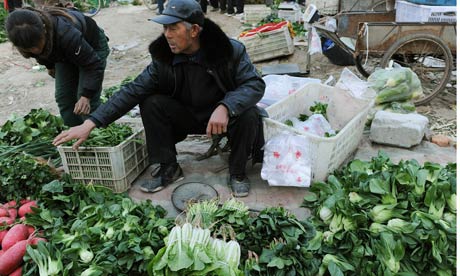
 China foodVegetable sellers wait for customers at their stalls in a street market in Hefei, eastern China. Recent food price surges in the country have underscored the supply challenges it faces. Photograph: Str/AFP/Getty Images


Shrinking arable land making it harder to maintain agricultural output, says Olivier De Schutter, as food prices rise in China
China's ability to feed a fifth of the world's population will become tougher because of land degradation, urbanisation and over-reliance on fossil-fuels and fertiliser, a United Nations envoy warned today as grain and meat prices climbed on global markets.
With memories still fresh of the famines that killed tens of millions of people in the early 1960s, the Chinese government has gone to great lengths to ensure the world's biggest population has enough to eat, but its long-term self-sufficiency was questioned by UN special rapporteur on the right to food, Olivier De Schutter.
"The shrinking of arable land and the massive land degradation threatens the ability of the country to maintain current levels of agricultural production, while the widening gap between rural and urban is an important challenge to the right to food of the Chinese population," said De Schutter at the end of a trip to China.
He told the Guardian his main concern was the decline of soil quality in China because of excessive use of fertilisers, pollution and drought. He noted that 37% of the nation's territory was degraded and 8.2m hectares (20.7m acres) of arable land has been lost since 1997 to cities, industrial parks, natural disasters and forestry programmes.
Further pressure has come from an increasingly carnivorous diet, which has meant more grain is needed to feed livestock. The combination of these factors is driving up food inflation. In the past year, rice has gone up by 13%, wheat by 9%, chicken by 17%, pork by 13% and eggs by 30%.
"This is not a one-off event. The causes are structural," said the envoy. "The recent food price hikes in the country are a harbinger of what may be lying ahead."
With climate change expected to increase price volatility and cut agricultural productivity by 5% to 10% by 2030, De Schutter said it was essential for China to wean itself off fossil-fuel intensive farming and adopt more sustainable agricultural techniques, including organic production, and to make even better use of its two great strengths: a huge strategic grain reserve and a large rural population.
He said other countries should learn from China's food reserve, which accounts for 40% of the nation's 550m-tonne grain supply and is released to minimise the impact of market price fluctuations.
He also cautioned against a shift towards industrial-scale farming, which increases economic competitiveness at the cost of natural productivity. "Small-scale farming is more efficient in its use of natural resources. I believe China can show that it is successful in feeding a very large population. " However, he acknowledged that this may prove difficult in the future as more of China's 200million farmers move to the cities.
The widening rural-urban gap has hit supply and demand of food in other ways. Nationwide nutrition levels have risen, but the growing income disparity has left sharp discrepancies in access to food. While some poor rural families in western China scrape by with two meals a day, wealthy urban households on the eastern seaboard eat so well that they are increasingly prone to the "rich diseases" of obesity and diabetes.
In his report to the Chinese government and the UN, De Schutter also raised the case of Tibetan and Mongolian nomads who have been relocated from the grasslands under a controversial resettlement scheme, and pressed the Chinese government to ensure that consumers have the freedom to complain when food safety is compromised.
He spoke specifically about Zhao Lianhai, a former food-safety worker who was jailed last month for organising a campaign for compensation over a contaminated milk scandal that left 300,000 ill and killed at least six babies.
"I'm concerned this will have a chilling effect on consumers who want to complain," he said. "You cannot protect the right to food without the right to freedom of expression and organisation."

http://www.guardian.co.uk/environment/2010/dec/23/china-ability-to-feed-population-warning

Wednesday, 22 December 2010

MALNUTRITION: In Northern Thailand

OUSA THANANGKUL M.D., JO ANNE WHITAKER M.D.and ELEANOR G. FORT
Department of Pediatrics, Chiengmai Hospital, University of Chiengmai, Chiengmai, Thailand

One hundred and eleven patients with protein-calorie malnutrition were admitted to the Pediatric Department of Chiengmai Hospital from January 1 to December 31, 1964, representing 9.1 per cent of total admissions. Blood chemical studies were performed and hematologic data were obtained in forty-five children, and another nineteen children were studied hematologically from January 1 to March 1, 1965. The age range, clinical behavior and biochemical results were essentially similar to the patterns reported from other countries where the disease represents a major problem.
Hemoglobin levels of less than 10 gm. per 100 ml. were found in 69 per cent of the patients upon admission. It is thought that the anemia of protein-calorie malnutrition is probably due to multiple deficiencies. The effects on bone marrow and peripheral blood of treatment with vitamin E, folic acid and iron, singly and in combination, are being investigated.
Low income is not the sole factor of etiologic significance in the development of protein-calorie malnutrition. "Displacement" of a child due to the birth of a sibling before weaning would ordinarily occur, and dietary habits which, by custom, include inadequate amounts of protein and large quantities of "overmilled" vitamin-depleted rice, are equally contributory.
http://www.ajcn.org/content/18/5/379.short

POVERTY: SOMALIA: UK Announces Emergency Humanitarian Assistance

15 December 2010 Nairobi — The British government is to provide food, water, shelter and urgent medical assistance for hundreds of thousands of Somalis affected by drought, flood and conflict - including those forced to flee their homes as a result of violence.
Nearly 1.5 million people in Somalia have been displaced by violence in recent years. The UN estimate that 2 million people - more than a quarter of the entire population - are in need of emergency aid.
The UK Government said it will provide emergency assistance to treat acute malnutrition in over 65,000 children, provide food aid to 8,600 people and tents and shelter for 8,000 households.
Safe drinking water to 93,000 people and improve hygiene conditions for over 250,000 people to help prevent diseases.
And ti will prepare access to basic healthcare for more than 120,000 people, 13,000 pregnant women and essential vaccinations to over 300,000 children and 134,000 women of child bearing age.
International Development Minister, Stephen O'Brien said: 'The people of Somalia are suffering dreadfully as a direct result of extreme poverty exacerbated by extreme violence. We will not turn a blind eye to this suffering.
'Over the next year more than 700,000 of the most vulnerable Somalis will benefit from emergency UK aid. We will provide food, clean drinking water and vital medical supplies to starving children and pregnant or breastfeeding women.
'The UK Government fully recognises the challenges and tremendous dedication of humanitarian staff delivering life-saving aid in Somalia.
'Our position is clear; the neutrality, independence and impartiality of humanitarian assistance must be respected. Unhindered access must be allowed for humanitarian agencies and people in need.'
In December the UN launched a new humanitarian appeal for Somalia. The UK government confirmed its assistance following a meeting with the UN Humanitarian Coordinator for Somalia in London today.

http://allafrica.com/stories/201012150441.html

MALNUTRITION: The silent killer -- Malnutrition stalks urban poor

December 22, 2010
There is overwhelming evidence to establish a symbiotic relationship between malnutrition and children of migrant labourers living in urban slums. The recent death of 16 children, all of them less than six years old, from malnutrition and related illnesses in the last eight months in just one area of Mumbai serves to underscore urban poverty and the non-existence of even rudimentary healthcare system for the poor in our cities. These tragic deaths also highlight deep-rooted problems afflicting urban slums, where children are exposed to unhygienic condition, pollution and contamination due to overcrowding and lack of basic civic amenities. What should concern authorities is that malnutrition in urban slums remains neglected by policy-makers. Studies have shown that the nutritional status of slum children is even lower than the rural average. It is primarily because families living in urban slums do not qualify for the 'below poverty line' category. Moreover, the maternal and child health services that occupy an important place in socio-economic development programmes have failed to address the problems in urban slums because they follow the rural model. These services have failed to take into account that with both parents working, children are usually left unattended and neglected; that they are born with nutritional disadvantage because their mothers are malnourished and not in the best of health; and that they are more vulnerable to communicable diseases. Slum-dwellers are often ignorant of the fact that malnutrition is a silent killer.
Since migration from rural to urban areas will continue to happen, Government must work on providing better living conditions, access to clean water and healthcare for migrant workers. If Mumbai has only 183 public health posts and 162 public healthcare centres for over 82 lakh slum-dwellers, the situation in other smaller cities and towns can well be imagined. There is no denying that Integrated Child Development Services in cities is in a shambles with inadequate staff and thus fails to provide the necessary services, including vaccinating children, and monitor their health. What we need is a separate set of services for urban areas, especially urban slums. A point that often gets ignored is that there has been a steep rise in the level of urban poverty over the past few years. This is primarily because of increased migration to urban areas by those seeking jobs as workers on construction sites or in factories. This in turn has led to a steep rise in the number of people living in already crowded urban slums. The results, understandably, are sufficiently scary to make authorities worry about the future. The solution does not lie in regulating migration, but in ensuring migrants do not pay for absence of policy
http://www.dailypioneer.com/303733/The-silent-killer.html

MALNUTRITION: On the move in a warming world: The rise of climate refugees

Geoffrey York (The Globe and Mail's Africa bureau chief.)
Dec. 17, 2010
Fatime Owye and her mother, Halime Djime, who travelled 700 kilometres to take the girl to the hospital for emergency care. Fatime's father, who owned a small herd of camels, left the family three years ago in search of work when the climate became too harsh for the camels. - Fatime Owye and her mother, Halime Djime, who travelled 700 kilometres to take the girl to the hospital for emergency care. Fatime's father, who owned a small herd of camels, left the family three years ago in search of work when the climate became too harsh for the camels. | Geoffrey York/The Globe and Mail
 Five-year-old Fatime moves in slow motion, barely able to lift her skeletal arms and legs. Flies land on her face, and she is too weak to brush them away. She struggles to drink a cup of therapeutic milk, the only food she can swallow.
Her parents were nomads who owned dozens of camels that provided meat and milk for their family. Then the rains stopped coming. The thorn trees began dying, the vegetation withered up and the big herds of camels ceased to roam.
 “I've never seen this before,” says her 29-year-old mother, Halime Djime, who has already lost two of her four children to malnutrition and disease. “Even when there were no trees, there would be vegetation. This is the first time that the land is all white.”
Fatime weighs just seven kilograms – barely half of what she should weigh at her age. Teetering between life and death, her emaciated body evokes memories of Ethiopian famines in the 1980s. Yet she is not a poster child for a celebrity benefit concert or a charity campaign. Ignored by much of the world, the starving children of the African Sahel represent a new global challenge: How to respond to the climate crisis that the world's politicians have failed to fix, and how to break the cycle of endless emergency aid in an era of donor fatigue.
Fatime's father has been on the move for years, selling his few remaining camels and seeking work in Libya and eastern Chad. His wife does not even know where he is any more. These are the days of the “climate refugees” – families splitting apart as migrants flee from increasingly harsh conditions where survival is nearly impossible.
As the desert relentlessly expands and rainfall disappears, the villages in this part of the Sahel are almost empty of men. Most have trekked to Libya or Nigeria in search of jobs. Of the people who remain, 80 per cent are women and children.
Across the Sahel, a band of semi-arid land south of the Sahara stretching from the Atlantic Ocean to the Red Sea, an estimated 10 million people suffered food shortages this year, including 850,000 children who are acutely malnourished and could die without urgent care. In the Sahel region of Chad, more than 20 per cent of children are acutely malnourished, on top of a chronic malnutrition rate of about 50 per cent. In some regions, mothers are desperately digging into anthills in search of tiny grains and seeds for their children. And this is just one of many places around the world where the changing climate has left the people dependent on foreign aid.
When the 190-nation climate conference in Cancun, Mexico, staggered to an end last weekend, there was no binding agreement on curbing carbon emissions and no sign of a treaty to replace the soon-expiring Kyoto Protocol. The negotiators will try again next December. But regardless of those negotiations, the facts on the ground will not change: The climate is growing more precarious, and millions of people are on the move. The question now is whether to encourage them to migrate – or to salvage their ravaged land with long-term investment, instead of simply handing out emergency aid.
Unable to agree on a climate treaty, the wealthy nations at Cancun promised to help the poorer countries “adapt” to climate change. The people of the Sahel, however, have already been adapting for years – mostly by voting with their feet, abandoning their barren fields and migrating hundreds of kilometres in search of work.
“Anyone who could afford to leave has left,” says 71-year-old Adji Goukouni, deputy chief of the village of Mampel, a collection of beehive huts and stick fences in the sandy wastes of the Sahel.
“I am too old to move,” he says. “I have no strength left to work. If I have to die, I will die here.”
For more than a decade now, he has been bewildered by the changing weather patterns. Fifteen years ago, he had more than 30 cows, 10 donkeys, five camels and five horses. Then they began dying. Within the past three years, his last remaining livestock perished.
“The rainfall has been diminishing all the time,” he says. “The wind is stronger than before, and animals are fleeing. We have nothing left – we only have goats. All the animals are gone, and the wild animals too, even the geckos and hyenas and guinea fowl.”
This year, the village suffered a perverse twist of fate. When everyone had given up on the rains, suddenly there were torrential storms, more rainfall than the village had seen in many years. But the farmers gained nothing. They had not gambled on the cost of seeding their fields. “We weren't expecting any rain, so I didn't plant anything,” Mr. Goukouni said.
In the region around his village, farmers need 400 millimetres of rain annually to produce a crop. Over the past four years, rainfall has varied from 135 millimetres to 358 millimetres – not enough to sustain a harvest. And much of the rainfall is produced in torrential storms that cause more damage than benefit.
In the nearby town of Mao, the strange combination of drought and sudden torrential rain has had an unexpected result: huge fast-growing ravines that threaten to swallow up the town. This year alone, 350 houses were destroyed by the eroding sand, which also threatens to destroy a local school and the local airport. Sandbags and concrete walls have failed to hold back the rapid growth of the ravines.
A couple of hundred kilometres to the south, fishermen and farmers have been devastated by the dramatic disappearance of Lake Chad, one of the biggest lakes in Africa. The lake, shared by four countries, has lost 95 per cent of its size since the 1960s, partly because of climate change and partly because of overuse for agricultural irrigation. Experts say it could completely disappear within the next two decades.
Where once the lake had 150 species of fish, only about a dozen species are still alive today. The fish catch has dropped by 60 per cent, and thousands of fishermen have been forced to abandon the lake. From an airplane overhead, the lake is now revealed as a vast collection of shallow inlets and fingers of water, choked with weeds. It's an environmental catastrophe that imperils the 30 million people who depend on the lake, yet it has been virtually ignored by the world.
“When the water was deep, I could just throw out a net and it would fill with fish,” says Paul Mbayou, who has been fishing on the lake for 17 years. “I used to get enough to sell in Nigeria. But now the fish are too small.”
He takes a boat to check the traditional basket nets that he left in the weeds at the edge of the lake. But most of the nets are empty, and only one has a few tiny fish in it. “Nothing, nothing,” he mutters as he checks each net.
The region around Lake Chad was once the breadbasket of the Sahel, but its farmers have seen their crops decline by 40 to 60 per cent in the past decade, as irrigation canals are left dry by the receding lake. Thousands of cattle have died, and the surviving cows are producing less than half as much milk. Even in this former breadbasket region, more than a fifth of the children are acutely malnourished.
The village of Ngambia was built in the 1940s on an island in Lake Chad. Then the lake receded, the village was left stranded in the middle of the desert, and the villagers had to stop fishing. They tried to grow crops, but they could produce only enough to feed their families for a few months of the year. So now the men have moved away in search of work, leaving the women and children behind.
The biggest town on the Chad side of the lake, Bol, has lost more than half of its population since the 1990s. Its mayor, Ahmat Tidjani Boukar, says the men have journeyed to Nigeria or Libya to become labourers or security guards, or have joined the Chadian army. Many of the women, he says, have become prostitutes or beggars.
“The community has always depended on the lake, but now there are no fish,” the mayor says. “In the past, we exported fish everywhere. Now, we can't even produce enough for ourselves. It's very likely that people will just keep moving away.”
Evidence like this is convincing some experts that the Sahel is becoming uninhabitable. Across most of Africa, average temperatures have been steadily rising for decades, while rainfall has been declining. The Sahel is one of the worst-hit regions. Climate change and human exploitation have left it vulnerable to extreme weather and a destructive cycle of drought and floods.
For more than a decade, child malnutrition in the Sahel region of Chad has been above the emergency threshold (defined by the United Nations Children's Fund (Unicef) as a 15-per-cent rate of acute malnutrition). The Sahel countries, including Chad and Niger, are among the poorest and hungriest in world, with nearly one-quarter of their children dying before their fifth birthday. An estimated 225,000 children die annually of malnutrition in five Sahel countries: Chad, Niger, Mali, Mauritania and Burkina Faso.
“Before, we had crises, but they came and went,” says Maina Abakar, a nutrition expert in Chad. “Now, the crisis just stays.”
The changing climate has created a dilemma for wealthy donor countries such as Canada. Instead of spending millions of dollars on emergency food for the region's malnourished children, should they be encouraging the people to leave? When the Cancun conference promised $100-billion annually to poor countries to help them adapt to climate change, does it mean helping Africa ship its people out of uninhabitable areas?
“If the conditions in the Sahel continue to worsen because of climatic deterioration, it's obvious that it can't sustain a large number of people,” says Jean-Luc Siblot, director of the Chad operations of the World Food Program, the UN food agency.
The WFP is providing supplementary food rations to about 60,000 children and 81,000 pregnant women and young mothers in Chad alone. It has asked for $300-million from donors to support the Sahel countries this year. But Mr. Siblot questions whether this kind of assistance is the best solution for the region in the long term.
“When it is likely that the climate will worsen over the next 20 to 30 years, I'm not sure whether we'll be able to sustain it,” he says in his office in Chad's capital, N'Djamena.
“The desert is expanding every year. You can't have a big percentage of the population living in those conditions. They're migrating away, in a very disorganized way. I don't see a solution for it. You can dump as much food as you want into the Sahel, but it won't solve the problem.”
Unicef sees it differently. In its view, its primary obligation is to prevent starvation and save the lives of the families in the Sahel, even if this encourages them to remain in a region where the climate is deteriorating and the desert is spreading.
“This is where our parents and ancestors were born,” says Yakoura Maloum, a Unicef officer who was born in the town of Bol. “The tombs of our sultans are here. It's not possible for us to move away. Individuals can move, but the community cannot move.”
In the Sahel region of Chad alone, Unicef is providing food for 50,000 malnourished children in about 200 emergency feeding centres. Last year, it supported 12,000 children, so the number has quadrupled this year as the crisis deepened.
“I've never seen a situation as bad as this,” says John Ntambi, a Unicef nutrition specialist in the Mao district.
“You see thousands of children all the time, and it never ends. It never gets any better. The population is less and less capable of feeding itself, so it's more reliant on external support. The levels of malnutrition are very alarming.”
Even after the feeding centres were created this year, it can be a long ordeal for mothers to reach one. Distances are vast, and roads almost non-existent. When her child fell ill, it took five days for Halime Djime to travel 700 kilometres to the hospital in Mao.
The irony is that the Sahel countries could do more to feed themselves, but they are hamstrung by poor land policies, low education levels, a lack of money for investment, and autocratic regimes that spend more money on weapons than on children. If donor countries refused to help the malnourished children of the Sahel, the children would simply starve.
“I've never worked in a region where the government is so unresponsive,” Mr. Ntambi says. “All of the life-saving supplies are being provided by Unicef, and nothing is being provided by the government. The priorities are wrong.”
Many experts believe that the Sahel has huge potential to sustain crops and livestock if its water resources were managed properly. Scattered among the sand dunes and scrub land, there are thousands of oases and valleys where crops can grow. But less than 10 per cent of the population has access to these oases, which are owned by a privileged few. And since the water is deep underground, the owners often lack the money to dig wells and pump out the water for crops.
In the region surrounding Mao in the Sahel of western Chad, 750 oases are underused because their owners cannot afford to dig wells, according to the UN's Food and Agriculture Organization. It estimates that only 10 per cent of the oases are properly developed for agricultural use.
Another key factor is the government's preference for military spending. Chad has received billions of dollars in oil revenue in recent years (it is the sixth-biggest African supplier of oil to the United States), yet most of this revenue is spent on its security forces, despite its earlier promises to spend the oil money on poverty alleviation.
“People think Chad is a rich country because of its oil – and it's true,” says Jean-Baptiste Ndikumana, the Unicef deputy representative in Chad. “If they used this money for social services, there could be some improvement. Instead, they use it for weapons.”
oor levels of education are another crucial problem. Knowing little about nutrition, many people in the Sahel turn to traditional healers when their children are starving. The “healers” usually do more harm than good: They cut incisions in children's mouths or burn their bottoms to “treat” diarrhea.
Grandmothers, meanwhile, encourage their pregnant daughters to eat less food so that their babies will be smaller; or they advise mothers to give water, instead of milk, to newborns. Both are dangerous practices. Breastfeeding is one of the best ways to improve a child's health, yet only about 3 per cent of Chad's children are exclusively breastfed in their first six months. And because of cultural traditions, women with starving children are reluctant to travel to a feeding centre without the permission of their husbands, who are often unreachable because they have migrated in search of work.
Education and agricultural development are the keys to saving the people of the Sahel from climate change. Yet only a small handful of international agencies are present here, in contrast to the hundreds of agencies in Haiti or Afghanistan.
There are no dramatic earthquakes or civil wars to draw attention to the Sahel – only the slow grind of climate change, wreaking its gradual chaos on the land. Relief agencies tend to respond late, or not at all. The UN was aware of the drought in Chad in the fall of 2009, yet it did not send emergency aid until the spring of this year. “We came too late,” Mr. Siblot admits. “We wasted three months, scratching our heads and trying to decide on a response.”
The FAO is one of the UN agencies that should be helping Chad to improve its agricultural productivity, yet it has only a small presence here. In effect, the UN and the world's donor countries have channelled their funds to emergency aid, rather than long-term agricultural development – which means that Chad will always be dependent on aid. “We are saving lives, but we are not solving the problems,” says Mr. Ndikumana of Unicef.
The Sahel may symbolize the future of foreign aid: responding to climate-related crises that leave millions at risk of hunger and death. The solution, as Mr. Siblot acknowledges, is to do more than “dumping food” into a region. There needs to be much heavier investment in education and agriculture, so that massive numbers of people aren't forced to abandon their homes. And if a regime prefers to spend its billions on soldiers and military weaponry, the buyers of its oil might have to use their influence to press for new priorities. Otherwise, the vast human migration in places such as the Sahel will spin out of control forever.
http://www.theglobeandmail.com/news/world/africa-mideast/on-the-move-in-a-warming-world-the-rise-of-climate-refugees/article1843024/singlepage/#articlecontent

MALNUTRITION: Malnourished Children in Yemen Need Plumpy'nut

 William Lambers:  Dec 17, 2010
  A severely malnourished child being treated in Yemen. Foods like plumpy'nut can bring children back to health. (UNICEF photo).


The most important aid Yemen needs right now is food to save its youngest children from dangerous malnutrition. UNICEF and the World Food Programme (WFP) are calling for arsenals of the nutritious peanut paste plumpy'nut to feed children in Yemen.
Impoverished Yemen has one of the highest rates of child malnutrition in the world. WFP says "half of Yemen's children are chronically malnourished." When a small child does not receive proper nutrients in the first 1000 days of life, devastating physical or mental damage will occur.
If a child suffers from severe acute malnutrition, a simple infection could lead to death. Even in more moderate cases, simple infections can descend the child deeper into malnourishment. This is what many children in Yemen face from birth.
Low funding for both WFP and UNICEF has limited their ability to help Yemen. Both aid agencies depend on donations from the international community. Food security has simply not been given a priority among donors, a huge failure in the foreign policy strategy of many governments.
The conflict in Northern Yemen (Sa'ada) between the government and rebels has placed small children in even further danger. The chaos from the conflict is increasing the risk of malnutrition.
A survey released by UNICEF found "Nearly half of the 26,246 children aged 6-59 months screened in five western districts of Sa’ada in July 2010 were found to be suffering from global acute malnutrition; in one area, the proportion was as high as three out of four children. Overall, 17 per cent of the children screened suffer from severe acute malnutrition and 28 per cent from moderate acute malnutrition. "
Geert Cappelaere, UNICEF's director in Yemen says, “Malnutrition is the main underlying cause of death for young children in Yemen, and therefore this grim situation could spell disaster for the children of Sa’ada. As winter approaches, thousands of children are at serious risk if we are not able to act immediately.”
http://blogcritics.org/culture/article/malnourished-children-in-yemen-need-plumpynut/

MALNUTRITION: Sudan: An Overview of MSF's Work in 2010

December 16, 2010


“I was only six months pregnant. I could feel myself go into labor. I had really bad back and abdominal pain. I was worried, so I walked to the MSF hospital. My baby, Litjong, was born after a quick labor. He only weighed 650 grams. I was sad; but whether he was going to survive or not was not a question for me to answer. It was always going to be in the hands of someone else.”
—Aluel, MSF patient in Agok, and mother of eight children, including Litjong, who survived despite being born three months premature.

Doctors Without Borders/Médecins Sans Frontières (MSF) has been providing medical humanitarian assistance in Sudan since 1979. Currently MSF is providing a range of health care services including nutritional support, reproductive healthcare, kala azar treatment, counseling services, surgery, and pediatric and obstetric care. MSF also responds to medical emergencies.
MSF teams are preparing to respond rapidly to any emergencies that arise in 2011 by positioning supplies that will ensure teams can assist people in need as quickly as possible and will allow them to deal with outbreaks of disease such as kala azar and meningitis.

Northern Bahr El-Ghazal State
In Aweil Civil Hospital in Northern Bahr El-Ghazal province, MSF works with the Ministry of Health to reduce maternal and pediatric mortality, treat malnutrition, and respond to emergencies. MSF staff perform surgery, including caesarean sections, and provide gynecological and obstetric care, and mother and child healthcare, including antenatal and postnatal consultations and vaccinations.
From January to October 2010, nearly 31,000 antenatal consultations were provided, more than 2,450 women came to the hospital to deliver, and 50,000 pediatric consultations were performed. There were nearly 2,300 admissions to the pediatric department, with the main illnesses being respiratory infections and diarrhea. The hospital has an inpatient therapeutic feeding center and an outpatient feeding program. From January to October 2010, around 2,370 children were treated for severe acute malnutrition, similar to the number of people that were treated for malnutrition in the same period last year.

Western Bahr-el-Ghazal State
MSF began working in Raja County in August 2010, focusing on emergency preparedness and reducing maternal and pediatric morbidity and mortality. MSF has already supported the treatment of 2,700 patients and admitted 200 patients. Once the roads are accessible at the end of the rainy season, MSF teams will extend their intervention to the camps for displaced people, if the needs are there.

Central Equatoria State
In Juba, southern Sudan’s main city, MSF runs activities to prevent cholera outbreaks, including health promotion and the provision of clean water to at-risk communities. In order to improve hygiene and reduce the number of deaths from water-borne diseases, an MSF team has drilled seven new boreholes, repaired ten existing ones, and quality-tested more than 200 boreholes used by the community.
MSF has also constructed a new water system for the Ministry of Health’s El-Sabah Hospital, drilling a new borehole within the hospital grounds, providing a water tanker, and creating a water distribution system to supply the pediatric and nutritional wards and the laboratory.

Eastern Equatoria State
At the end of May, MSF started a six-month project to support the Kapoeta Hospital in treating children under the age of five suffering from acute malnutrition during the April-to-September “hunger gap.” A 40-bed inpatient therapeutic feeding center and three outpatient treatment centers were set up. Between the end of May and mid-July 2010, around 250 children were admitted to the program, 50 of whom received inpatient care.
Western Equatoria State
MSF is providing essential primary and secondary healthcare, including emergency medical care, mental health care and relief activities for people affected by violence, many of whom have been injured in attacks carried out by the Uganda-based rebel group, the Lord’s Resistance Army. MSF uses mobile teams in this area to reach people affected by violence and to provide primary healthcare. MSF is also supporting Ministry of Health facilities in the Ezo and Makpandu refugee camps and running mobile clinics where needs arise in and around Yambio.
In May 2010, MSF started supporting the pediatric, surgery, outpatient, inpatient and reproductive health departments of Yambio Civil Hospital, as well as its sleeping sickness program. Between January and October 2010, MSF provided more than 26,286 outpatient consultations and treated approximately 11,057 people for malaria in Western Equatoria State. Between May and October, MSF teams admitted over 1,691 people to Yambio Civil Hospital and performed over 243 surgeries.

Jonglei State
Apart from a small Ministry of Health facility in Pibor town, MSF is the only primary healthcare provider in this part of Jonglei State, where approximately 160,000 people live in widely-scattered villages and the roads are often impassable. MSF runs a primary healthcare clinic providing emergency care, inpatient care (in a 42-bed facility), outpatient care, and reproductive health services, including antenatal consultations, maternity care, and treatment for sexually transmitted infections.
MSF runs outreach primary healthcare units in Lekwongole and Gumuruk, providing basic care, such as general consultations, treatment for malnutrition, deliveries, antenatal care and vaccinations, as well as referring more complex cases to Pibor. During the rainy season, which lasts from May to September or October, both these sites are only accessible by boat or plane.
Between January and November 2010, MSF teams provided 44,775 consultations in Pibor, Lekwongole, and Gumuruk, and delivered 435 babies. The MSF team also admitted 1,309 severely malnourished children to its outpatient therapeutic feeding program.
In July 2010, following a series of cattle raids near Lekwongole, an MSF team treated five male patients for violent trauma wounds. From its Lekwongole outreach post, MSF transferred a four-year-old boy with head injuries and four patients—two children and two adults—with gunshot wounds to its larger clinic in Pibor. There the medical team stabilized the patients before evacuating those suffering from gunshot wounds by plane for urgent surgery in Boma.
At the end of July, MSF was forced to suspend activities in its Gumuruk clinic due to the deteriorating security situation. Therapeutic food for malnourished children and medical equipment was stolen from the clinic on two occasions, and four MSF staff travelling by boat from Pibor were violently robbed. This suspension of activities meant that the more than 160 severely malnourished children receiving treatment, and the approximately 20 new admissions each week, were not able to receive the care they urgently needed. Though the project is still suspended due to continuing clashes in the area, MSF remains committed to resuming its medical activities in Gumuruk as soon as it is feasible.
In the remote northern area of Lankien, MSF runs a busy clinic which serves around 127,000 people. With outreach sites in Pieri and Yuai, MSF teams provide all levels of medical care, with treatment for ailments ranging from respiratory tract infections to spear wounds. In the outpatient departments, 75,163 patients were seen between January and November 2010. In this period, 550 people were treated for malaria, 638 people started treatment for kala azar, and 237 began tuberculosis treatment. In the same period, 979 people were admitted to the hospital, 3,520 children were vaccinated against measles, and, up until November 2010, 1,072 children were treated for malnutrition.

Unity State
MSF is one of the few organizations providing medical care in Leer, an area close to the contested north-south border and numerous oilfields. MSF teams run a hospital which provides all levels of care, including emergency surgery and outpatient care, as well as surveillance and response to medical emergencies and outbreaks. This past year, MSF teams provided more than 63,859 outpatient consultations between January and November. More than 6,454 people were treated for malaria, more than 3,245 children were vaccinated against measles, and 1,131 people were admitted to the hospital, 300 of whom were operated on. Upwards of 70 percent of these operations were emergency surgeries. Through November 30, 2,400 children under the age of five were treated for malnutrition, 167 people were admitted for tuberculosis treatment, and 43 patients were admitted to the HIV/AIDS program, 11 of whom have been started on antiretroviral therapy.
In July 2010, MSF opened a feeding program in Bentiu, the capital of Unity State, as teams were seeing increasing numbers of patients coming from there to seek treatment in Leer. The nutritional situation in Unity State is extremely worrisome, and it seems that the high levels of malnutrition cannot be attributed to the annual hunger gap alone. Factors such as the scarcity of food, the high price of sorghum and other staples, violence, insecurity, and displacement have all had a direct impact on people’s ability to produce food and feed themselves. In the first two days of activities, more than 60 children were admitted to the nutritional program in Bentiu. Up until November, MSF had treated a total of 1,396 children.
Upper Nile State
MSF runs a hospital in Nasir and a primary healthcare unit in Beneshowa. Situated close to the Ethiopian border and the Sobat River, Nasir struggled with insecurity in 2009 due to escalating violence between various tribes and clans. In 2010, the tension decreased, allowing MSF teams to focus on the development of medical programs, including HIV and TB care. In Nasir and Beneshowa, MSF teams provided 36,639 outpatient consultations between January and November. More than 1,670 people were treated for malaria and 4,140 children were vaccinated against measles. In this period 1,788 people were admitted to the hospital, 151 of whom were operated on. Over half (59 percent) of these operations were emergency surgeries. Up to November 2010, 1,710 people were treated for malnutrition.
The Upper Nile region is southern Sudan’s epicenter for kala azar, a parasitic disease caused by the bite of a sand fly, and is facing the worst outbreak in eight years. So far in 2010, MSF teams have treated more than 2,086 kala azar patients, curing 94 percent of them. This is eight times higher than the number of patients treated over the same time period in 2009. In 2010, MSF responded to outbreaks in Pagil, Atar, and Khorfolus by providing treatment to patients and training health staff. Medical teams also assisted a clinic in Old Fangak and assisted the Ministry of Health in Malakal, Upper Nile State, with technical and material support.
In October, MSF responded to a large increase in kala azar cases in the local health center in Rom village in Akoka County. Nearby clinics that did not have drugs to treat kala azar patients began to refer them to Rom, putting significant pressure on the existing team of local staff, who did not have enough medical supplies or trained personnel to deal with the increase of patients seeking treatment. To support the team, MSF donated kala azar drugs, rapid tests for malaria and gloves, and treated more than 40 patients. MSF also provided training on the correct diagnosis and treatment of this neglected disease

Warrap State
In December 2009, MSF started working in Gogrial West County in Warrap State. Initially, MSF provided basic health care on an outpatient basis. There was no hospital in Gogrial West County, so people in need of urgent surgery were forced to travel long distances at great personal expense. In order to meet the medical needs of the approximately 240,000 people living in this area, MSF has built a brand new primary healthcare center, with inpatient wards, a pharmacy and laboratory.
MSF has also set up two inflatable clinics to provide maternity, emergency obstetric and surgical care. Between January and October 2010, MSF treated more than 34,400 patients (or more than 3,000 patients per month). Of these, 936 were children suffering from malnutrition. In July, surgical operations began, and 82 surgical interventions have already been carried out. On November 18, for instance, an eight-year-old boy was referred to the MSF team in Gogrial for surgery to remove shrapnel, the result of a recent airstrike bombing in neighboring Northern Bahr El-Ghazal state. Following surgery, the child received antibiotics, the wound was cleaned and closed, and one week later he was sent home in a good condition.
Elsewhere in Warrap State, MSF is setting up a base in Turalei to support surgical activities in an existing health center as to facilitate quick medical emergency responses. A mobile medical team, consisting of doctors, surgeons, and nurses, is on standby and ready to respond to any emergency medical needs in other areas of the state.

The Transitional Area of Abyei
MSF has been working in the transitional area of Abyei since 2006. MSF offers primary healthcare services through an outpatient clinic in Abyei town. MSF provides nutritional support for children under the age of five, as well as maternity and pediatric services, and also responds to emergencies. Between January and November 2010, 10,625 outpatient consultations were conducted, more than 1,204 mothers were seen in the antenatal clinic, and more than 305 children under the age of five were treated for severe malnutrition.
MSF was running five mobile clinics in the northern part of Abyei until July, when mobile clinic activities were suspended due to security concerns.
In May 2008, following violent clashes in the transitional area of Abyei, nearby Agok became a host town to thousands of displaced people. MSF responded quickly by setting up an emergency medical program caring for the wounded and displaced. Today, there are 60 inpatient beds and the medical teams are providing primary and secondary healthcare, including reproductive healthcare and treatment for malnutrition. Between January and November 2010, MSF staff carried out over 27,812 outpatient consultations, admitted 1,450 patients to the inpatient department, and saw more than 3,164 pregnant women in the antenatal clinic. In the same period, there were 668 deliveries in the maternity ward, 10,141 nutrition screenings, and 2,283 children treated for severe malnutrition. MSF is also setting up an operating theater, which will enhance MSF’s surgical capacity and emergency response.

Al-Gedaref State
In January 2010, MSF, in collaboration with the Ministry of Health, opened a project in Al-Gedaref State in eastern Sudan to provide free treatment for kala azar. According to data from the Ministry of Health, the World Health Organization, and MSF, Al-Gedaref State is the most kala azar endemic area in Sudan.
The treatment center is located in the remote village of Tabarak Allah, three hours from Al-Gedaref town, and approximately 330 miles east of the capital, Khartoum.
Between January and October 2010, a total of 5,967 kala azar suspects were screened for the disease. This resulted in 1,103 patients diagnosed with kala azar. Of these, 951 (86.2 percent) were primary kala azar, 76 (6.9 percent) were relapses, and 76 (6.9 percent) were suffering from post-kala azar dermal leishmaniasis.
In April 2010, the Ministry of Health expressed concern about the deterioration of the nutritional situation in Al-Gedaref State and asked for MSF’s support. In June 2010, MSF and the Ministry of Health conducted nutritional screening in three areas and were concerned by the results. Consequently, in July 2010, MSF opened a nutrition program in Gala Al-Nahal and Al-Quereisha localities, with four inpatient nutrition centers to treat malnourished children suffering from medical complications, and four mobile teams performing screenings and providing nutrition treatment for uncomplicated malnutrition cases. These activities are taking place in Tabarak Allah and Sifawa, in Al- Quereisha locality, and Gala Al-Nahal and Um Sagata in Gala Al-Nahal locality. Between July 21 and late-October, MSF provided treatment for more than 6,000 malnourished children under the age of five.

North Darfur State
MSF faces major constraints in delivering medical assistance in Darfur. Security remains a pressing issue, as banditry and kidnappings of aid workers continue to occur. Reaching people who are in dire need of health care continues to be a struggle. MSF conducted a medical assessment in eastern Jebel Marra in May 2010 but, lacking the proper authorization, has not been able to return to provide medical care to the people who need it.
MSF runs a clinic in Kaguro, North Darfur State, in western Sudan. This clinic offers outpatient and inpatient care, an immunization program, an outpatient therapeutic feeding center, an inpatient therapeutic feeding center and stabilization unit, a women’s health clinic, and emergency surgery. MSF also runs five health posts in the isolated mountain villages of Burgo, Bourey, Lugo, Useige, and Bouley. At the health posts, teams provide primary health care along with nutritional support. MSF is the only provider of healthcare in Kaguro and has been working there since 2005. Between January and late-November, the MSF team provided 61,200 consultations—an average of over 5,500 a month—including care for 854 severely malnourished children and more than 2,650 antenatal consultations.
MSF supports a nutrition program in Aboushok and Elsalam camps for internally displaced people in El-Fasher, the capital of North Darfur. These two camps were set up in 2004 on the outskirts of El-Fasher, and are home to about 104,000 people. MSF, in coordination with the Ministry of Health, runs a feeding program for children affected by severe acute malnutrition. It includes one inpatient facility for severely malnourished children with complications and two outpatient nutrition centers. There are currently 554 children being treated for malnutrition. MSF also supports a team of community health workers who are involved in case finding, defaulter tracing, and health promotion in the camps for displaced people. The program is run in collaboration with the Humanitarian Aid and Development Organization, a Sudanese non-governmental organization.
Elsewhere in North Darfur, MSF works in Shangil Tobaya, Tawila, and Dar Zaghawa. In Shangil Tobaya, MSF’s hospital continues to provide primary and secondary healthcare, including pediatric care, reproductive healthcare, and counseling services for approximately 57,000 people. Between January and October 2010, MSF staff provided more than 31,425 outpatient consultations and 4,365 antenatal care consultations, and admitted 1,015 people to the hospital’s inpatient department.
In Tawila Hospital, MSF works with the Ministry of Health to provide care for around 28,600 people, both local residents and those who are living in the Rwanda, Dali and Argo camps for internally displaced people. Between January and October 2010, MSF staff provided around 23,825 outpatient consultations and more than 3,274 antenatal consultations, and admitted 292 people to the hospital’s inpatient department.

In December 2009, MSF started a short-term intervention for a period of one year in Dar Zaghawa, an area in northwestern Darfur close to the Sudan-Chad border. MSF supports five health centers in the area, as well as responding to possible emergencies arising from violence. In October, MSF teams provided 2,420 outpatient consultations.

In the three areas of Shangil Tobaya, Tawila, and Dar Zaghawa, MSF has a network of more than 60 community health promoters providing daily support to displaced people living in the camps and surrounding villages. These teams provide nutritional care and basic health and hygiene education and follow-up with patients as well.

Since January 2010, MSF teams have launched a number of emergency responses in Dar El-Salam, El-Fasher, the Jebel Marra region, Tawila, and Dar Zaghawa, providing emergency medical care, surgery, and mental health support, donating medical kits and drugs, distributing non-food items, building latrines and organizing vaccination campaigns.

Red Sea State
In the city of Port Sudan, the capital of the Red Sea State (RSS) in northeastern Sudan, MSF provides reproductive healthcare in the Ministry of Health’s Tagadom Hospital. Approximately 98 percent of women in Tagadom and surrounding neighborhoods have undergone some form of female genital cutting, which causes a variety of serious medical and obstetrical complications. In collaboration with the Ministry of Health, MSF provides a range of services in the reproductive health unit, including antenatal and postnatal care, delivery services, family planning, treatment for sexually transmitted infections and counseling services. Earlier this year, MSF built and equipped an operating theater to assist women with complicated deliveries and caesarean sections. MSF community health workers also raise awareness about the importance of seeking medical care during complicated deliveries and about the harmful medical effects of female genital cutting.
De-infibulation, the de-stitching of the vaginal outer lips, is performed when preparing an infibulated woman for delivery. To avoid grave medical consequences, MSF’s gynecologists do not re-infibulate, or stitch back, the mother after delivery. In the first ten months of 2010, MSF conducted over 12,651 antenatal consultations, helped deliver 1,716 babies and carried out 65 caesarean sections.
At the end of the year, the work that MSF medical teams began in Tagadom Hospital in 2005 will continue under the auspices of the Ministry of Health, which will take full responsibility for these important services. MSF has donated a six-month supply of drugs and medical materials to the hospital.
Following serious flooding in the Red Sea State in July 2010, MSF donated kits and emergency supplies of food to affected families in the Tokar region. The flooding destroyed homes and water sources, and although the Ministry of Health addressed the most urgent medical and humanitarian needs in the immediate aftermath, the Minister of Social Affairs requested additional support. MSF donated 200 emergency kits to a special shipment of supplies that was sent by boat to the affected area. Each kit contained plastic sheeting, rope, a blanket, a mat, soap, hygiene items for women, pots, mugs, eating utensils, jerry cans, and a bucket. MSF also donated more than seven tons of high-calorie, vitamin-fortified food, enough to provide nutritional supplements for up to 1,200 families for a period of 11 days, and to help prevent malnutrition amongst children under the age of five.
http://www.doctorswithoutborders.org/news/article.cfm?id=4922&cat=field-news

MALNUTRITION: Peru nears goal of reducing child chronic malnutrition to 30%

Children from Apurimac region, southern-central Peru.  Photo: ANDINA/ Vidal Tarqui. Children from Apurimac region, southern-central Peru. Photo: ANDINA/ Vidal Tarqui.

Lima, Dec. 14 (ANDINA). Peru is about to achieve its goal of reducing child chronic malnutrition to 30 percent in rural areas of the high Andes, said the president of the National Program of Direct Support to the Poorest (Juntos), Ivan Hidalgo.
“According to the Demographic and Family Health Survey (Endes), child chronic malnutrition (DCI) in rural areas of the country contracted 30.9 percent as of the first half of 2010, with which Peru is about to accomplish its goal set at the beginning of the current administration,” Hidalgo stated.
He recalled that in 2000, child chronic malnutrition stood at 40.2 percent and declined only 0.1 percentage points to 40.1 by 2005.
However, after five years and due to several factors including an economic incentive for the poorest families in the country, the current rate is 30.9 percent.
Good results can be largely attributed to the participation of the poorest families in the Juntos program, because there is a commitment of shared responsibility.
They are given 200 soles (some US$ 70) every two months and families must take children to their medical checkup and school.
http://www.andina.com.pe/Ingles/Noticia.aspx?id=uifu7Vn42Gk=

MALNUTRITION: What is malnutrition?

Diana Nabiruma : 15 December 2010

Malnutrition manifests in two forms; under-nutrition and over-nutrition.
Under-nutrition, according to a booklet titled Malnutrition: Uganda is Paying Too High a Price, “occurs when the body fails to get the right quantities and proportions of nutrients for it to maintain health and proper function.”
In Uganda, under-nutrition mostly occurs in children and it presents with stunting (child being too short for their age) or too thin for their height (wasting). The most severe forms of wasting are marasmus and kwashiorkor.
A nutritionist at Mwanamugimu unit of Mulago hospital says that although signs of marasmus and kwashiorkor are obvious, child caretakers are usually in denial or ignorant of the fact.
According to this nutritionist, caretakers instead blame witchcraft when their children show signs of malnutrition or think their children are simply fat.
As if to demonstrate the point, the day we visit the unit, a father taking care of his daughter bugs the nutritionist to have his child moved to a ward with stabilised children.
“Ono simulwadde. Mutusindike eri,” he says meaning, “This one is not sick. You should send us to the other ward”. However, the child looked wasted, something even the sunny dress she wore couldn‘t hide.
Nutritionists point to poor sanitation and hygiene (which cause diseases like diarrhoea), teenage pregnancies and frequent pregnancies (pregnancies and lactation require high amounts of nutrients which are sometimes not met), poor feeding habits where people feed on only staple foods (usually containing carbohydrates and proteins), poverty and a lack of prioritisation of nutrition by the government as the major causes of malnutrition.
And despite Uganda being a food basket, the nutritionists say all regions are afflicted. Case in point, south-western Uganda has the highest number of stunted children.
Over-nutrition, on the other hand, is a condition that occurs when the “body gets more nutrients than it needs, to the point that the person becomes unhealthy.“ The condition usually presents with obesity and is common in urban areas.

Measures
It is said that malnutrition starts from the womb; when a mother feeds poorly, the child also feeds poorly and it is estimated that one in every 10 children born in Uganda is already malnourished.
This puts the child at risk of dying from diseases like malaria, diarrhoea and HIV/AIDS. The estimated number of child deaths as a result of diseases closely related to malnutrition is 47%.
Overall, 60% of deaths in child deaths are attributed to malnutrition in all its forms (low birth weight, underweight and Vitamin A deficiency). Clearly, there is need to address the problem to reduce child mortality.
In addition, curbing malnutrition would reduce on mental retardation, brain damage and physical disabilities in children. These occur because of an Iodine Deficiency Disorder (IDD), largely found in children from mountainous areas in western Uganda who eat locally mined salt as opposed to iodised salt.
The mothers in these regions also face the same problem, putting their children at the risk of having lower learning abilities, poor speech and hearing disabilities.
In 2009, 2,100 children were born as cretins as a result of IDD in mothers, while those who lack Vitamin A could suffer blindness.
As a measure, Uganda, through the National Development Plan of 2010-2015, hopes to achieve sustainable economic development through increased agricultural productivity, improved health and survival and improved human capacity development through education.

dnabiruma@observer.ug
http://www.observer.ug/index.php?option=com_content&view=article&id=11357:what-is-malnutrition&catid=58:health-living&Itemid=89

MALNUTRITION: Thousands of South Sudan children in 'desperate' condition

GENEVA — Thousands of children in south Sudan are living in "desperate" conditions due to serious malnutrition, as well as a lack of access to medical care and education, the UN children's agency said ."By any international standards, the situation of children in South Sudan is really desperate," said Yasmin Ali Haque, who heads Unicef's bureau in the region.
Malnutrition is one of the major problems of the region where 90 percent of the 9 million inhabitants live with less than a dollar a day, said the UNICEF official.
Around 1.2 million people were dependent on food aid in 2009, the UN agency said, noting that more than 40,000 children in the region are treated every year for malnutrition.
After years of conflict with the Arab-dominated north, "generations of children (in south Sudan) have not had access to schooling or proper health care," she added.
South Sudan also has one of the highest levels of maternal mortality in the world, with more than 2,000 women dying in every 100,000 births.
Due to the lack of access to healthcare, one in every seven children "don't live until their fifth birthday," Haque said.
In addition, only one out of five children aged six enters school.
In the past five years, the situation has improved with the end of the conflict with the north, said Haque, although she acknowledged that "still a lot more need to be done."
She said the referendum on independence planned for January 9 could worsen a humanitarian situation which is already complicated by "floods, drought, inter-tribal conflict or attacks" by Ugandan rebels.
"There is a constant humanitarian situation in South Sudan and there is the potential that it gets worse," she added.
South Sudan is widely expected to opt for independence in the referendum, which would split Africa's largest country in two.
http://www.google.com/hostednews/afp/article/ALeqM5i4lGpXU1_cUQmWNguWaL_KPyQvfA?docId=CNG.937a29e74a6fa43f33a85ed42e22fb84.211

MALNUTRITION: Another Face of Hunger: Malnutrition and Stunting in Guatemala

Guatemala Slideshow

http://abcnews.go.com/Health/slideshow/guatemala-devastating-effects-malnutrition-12387162

POVERTY: Millennium Development Goals & India

October 20, 2010
K. S. Jacob (Professor K.S. Jacob is on the faculty of the Christian Medical College, Vellore.)


External Affairs Minister S. M. Krishna delivers his speech on 'Millennium Development Goals' at United Nations in New York recently.
PTI External Affairs Minister S. M. Krishna delivers his speech on 'Millennium Development Goals' at United Nations in New York recently.

India's vast population, its diversity, the variability of services and the differing baselines across regions complicate the achievement of the MDGs.
The Millennium Development declaration was a visionary document, which sought partnership between rich and poor nations to make globalisation a force for good. Its signatories agreed to explicit goals on a specific timeline. The Millennium Development Goals (MDGs) set ambitious targets for reducing hunger, poverty, infant and maternal mortality, for reversing the spread of AIDS, tuberculosis and malaria and giving children basic education by 2015. These also included gender equality, environmental sustainability and multisectoral and international partnerships.
The 10th anniversary of the declaration was used to review progress and suggest course corrections to meet the 2015 deadline. The glittering banquets, the power lunches and the rhetoric at the formal meetings, attended by many celebrities, ambassadors of different nations, international charities and the media, in New York belied the stark reality in many poor countries. While the declaration and the MDGs were a clarion call and mobilised many governments into concerted action, a review of the achievements to date and projections for 2015 suggest some success and much failure. Most rich nations failed to meet the targets on promised aid. While progress has been made, much more needs to be done.

Government's claims
The Government of India claims that the country is on track to meet the MDG targets by 2015. It argues that the number of people living below the poverty line has reduced. It claims that child and maternal mortality rates are reducing at a pace commensurate with its plans. It maintains that many government-sponsored schemes have increased public resources in several key sectors. The Mahatma Gandhi National Rural Employment Guarantee Scheme has increased rural employment. The Sarva Shiksha Abhiyan, a national policy to universalise primary education, has increased enrolment in schools. The Reproductive and Child Health Programme II, the Integrated Child Development Services and the National Rural Health Mission have resulted in massive inputs in the health sector. It states HIV rates are low and that deaths due to tuberculosis and malaria show downward trends. It asserts that the Rajiv Gandhi National Drinking Water Mission and the Total Sanitation Campaign address crucial MDGs.
It is, however, difficult to endorse the government's confidence and optimism. Experts argue that the poverty reduction claims are the result of a sleight of hand, which employs debatable measurements and methods for assessment. The existing rates of malnutrition, affecting half of all children under 5, do not support the claims of hunger reduction.
While many agree with the figures for reduction in maternal mortality, they feel the target set is unachievable, as are those for reduction of child mortality and for universal primary education. Gender equality remains elusive. The emergence of an extremely drug-resistant tuberculosis and the high incidence of malaria in certain regions are worrying.
The impressive growth and the creation of wealth with economic liberalisation have not resulted in social development, what with stagnation in key social indicators, particularly among the disadvantaged. There has been an uneven expansion of social and economic opportunities with growing disparities across regions, castes and gender. While India's Gross Domestic Product argues for its middle-income nation status, it also hides massive poverty and much inequity. The challenge to convert India's commitments and resources into measurable results for all its citizens, especially those belonging to socially disadvantaged and marginalised communities, remains gigantic and unmet.

Illusory measurements
The Millennium Declaration, unlike many other documents, set out measurable aims instead of the usual vague platitudes of many international agreements. The MDGs focus on specific and measurable outcomes. However, employing proxy and surrogate variables to measure the country's success may not reflect actual progress. The focus on the massive inputs related to the National Rural Health Mission (NRHM) while discussing child and maternal mortality, for instance. Most NRHM documents describe in detail particulars of the increased funding, new infrastructure, additional health personnel and the many new initiatives. However, they are silent on their impact on the health of people. The Janani Suraksha Yojana (JSY), a conditional cash transfer scheme for safe motherhood, is operative and is part of the drive to increase institutional deliveries. The impressive number of women who have given birth to children in hospitals and the amounts utilised under the scheme measure its success. However, the system does not collect and collate data on the number of safe deliveries, the number of live births and measures of the health of mothers and babies. Data on the person who actually conducted the delivery, post-delivery complications, duration of stay at health centres and the status of the mother and child are not available. System failures related to transport, functioning of facilities, referral and emergency obstetric care are not rare but go undocumented.
While there is no doubt that the NRHM has made a positive impact on primary and secondary health systems, we need proof of improved functioning in addition to evidence of enhanced infrastructure and increased personnel. Specific measurements of outcomes will allow for course corrections and targeted inputs.
Similarly, while enrolment rates have improved, the question of retention of girls in primary education is yet to be established, posing a threat to meeting the targets for universal education. While the figures for hunger reduction look better, those for malnutrition in children suggest otherwise. The figures for poverty reduction are contested. Patriarchy is firmly established and shows little signs of change, especially in rural India, making gender equality and justice elusive. Many reports suggest that environmental sustainability of many development projects is not adequately evaluated.
While there are many gains, the question to be answered is: “Is India on track to meet the MDGs in 2015?” Its vast population, its diversity, the variability of services and the differing baselines across regions complicate the achievement of the MDGs. There is evidence that while some States are on track, many others lag behind and will lower the country's overall achievement. This demands a more detailed assessment of the impact of the many schemes introduced rather than the use of only input variables to predict MDG outputs.

Rhetoric-reality divide
India's vast geography and its diversity are major reasons for significant variations across regions. They mandate the need for separate targets, governance, a focus on public health and changes in social structures. The variability across regions mandates dedicated goals and specific targets tailored to regional baseline rates, for both specific regions and marginalised populations. Periodic assessments of specific outputs required to meet the MDGs are necessary rather than highlighting of new inputs. The many new schemes need to audit their actual, rather than their presumed, impact.
Any survey of regional data clearly documents that poor outcomes are in regions with poor governance. While the NRHM divides the country into high-focus and non-high focus States, the inputs to improve the situation are not directed at improving governance. The federal structure means that improving local governance is the responsibility of individual States. Many States have not fully exploited the increased funding and the newer schemes. Good governance is an effect multiplier and will have a much greater impact on the country's MDGs than just increases in finance, infrastructure and health personnel. Corruption is a deadlier disease which needs urgent attention than most of the medical conditions affecting the people.
The focus on improvement in health continues to employ perspectives of curative medicine rather than concentrate on public health approaches. Clean water, sanitation, nutrition, housing, education, employment and social determinants seem to receive a lower priority despite their known impact on the health of populations.
Feudal social structures continue to oppress millions of people. Health and economic indices of the Scheduled Castes and Tribes show much lower rates of health and greater poverty. Patriarchal society places much burden on girls and women, especially in rural India. Without changes in social structures, improvements in health and economic status will remain a distant dream for the many millions who live on the margins of a resurgent India.
The 10th anniversary assessment of the MDGs and its rhetoric left many wondering if they were just warm words, business as usual. Millions live in poverty, hunger is common, half the children under-five are malnourished, maternal mortality is unacceptably high, and a significant number of girls will not receive primary education. The sense of urgency, born of the moral conviction that extreme poverty is unacceptable in our inter-connected world, should not be lost. The time for action is now.
http://www.thehindu.com/opinion/lead/article838318.ece

MALNUTRITION: Mumbai slum children facing acute malnutrition

Malnutrition, illness and abject poverty have taken a severe toll on children in Mumbai's Rafiq Nagar slum. File photo: Paul Noronha
File photo: Paul Noronha

Malnutrition, illness and abject poverty have taken a severe toll on children in Mumbai's Rafiq Nagar slum. Situated in a vast dumping ground, swarming with flies, and packed with garbage heaps at every step, the destitute colony has seen a series of child deaths since April this year, even as authorities scramble to ascertain their causes.
The infant, Asif Sheikh, from Rafiq Nagar slum died on Tuesday. His death comes less than a week after one-and-a-half-year-old Sahil Sheikh lost his life in the same slum. Sahil was not able to digest his food properly, officials of the Integrated Child Development Services (ICDS) told The Hindu.
The ICDS ward office has asked for data from the organisation Apna Le, which has been keeping a record of child deaths and malnutrition in 650 houses in the area for the past five years.
The Apna Le volunteers have recorded 18 deaths since April of which 10 have been due to malnutrition, said Pushpa Adhikari. There are 429 children in the age group of zero to 5. Of those who have been weighed so far, 25 were found to be in the acute stage, 80 fell in the moderately underweight stage and 143 were normal.
Najmunisa's four children are in varying stages of malnutrition. Her two-year-old son Mohammad Ahmed falls in the acute stage, weighing only 6 kg instead of the required 8 kg. Her six-day-old daughter weighs 2.5 kg, about 1/2 kg less than the average weight.
The pale Najmunisa is herself has a low blood count of 9.5, due to which she cannot undergo family planning operation.
It's the same story in Asma Sheik's house and practically every other house in Rafiq Nagar. Many of the residents here are migrants, eking out a living as garbage-pickers for which they erratically earn around Rs.3,000 a month.
“During the monsoon there is no work, so we have to take loans to survive,” said Najmunisa. Of the meagre earnings, a large amount is spent on water, which costs about Rs.40 a drum. Large families subsist on one drum for two days. Asma's house of five children, for instance, uses the same water for drinking and cooking.
“There are times when for eight days there is no water tanker. So there is no water to cook food,” said an ICDS staff. The extreme squalor gives rise to a host of diseases against which the children of Rafiq Nagar completely lack immunity.
Mothers reported that municipal schools refused to admit their wards either without birth certificates or summarily. Due to this, many cannot avail of the mid-day meals they are entitled to.
The Apna Le, which provides food for 250 children daily, hit out at the lackadaisical approach of government agencies. “We cannot blame the anganwadi teachers; they simply don't have the tools – the weighing scales, the cards to track malnutrition. Workers don't come to weigh the children every month. Two years ago, in reply to an RTI application, the ICDS said, there was not a single malnourished child in this area. In anganwadis, no record of beneficiaries is kept. The ICDS is a good scheme, but its implementation is poor,” said Ms. Adhikari.
According to the ICDS data, in Shivajinagar area, in which Rafiq Nagar falls, 915 children between zero to five years had severe underweight problem in the month of October this year. A climb down from 1,113 children in the same category in September.
The number of children who are moderately underweight rose from 1,982 in September to 2,122 in October. The ICDS has recorded 12 deaths in Shivajinagar, of which two were due to malnutrition, six still births and the rest were due to illness, ICDS staff said.
“Migration and demolitions [severely affect the growth of the children]. Their immunity is very low. There is no gap between the children. Anganwadi gives only one meal, but that is not enough,” the ICDS workers said.
Rafiq Nagar is part of a 900-acre dumping ground, which stretches over many other slum colonies. “It's an encroached property. How can the civic body provide any services? Do they pay taxes? They come here because in Mumbai they can at least get two square meals,” said a civic official.
http://www.thehindu.com/news/article954719.ece